

Explore CNC Milling, Turning & EDM
Purchasing often asks whether upgrading from 304 to 316 is “worth it” after a quote lands. The better question is whether the environment and cleaning chemicals attack the alloy you chose—and whether your CNC drawing even named a grade. This 304 vs 316 stainless steel guide focuses on machined parts: corrosion context, machining behavior, finishing, and RFQ language that prevents silent substitutions.
What is the practical difference between 304 and 316?
316 adds molybdenum for better pitting resistance in many chloride environments.
Both are austenitic stainless steels widely used for fittings, housings, fasteners, and equipment parts. Comparative guides such as Fractory’s 304 vs 316 article emphasize molybdenum’s role in 316 and the typical cost premium versus 304. For indoor structural brackets with mild exposure, 304 is often sufficient. For marine-adjacent, coastal outdoor, or many chemical washdowns, teams lean 316—or a higher alloy if chlorides and temperatures stack aggressively.
Do not treat “stainless” as a complete specification. Call out 304/304L or 316/316L (and product form) on the print.
When is 304 the smarter CNC choice?
Choose 304 when corrosion risk is modest and cost/lead time dominate.
Fixtures, machine guards, dry indoor frames, and many food-adjacent parts that see only mild cleaning may run for years in 304. 304 also machines slightly more cooperatively than 316 in many shops’ experience, which can show up in cycle time on large chip volumes. If your customer specification already freezes 304, do not “upgrade” casually—certification and weld procedures may be tied to the named grade.
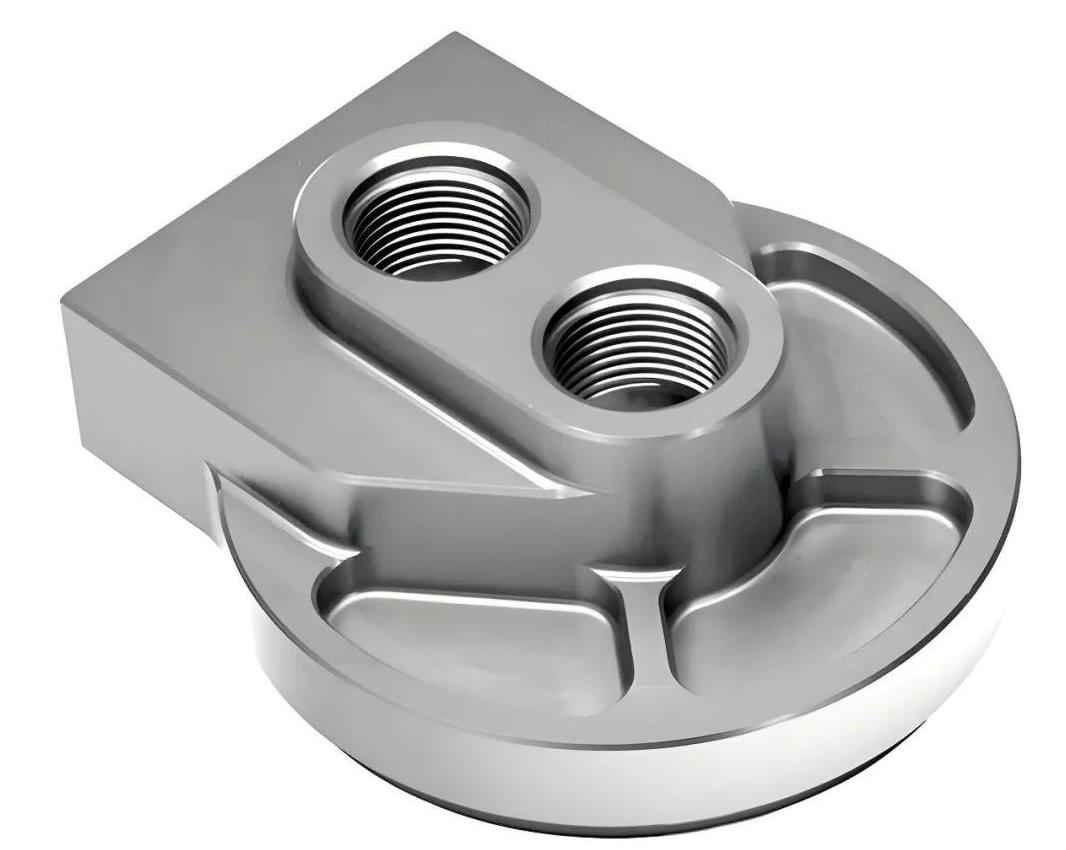
Use stainless steel materials as a hub, then state the exact UNS/AISI designation in the RFQ.
When does 316 justify the premium on machined parts?
Pay for 316 when chlorides, brines, or harsh sanitizers are real.
Coastal housings, marine hardware, some medical-adjacent instruments (requirements vary widely), and process equipment wetted by chlorides are common 316 use cases. If the part is only occasionally wiped with mild detergent indoors, 316 may be an expensive habit. Also consider geometry: crevices, stagnant pockets, and rough as-machined surfaces can undermine either grade—design drainage and specify finish where corrosion starts.
If your environment exceeds what 316 routinely handles, stop the 304-vs-316 debate and consult a corrosion engineer about duplex or nickel alloys.
Machinability and shop-floor realities
Austenitic stainless work-hardens; rigid setups matter for both grades.
Sharp tools, positive rake strategies, and adequate machine stiffness reduce glazed surfaces and dimensional drift. 316 is often considered a bit tougher on tooling than 304, which can lengthen cycle time on heavy roughing. Deep holes, thin walls, and interrupted cuts deserve explicit notes so planners do not assume aluminum feeds. For complex multi-face parts, 5-axis machining may preserve datums better than many 3-axis re-clamps in sticky stainless.
Ask for assumed cutting strategy only when the part is large or tolerance-critical; otherwise focus the RFQ on grade, finish, and inspection.
Passivation, welding, and finishing callouts
Name the post-process so corrosion performance matches the brochure.
Machining embeds free iron and creates heat tint on welds. Passivation (when specified) helps restore chromium-rich surfaces—define the method your customer accepts rather than writing only “passivate.” If welds exist, discuss low-carbon (L) grades and cleaning. Bead blast, polish, and electropolish change both cosmetics and cleanability; price them explicitly. SSINA and related industry resources (SSINA) are useful orientation on stainless families; your PO still needs a named finish spec.
Drawing and RFQ language that prevents substitutions
Write alloy, product form, and finish as governing requirements.
Example pattern: `ASTM/AISI 316L stainless, mill cert required, passivate per [customer spec], Ra on sealing face xxx`. Avoid “SS or equivalent.” If 304 is allowed as a cost-down option, list it as an approved alternate with environment limits. ASME standards libraries (ASME codes & standards) help when pressure or piping contexts apply—cite what your program uses.
For China on-demand CNC, dual-language notes on grade (304/316) reduce mis-picks in busy stock rooms.
Cost, availability, and lead-time notes
316 usually costs more and can have longer bar/plate lead times in odd sizes.
Model total cost including scrap risk and finishing, not only bar price per kilogram. On prototypes, confirm stock before promising demos. Sometimes a 304 prototype with coating is a temporary learning unit while 316 production stock arrives—label those units clearly so field tests are not misread.
Chloride, temperature, and crevice checklist
Before you pick 316 by default, walk a short corrosion checklist.
Are chlorides present (coastal air, salt roads, process brines)? Are temperatures elevated? Are there stagnant crevices, gasket interfaces, or rough as-machined pockets where oxygen depletes? Is cleaning done with bleach or other oxidizers? Mild indoor dry air with occasional detergent usually points to 304 if the customer allows it. Frequent chloride plus crevices pushes toward 316 or beyond. Fractory’s comparison material (304 vs 316) is a readable primer; it does not replace a corrosion review for harsh process plants.
Also separate “food equipment marketing stainless” from your actual customer material list. If the list says 316L, do not cost-down to 304 without a signed deviation.
Inspection and material certification for stainless CNC
Mill certs and PMI catch silent swaps.
Require material certificates with heat numbers when the part is safety, corrosion, or customer-mandated. For critical lots, positive material identification (PMI) on incoming bars reduces 304/316 mix-ups. Dimensional FAIR should call out sealing surfaces and threaded fits that stainless galling can complicate—note lubrication or coating for assembly if needed. Passivation records belong with the cert packet when specified.
On cosmetic stainless, define allowable scratch classes after passivation and handling. Soft jaws and film protect finished faces during CNC and freight.
Threaded features, galling, and assembly notes
Austenitic stainless loves to gall if ignored.
Specify thread class, whether anti-seize is allowed, and if coated fasteners are used. Fine pitches in deep holes need shop notes. If the mating part is also stainless, call that out—galling risk rises. Sometimes a bronze or coated insert is the right system answer rather than chasing perfect stainless-on-stainless machine threads.
Prototyping strategy across 304 and 316
Use the cheaper grade only when the test allows it.
Fit and CNC process prove-outs can often run in 304 even if production is 316, provided corrosion and strength tests wait for the production alloy. Fatigue and chloride tests should not. Label boxes “304 prototype—not for corrosion sign-off” to protect field engineers from accidental conclusions.
Galling, fasteners, and installation torque notes for stainless assemblies
Installation is part of material selection.
Specify torque windows and whether lubrication is allowed on stainless fasteners into stainless housings. If dry assembly is mandatory, consider coated fasteners or dissimilar nuts. Capture these notes on the assembly drawing so CNC shops and line technicians share one truth.
Questions that expose stainless machining discipline
Ask how the shop will fixture, inspect, and document the first article.
Request a short process traveler outline: incoming material check, machine type assumptions, in-process checks, finishing handoff, and final pack. Vendors who cannot describe that path will struggle when revisions hit. Compare two quotes only after those assumptions are written. For China on-demand partners, also confirm English technical communication channels and who owns DFM replies when the primary engineer is offline.
Freezing 304/316 callouts before bar is cut
Freeze what you cut; annotate what you are still learning.
Every release should state which features are locked for the current build and which are experimental. Shops can then avoid over-investing in hard fixtures for features you expect to delete. Purchasing should refuse to release POs that lack a revision letter. When an ECO arrives mid-run, decide scrap-versus-rework explicitly rather than leaving parts in limbo on a shelf.
Protecting finished stainless from iron contamination in transit
The job is not done at the spindle or press.
Define bagging, desiccant, edge protection, and label fields (PO, revision, quantity, material). Receiving teams should know which dimensions to spot-check on arrival. Photos of packaged first articles help remote buyers accept shipments without unpacking every carton immediately. Damaged cosmetics on polished stainless or brass are often packaging failures, not machining failures—write the pack spec once.
Stainless housings meeting connector and gasket stacks
Mechanical releases should carry connector and PCB keep-out updates.
When electronics change hole patterns after mechanical CAD is quoted, machining and molding both suffer. Hold a brief cross-functional gate before releasing metal or soft tools. Share a single interface control sketch with the manufacturer so bosses, PEM nuts, and keep-outs stay synchronized across processes.
Why 316 quotes need separate passivation and cert lines
Ask for a line-split even when you will approve a lump sum.
Seeing setup versus run versus finish versus freight teaches the team where redesign leverage exists. A part that is “expensive” because of hand polish may need a texture change more than a new vendor. Freight mode should be selectable per release—air for demos, consolidated ocean for stable pilots—without rewriting the manufacturing quote.
Conclusion
304 vs 316 is an environment and specification decision, not a status upgrade. Use 304 for mild indoor service when allowed; use 316 when chlorides and harsh chemistries justify it; machine both with work-hardening in mind; and put grade plus finish on the print. That clarity keeps CNC quotes comparable and parts aligned with real corrosion risk.
Next step: Send stainless CAD with grade callouts via Request a Quote, projects@6cproto.com, or WhatsApp +86 180 2219 4001.
FAQ
Is 316 always better than 304?
No. It is often better in chloride-rich settings, but it costs more and is unnecessary for many indoor duties. Match the alloy to the environment and customer spec.
Should I use 304L or 316L for welded CNC assemblies?
L grades are commonly chosen to reduce sensitization risk in welding. Confirm with your welding procedure and customer material list.
Does passivation replace the need for 316?
No. Passivation helps surface condition; it does not add molybdenum chemistry. Grade selection and finish are complementary.
Can I prototype in 304 and produce in 316?
Sometimes for fit checks, but corrosion and strength nuances differ. Label prototypes clearly and validate critical corrosion tests on the production grade.
What finish should sealing faces use?
Define Ra or machining notes on the drawing. Polished or controlled as-machined faces beat unspecified “nice” finishes when seals leak.