

Compare two hypothetical titanium brackets with the same alloy and finished mass. One has open faces and generous tool access; the other has a deep pocket, a thin floor, and critical features on several sides. The second quotation can be higher because its manufacturing route carries more work and risk. A titanium price list would conceal those differences.
Cost drivers shops actually model
Titanium CNC machining cost depends on purchased stock, material removal, tool consumption, workholding, setups, finishing, inspection, and the risk of losing a partly completed component. Compare quotations against the same drawing, alloy condition, quantity, and acceptance requirements. Ask which features create additional operations before seeking an unsupported universal price per part.
Start with a quotation checklist: material and stock form; roughing and finishing scope; fixtures and setups; outside processing; inspection and documentation; packaging; and quantity assumptions. Ask the shop to explain the largest drivers rather than disclose a proprietary shop rate. A usable response connects each driver to a drawing feature or order requirement.
TIMET’s TIMETAL 6-4 information distinguishes material forms, conditions, and fabrication considerations. Specify the actual grade and condition. The word titanium cannot establish the required properties, stock sourcing, or manufacturing plan for an accepted part.
Material removal rate and tool life
Review the volume and accessibility of material to be removed. A deep pocket may need a different roughing and finishing approach from an open face even when their removed volumes match. Time also includes tool changes, repositioning, probing where used, and work that does not remove material.
Sandvik Coromant’s titanium-milling guide discusses cutting-edge demands from thermal, chemical, and mechanical loads. It explains why tooling is part of the route assessment; it does not establish a fixed tool-life multiplier or machine-time premium for this quotation.
Ask whether a cost increase comes from longer cutting time, more frequent tool replacement, restricted access, or additional finishing passes. Keep these explanations separate. Increasing an assumed removal rate in a spreadsheet is not a cost reduction unless the process can preserve tool condition, geometry, and the specified surface.
Workholding and chatter risks
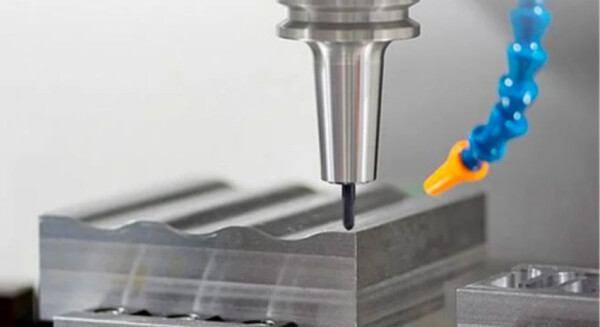
Check how the part is supported as it becomes thinner. Roughing a pocket changes the remaining stiffness and the available clamping surfaces. A fixture that holds the starting blank securely may need a revised support arrangement for final wall or floor machining.
TIMET’s design and fabrication handbook identifies rigid setups as important to controlled titanium cutting. For procurement, the practical question is which holding and support operations the design requires. Avoid assuming that a fixture charge is optional overhead when it enables the accepted geometry.
Ask the supplier to flag chatter-sensitive features, clamping limitations, and inspection in the released condition. A thinner wall can increase finishing or support work even while reducing finished material. If a proposed modification increases a radius or opens access, obtain design approval and compare the revised complete route.
Table: drawing choices that inflate cost
Use the drawing to investigate cost changes in a consistent sequence: identify the feature, ask what operation it creates, consider an acceptable design alternative, and requote that revision. Keep any estimate tied to the specified quantity and evidence package.
| Drawing choice | Potential route consequence | Review question |
|---|---|---|
| Deep, narrow pocket | Long tool reach and restricted chip clearance | Can depth, access, or internal radius change? |
| Thin wall or floor | Support, staged cutting, and careful release | Which region is functionally required to be thin? |
| Critical features on several faces | More setups or multi-axis access review | Can a common reference simplify the route? |
| Tight controls across most surfaces | Finishing and inspection beyond functional interfaces | Which controls determine assembly acceptance? |
| Special material evidence | Sourcing and documentation work | What exact specification and records are required? |
ASME Y14.5 supports clear geometric communication. Functional controls should be deliberate and inspectable. Removing a necessary tolerance to reduce a quotation merely transfers risk to assembly.
When near-net or AM blanks help
A forging, casting, or additively manufactured near-net blank may reduce some machining, but its preparation and acceptance work must enter the comparison. Review minimum machining allowance, surface condition, locating features, consistency, and access for the remaining cuts.
NIST’s additive-manufacturing qualification work identifies material, post-processing, and inspection issues in qualifying AM parts. An AM blank cannot be treated as interchangeable with wrought stock solely because the nominal alloy name matches.
For a low-volume order, alternative blank development may outweigh reduced roughing. For a repeat design with expensive material removal, it may justify a detailed comparison. Ask for the full route through heat treatment where required, support removal, machining, inspection, and approval. Do not assume 6CProto offers a particular blank process without confirmation.
RFQ package for titanium
Package the controlled model and drawing with the alloy, condition, governing material specification, quantity, finish, and critical interfaces. Include the required records and any restrictions on stock form or substitutions. Identify whether a prototype and later production order share the same acceptance requirements.
Use the titanium material review to resolve sourcing assumptions and the CNC machining review to resolve the proposed route. Ask the response to distinguish included operations from optional or unresolved items.
Check the quotation against the RFQ line by line. A cheaper offer that omits specified material evidence, finishing, or inspection is not yet comparable. Record approved deviations explicitly and keep their effect on design acceptance visible.
FAQ
These questions address specification details that should be settled before sample approval.
Can titanium be priced from finished weight alone?
No. Purchased stock, removed volume, feature access, tooling, setups, finishing, and inspection can differ substantially between parts with the same finished weight. Compare complete quotations for the same material condition, drawing revision, quantity, and acceptance scope.
Will five-axis machining always reduce the quote?
No. It may improve access or reduce some repositioning, but the total route also includes programming, fixtures, available equipment, cutting, and inspection. Ask which operations it changes and compare the complete accepted-part scope.
Is a near-net blank always cheaper than billet?
No. Reduced roughing must be weighed against blank development, sourcing, preparation, process approval, and the remaining inspection and machining. The result depends on the actual geometry and order quantity. Obtain a route-specific comparison before changing the material or starting-form requirement.
Related process selection notes
Use multi-axis machining when its access or setup advantages suit the geometry and acceptance plan. The 5-axis machining discussion can help assess several-face features, but the machine category alone cannot establish a cheaper accepted part. Fixture development, programming, access, and inspection remain relevant.
Close the cost review in three steps: confirm a common specification, identify the operations behind the difference, and compare approved alternatives. Preserve the final drawing revision and scope with the purchase order so the cost decision remains traceable.
Request a 6CProto titanium quotation with a feature-by-feature DFM review. Supply the complete acceptance package to make the quotation useful for an engineering decision.