

Consider two hypothetical clear prototypes: a demonstration housing that reveals an internal channel, and a window used to assess an image through its finished surfaces. Both are transparent parts, but a pleasing view through the first does not approve the second. This case review compares SLA vs CNC clear prototypes by the evidence each project needs.
Clarity expectations
Choose SLA or CNC for clear prototypes by the required visibility or optical performance, actual material, geometry, surface access, loads, temperature, finishing, dimensions, and acceptance method. Compare complete finished routes and their schedules. A transparent appearance does not establish imaging quality, material equivalence, or the functional performance of a different production process or grade.
In the demonstration-housing scenario, the main question is whether observers can see the intended internal feature under an agreed presentation. A supported SLA route may offer useful geometry, but orientation, support contacts, surface treatment and internal access still need review.
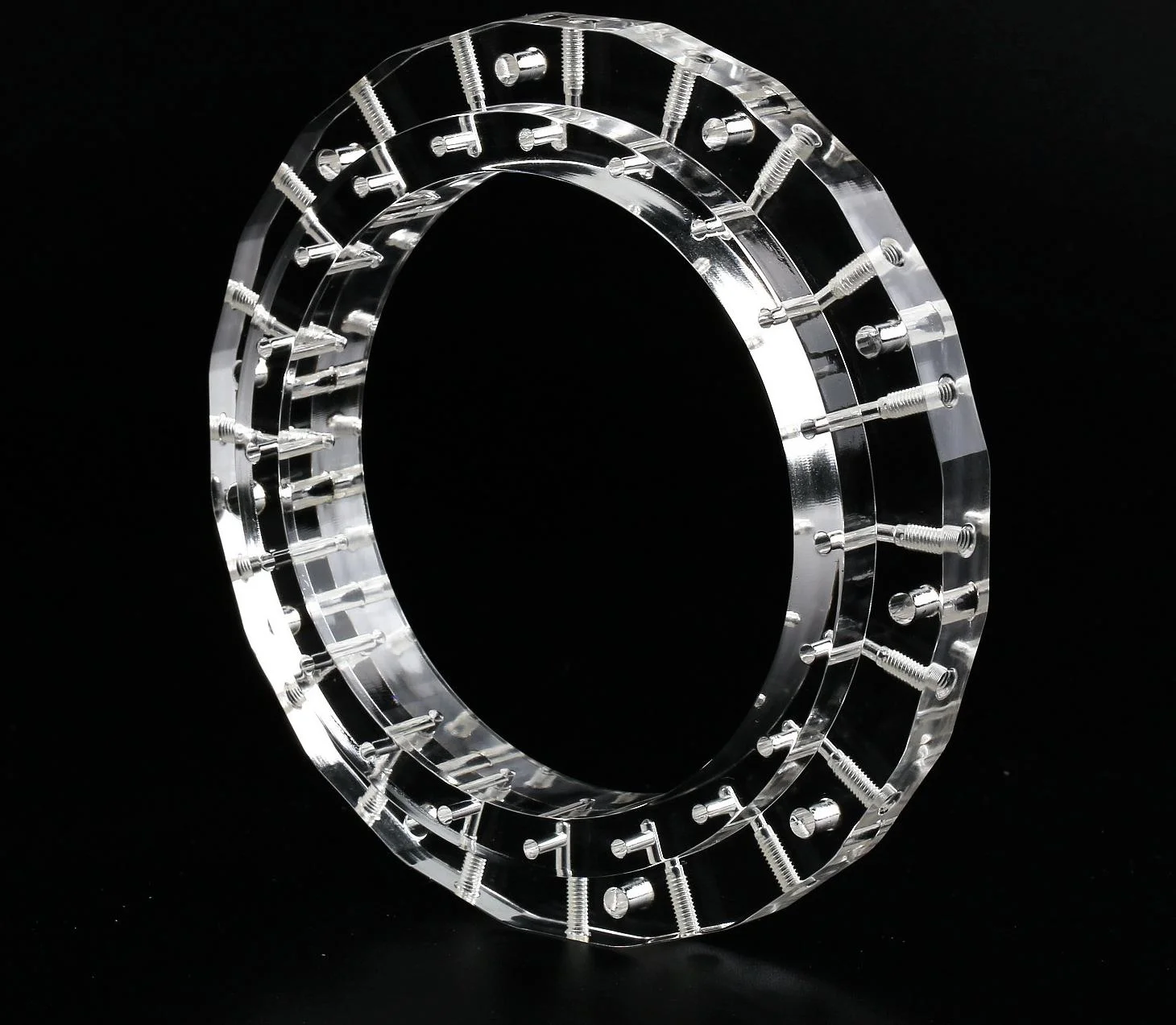
In the window scenario, define what the viewing or imaging system must do. Surface form, path geometry, distortion, transmission and scattering may be separate requirements. A flat-stock machining route may be a candidate, but machining and polishing can affect the surfaces and interfaces being evaluated.
The public scope of ASTM D1003 concerns haze and luminous transmittance of planar transparent materials. Check its applicability to the specimen and required measurement. It does not by itself specify the complete performance of a curved window, light guide, lens or assembled imaging system.
Record the actual acceptance objective before comparing samples. Both scenarios are illustrative rather than customer cases or reported test results. Their different purposes explain why one visual judgment cannot rank every clear prototype.
Strength and heat
Next identify the material and final state. A clear photopolymer, PMMA stock and PC stock are different material systems. Specify the actual grade, stock or print route, additives or tint, relevant processing, and any coating. Do not choose mechanical behavior from the word clear.
Define the load, temperature, exposure duration, mounting arrangement, cleaning agents and other service conditions that matter. A demonstration sample may support a limited presentation objective while leaving sustained loading or later production validation open.
The public scope of ASTM D648 describes a deflection-temperature test under specified conditions. A material value from that method is not automatically a continuous-service temperature or an installed-part guarantee. Review representative geometry and application evidence where heat or strength governs the decision.
Formlabs’ post-processing FAQ distinguishes washing, curing and further finishing of printed parts. Confirm the specific resin’s required processed state before comparing material information or accepting a functional trial. Cosmetic polishing does not replace the required material processing.
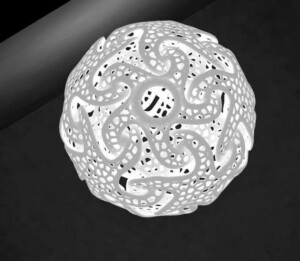
Table: selection
The two scenarios can use the same decision worksheet while reaching different supported routes. Compare the complete accepted part rather than the printing or cutting step alone.
| Question | SLA review | CNC review | Acceptance evidence |
|---|---|---|---|
| Purpose | Visibility, geometry and relevant resin behavior | Stock material, surfaces and accessible geometry | Defined presentation or functional objective |
| Surface | Layers, supports, internal access and finishing | Tool access, marks, polishing and protected faces | Representative final surface |
| Material | Exact resin and processed condition | Exact PMMA, PC or other stock | Relevant grade and application data |
| Geometry | Orientation, support removal and final dimensions | Setups, access and final dimensions | Specified interfaces and optical path |
| Schedule | Build, processing, finishing and approval | Stock, preparation, machining, finishing and approval | Actual quoted milestones |
| Later production | Limits of surrogate material/process evidence | Limits of stock and machined-part evidence | Documented transfer review |
Ask each supplier to state included finishing, inspection and records. A translucent as-printed part and a polished finished window are different deliverables. Align the scope before comparing commercial responses or promised dates.
Finishing paths
For SLA, review where support contacts, layers and accessible surfaces affect the intended view. Formlabs’ clear-resin polishing guidance describes a material-specific surface-finishing route and an optional coating. Its existence does not establish that every internal channel or recessed face can receive the same finish.
For machined PMMA, review stock form, cutting, surface preservation and finishing. The relevant sections of Röhm’s PLEXIGLAS machining guide discuss internal stress, sanding and polishing. A glossy result can still retain marks or introduce concerns that need application review.
Define surfaces that may be polished or coated and those whose geometry must be protected. Check relevant dimensions afterward. If the route includes bonding, cleaning or fastening, consider its compatibility with the actual material and processed state.
Approve the final surface system, not a photograph taken at an intermediate step. Record the viewing arrangement and any instrument or functional test required. Keep appearance, dimensional conformity and optical behavior distinguishable.
FAQ
These questions address specification details that should be settled before sample approval.
Does a transparent-looking prototype qualify as an optical component?
No. Define transmission, haze, surface form, distortion, or other application requirements as relevant. Visual clarity alone does not establish the complete optical performance.
Is clear SLA resin the same material as acrylic or PC stock?
No. Identify the actual resin and processed state or the exact machining stock. Similar appearance does not establish equivalent mechanical, thermal, chemical or aging behavior.
Related process selection notes
The case review closes in four steps. First, define what the sample must demonstrate. Second, select a route with the required material, geometry and surface access. Third, inspect and test a representative finished sample. Fourth, record the result’s limits and review any later process transfer.
For the housing, an accepted internal view may close the demonstration question while leaving long-term material performance unresolved. For the imaging window, a pleasing appearance may leave the optical requirement open until the relevant evaluation is complete. State those boundaries rather than declaring a universal process winner.
Schedule the complete route. Material confirmation, manufacturing preparation, finishing, inspection, approval and packaging can control completion. Confirm actual availability and milestones; neither SLA nor CNC carries a universal lead-time promise.
Internal links and next steps
Send the model and drawing, quantity, intended optical or visibility objective, material requirements, accessible surfaces, dimensions, mounting/environment, finish and acceptance plan. Compare SLA printing with CNC machining, using the actual PMMA or PC specification where relevant.
Request a clear-prototype comparison with final surface and performance acceptance defined. Confirm the included finishing, evidence and schedule before release.
FAQ
These questions address specification details that should be settled before sample approval.
Can polishing preserve every critical dimension automatically?
No. Polishing removes or changes surface material and can affect edges or interfaces. Define protected regions and inspect the final geometry and relevant performance.
Which route always has the shortest lead time?
Neither has a universal delivery time. Compare the actual geometry, material, preparation, supports or setups, finishing, inspection, approval and packaging milestones in the proposed quote.