

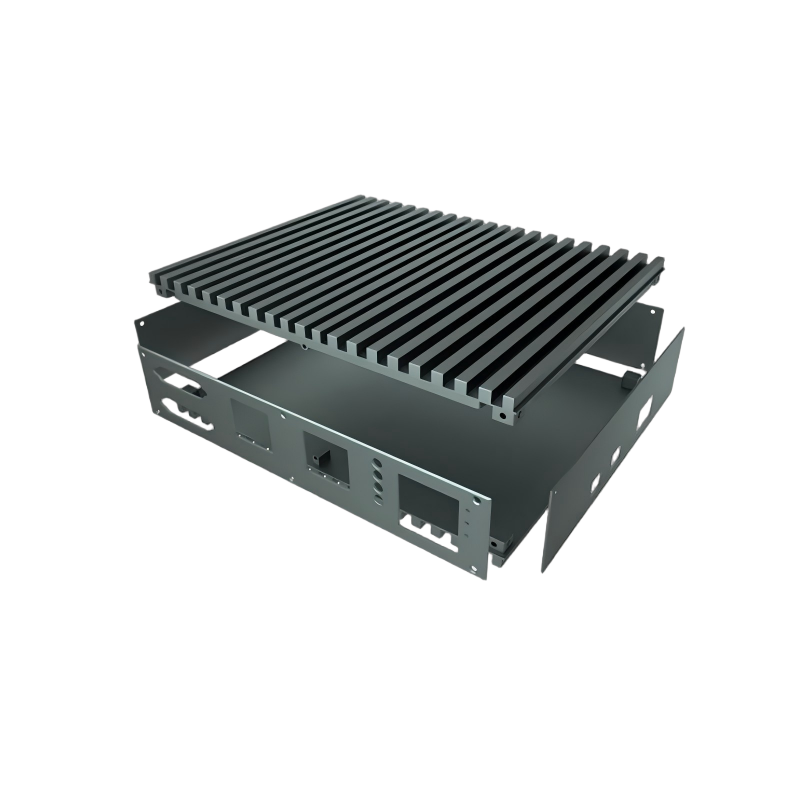
In a hypothetical first build, every bent panel passes inspection, yet the cover cannot be installed over the finished frame. The missing check sits between the components: hardware protrusion, accumulated variation, and the final assembly sequence. A sheet metal assembly quotation needs to price and control those interfaces, not merely add together the cost of individual flat patterns.
What belongs in an assembly drawing pack
Specify sheet metal assembly with controlled component drawings, an assembly model, a complete hardware list, joint definitions, finish sequence, critical interfaces, and final acceptance requirements. Review access and order of operations before quotation. Separate component conformance from assembly fit so fastening, welding, finishing, and inspection work are visible in the manufacturing scope.
Begin with a revision-controlled bill of materials. Identify supplied and purchased items, quantities per assembly, material conditions, and any customer-supplied components. Provide assembly views that show orientation and access; a set of loose part files does not define how the product is built.
For welded joints, use the selected drawing convention consistently. AWS A2.4 addresses symbols for welding and related requirements. Identify joint location, extent, and the governing acceptance requirements. A general weld note should not leave the fabricator to infer which seams are structural, cosmetic, or required to be continuous.
PEM and clinch fastener notes
Choose the exact self-clinching hardware for the sheet and assembly, not simply a thread size. Review sheet thickness and hardness, mounting-hole size, edge and bend proximity, installation side, and access for the press tooling. A fastener that fits the model can still be unsuitable for the host panel.
PennEngineering’s self-clinching fastener handbook describes those selection and installation factors. Its guidance also cautions against indiscriminate deburring or countersinking of mounting holes needed for clinching. Apply the selected fastener’s current instructions and dimensions rather than a blanket edge-finishing rule.
Include the full manufacturer part number or an approved equivalent specification. Confirm protrusion, thread usability, mating screw access, finish compatibility, and the agreed installation sequence. Price hardware procurement and installation as explicit operations. Their absence from a component-only quotation can make the apparent assembly saving disappear later.

Weld sequence and distortion
Plan welding as part of the assembly route. Fit-up, tacking, fixture access, deposition sequence, release, and any subsequent finishing influence the final result. A process that holds the parts in position during welding still needs to produce the required geometry afterward.
TWI discusses back-step and skip welding sequences. These are options for a welding engineer to evaluate, not universal instructions for every seam or permission to replace a specified continuous weld with an intermittent one.
Ask which interfaces are sensitive to shrinkage and how the proposed sequence addresses them. Record whether straightening, additional fixtures, or machining after welding is included. Do not compare a welded-frame quotation with a loose-panel quotation without accounting for the operations that establish final fit.
Table: join method selection
Compare joining methods against load transfer, service access, geometry, finish, and inspection. The lowest component count is not necessarily the lowest accepted-assembly cost. A joint that saves one purchased fastener may add fixtures, finishing, or rework elsewhere.
| Method | Useful design question | Manufacturing work to include | Acceptance check |
|---|---|---|---|
| Screws with specified hardware | Must the assembly be serviced? | Hardware sourcing, access, installation and any defined tightening | Fit, thread usability and relevant retention evidence |
| Self-clinching fastener | Is the host sheet and access suitable? | Hole preparation, installation tooling and sequence | Position, seating and required functional tests |
| Welded joint | What load, sealing or continuity function is required? | Fit-up, welding, distortion control and finishing | Defined weld and final-geometry inspection |
| Hybrid assembly | Can permanent and removable regions be separated? | Both joining routes and their interactions | Complete installed-interface check |
Require engineering approval for a proposed method change. Welding, clinching, and removable fastening can alter load paths and serviceability even when the exterior shape appears unchanged.
Inspection of assemblies
Inspect the final interfaces from a common reference system. Check mounting patterns, cover engagement, mating gaps, hardware position, and access where they establish function. Component-level reports remain useful but do not close all assembly requirements.
ASME Y14.5 provides geometric communication rules under the drawing’s selected convention. Define the datums and conditions used for the accepted assembly. Avoid forcing a frame into fit during inspection unless the specified restraint represents its intended acceptance state.
TWI’s restraint discussion notes movement and residual-stress considerations after release. Agree the final inspection state accordingly. Identify any required weld examination, joint testing, or leak testing separately from dimensional checks, with methods and criteria stated in the order.
FAQ
These questions address specification details that should be settled before sample approval.
Can conforming panels still produce a nonconforming assembly?
Yes. Interface relationships, accumulated variation, hardware protrusion, joining effects, and assembly sequence can create problems that individual panel checks do not reveal. Define and inspect the critical final assembly interfaces as well as the component requirements.
Is PEM a complete hardware specification?
No. Identify the exact manufacturer part or an approved equivalent specification, with the required thread, host sheet, installation geometry, material, and finish. Confirm that the selected hardware suits the sheet and available tooling access before ordering.
Should the drawing always prescribe every welding step?
Not necessarily. Define the required joint and final acceptance, then agree the process plan with the responsible welding engineer. Prescribe a sequence when engineering or qualification requirements demand it. Keep approved process changes traceable to their effect on weld quality and final geometry.
Related process selection notes
Build the cost review in manufacturing order: blank production; forming and bending; hardware and joint preparation; assembly; finishing; then final inspection. Ask the supplier to identify the steps responsible for an expensive interface or difficult access condition.
A forming change can affect downstream assembly, so review it against the complete model. Moving a bend, adding a relief, or changing a flange may simplify one operation while limiting press access or increasing the final gap. Preserve approved changes across the component drawings and assembly revision.
Use the sheet-metal fabrication review to resolve the route before comparing offers. Request a matched scope including fixtures, hardware, surface work, inspection, and the delivered configuration. Do not assume those items are included because the quote title says assembly.
Internal links and next steps
Submit the drawing pack, assembly model, bill of materials, quantity, finish, critical mating interfaces, and required records. Include customer-supplied items and any approved alternatives. Specify whether the deliverable is a loose kit, a partially assembled module, or a completed assembly.
Ask the fabricated-assembly review to identify access conflicts and unresolved joining assumptions. Confirm the first-sample acceptance and how later revisions affect tooling or fixtures.
Request a 6CProto sheet metal assembly quote with the complete drawing and hardware pack. Close the interface that failed in the illustrative cover example before optimizing individual panel prices.