

A production order does not automatically belong on a punch press, and a prototype does not automatically belong on a laser. For buyers comparing punching vs laser cutting, feature repetition and required forms can matter more than the label on the order. The useful comparison follows each route through tooling, blank production, secondary work, and final acceptance.
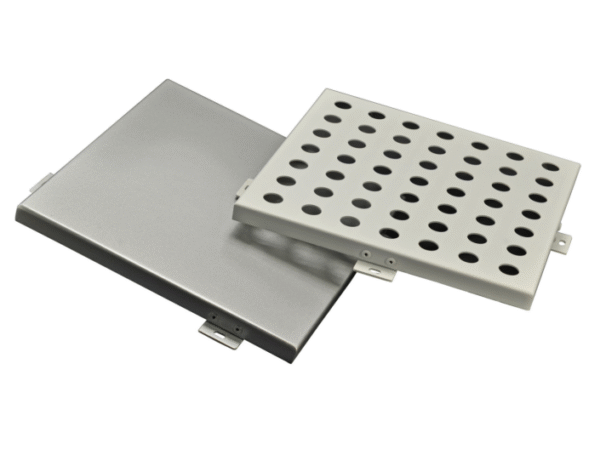
Hole patterns and form features
Compare punching vs laser cutting by the repeated hole pattern, required formed features, material and thickness, available tooling, design changes, edge condition, and complete production route. Request matched quotations at the actual quantities. A standard punch pattern, a free contour, and a raised feature create different trade-offs that a simple volume threshold cannot capture.
What features should the buyer identify first? Separate repeated holes and slots from free profiles and from raised forms such as embosses or louvers. Cutting the outline of a feature is not the same as forming its three-dimensional shape. Show the required delivered geometry rather than leaving that distinction to the quotation.
Wilson Tool’s punching information distinguishes standard and forming-tool solutions and relates clearance to material and thickness. Ask which required features suit existing tools and which need additional development. Tool availability is an order-specific assumption, not a benefit to infer from a process name.
Edge and burr differences
Will the edges be interchangeable? Do not assume so. Punched and thermally cut edges arise from different processes. Identify hole fit, burr-sensitive sides, visible edges, coating preparation, and any surface that contacts a cable, seal, or mating component.
Roper Whitney’s die-clearance guidance relates clearance to edge and stripping behavior. Use recommendations suitable for the actual material, thickness, tool, and machine rather than applying one percentage to every sheet. A nominal hole diameter alone cannot establish the accepted edge.
ISO 9013’s public scope addresses geometric specifications and tolerances for thermal cuts. Where applicable, define the selected requirements with additional project criteria. Do not apply a thermal-cut classification to punched edges as though the manufacturing routes were identical.
Table: volume and changeover
How should quantity enter the comparison? Quote the actual batch and any credible repeat quantities. Ask how programming, tooling, changeover, machine work, handling, and inspection change. Keep one-time and recurring activities distinguishable where the supplier provides that breakdown.
| Job condition | Punching review | Laser review | Compare after |
|---|---|---|---|
| Repeated standard hole pattern | Available tools, hits and setup | Contours, starts and cutting route | Both deliver the required holes and edges |
| Frequent profile revisions | Tool reuse or modification | Programming and route updates | The same revision and quantity are quoted |
| Raised forms | Tooling, access and forming sequence | Separate forming operations where required | Complete formed geometry is included |
| Mixed small batches | Tool loading, changeover and sorting | Nesting, material allocation and sorting | Material and handling scope match |
| Critical finished feature | Secondary sizing or finishing if needed | Secondary sizing or finishing if needed | Acceptance evidence is equivalent |
A tooling cost can be justified by repeat work without making punching the right choice for every feature. Equally, avoiding a dedicated tool does not remove laser programming or secondary-operation costs.
Hybrid routes
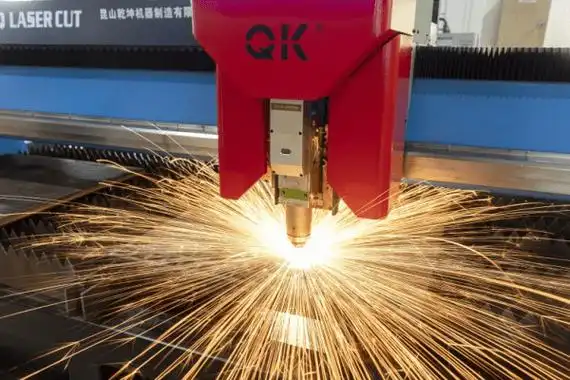
Can the two processes be combined? Yes, where the proposed equipment and route suit the part. TRUMPF’s TruMatic example illustrates a machine combining cutting, punching, and forming operations. It does not establish that 6CProto uses that machine or offers every listed operation.
A hybrid route may use punching for repeated standard features or forms and laser cutting for a changing outer contour. Alternatively, separate machines may perform the work. Review transfer, locating, protection of formed features, and inspection between stages.
Ask the quotation to describe the delivered condition rather than selecting a route from the catalog alone. Compare fixtures, handling, tool access, and any downstream bending or hardware installation. Combining operations is useful only if the entire component still meets its requirements.
FAQ
These questions address specification details that should be settled before sample approval.
Does a production quantity automatically favor punching?
No. The result depends on feature patterns, available tooling, changeover, material, geometry changes, secondary operations, and acceptance requirements. Compare complete routes at the required quantities rather than relying on an arbitrary volume threshold.
Can laser cutting produce the same raised form as a punch?
Cutting a contour and creating a raised form are different operations. A laser-cut blank may need a separate forming step, while suitable punch tooling may combine some features. Review the actual geometry, access, material, and tooling before treating the routes as equivalent.
Related process selection notes
What information makes the decision reviewable? Provide the controlled model and drawing, material and thickness, actual quantities, required forms, critical holes, edge condition, finish, and inspection. Identify which features are allowed to change and which define assembly or appearance.
TRUMPF’s laser-cutting overview gives process context for the thermal-cut route. The useful manufacturing response should relate that route to this component’s geometry, material, and edge requirements. A general cutting capability is not a feature-level acceptance commitment.
Follow a consistent review: classify features; check tooling and process access; compare complete routes; resolve edge and fit acceptance; approve a representative sample. Preserve the chosen assumptions for repeat orders so a later quantity or revision change triggers the appropriate review.
Internal links and next steps
Use the punching review and laser-cutting review to request comparable proposals. Ask the supplier to identify existing-tool assumptions, additional tooling, secondary operations, and limitations rather than offering only a preferred process label.
Align both with the complete sheet-metal fabrication scope. If bending, hardware, finishing, or assembly is required, include it in the comparison. Confirm the first-sample requirements and the evidence needed to accept the repeated hole pattern or formed feature.
Request a 6CProto punching-versus-laser review with the hole pattern, forms, and quantities. Make the choice against a matched delivered component and the actual order conditions.
FAQ
These questions address specification details that should be settled before sample approval.
Are punched holes automatically burr-free?
No. Tool condition, clearance, material, thickness, and the operation affect the delivered edge. Specify burr-sensitive surfaces and the required hole function, then agree any finishing and inspection. A punching process label does not establish a burr-free result.
Is a combined punch-laser machine always the cheapest route?
No. It may combine useful operations, but the actual geometry, available tooling, scheduling, handling, programming, and inspection still matter. Confirm the offered equipment and route, then compare complete quotations with the same delivered condition.