

Explore Rapid Prototyping & Low-Volume Guides
The first prototype piece is always the most expensive, not because the shop is penalizing a small order, but because programming, setup, and tooling are paid once, and a one-piece order carries that entire fixed block on a single part. Order one piece to validate geometry, order five to run a test matrix, order fifty to price the batch, and order strategically to spend the budget on questions rather than inventory. This guide explains how quantity changes prototype price, how to read a multi-quantity quote, and how to choose the number that actually fits the stage of your program.
The First Piece Is Always the Most Expensive
Every prototype order carries one-time costs: reading the drawing, programming, setup, and first-part verification. On a one-piece order, those costs sit entirely on that part; on a fifty-piece order, they spread across the run. That structure is not a pricing quirk; it is the model. The buyer who understands it knows that the one-piece price is not the per-piece price, and that the quantity decision deserves thought rather than a default.
The practical consequence is that the cost question and the use question are inseparable. A single part is the right order when the goal is to see the design in physical form. Five pieces make sense when the test plan needs repeated trials or spares. Fifty pieces are a bridge run, closer to production in behavior and price. The right quantity is the one that answers the question the stage is asking, not the one that happens to look round.
Fixed vs. Variable Costs in Prototyping
Prototype cost splits cleanly into fixed and variable blocks. The fixed block, programming, setup, tooling, and first-article work, is paid once per order. The variable block, material, machine time, finishing, and inspection, scales with each part. The per-part price is the fixed block divided by the quantity, plus the variable cost.
That math has two implications. First, ordering more parts always lowers the per-part price, because the fixed block is spread thinner. Second, the saving shrinks fast, so the question is not “more is cheaper per piece” but “how many parts does this stage actually need?” A fifty-piece order of parts that will be redesigned next week is not a bargain; it is a pre-paid version of a part that no longer exists. The rapid prototyping service at 6CProto quotes across quantities precisely so the fixed and variable split is visible before you commit.
| Quantity | Typical stage | What the fixed block does | When it is right |
|---|---|---|---|
| 1 | Concept validation | Fully loaded on one part | Verify geometry and appearance |
| 2-5 | Fit and functional tests | Spread over a few parts | Repeated trials, mating checks |
| 10-25 | User tests, demos | Meaningfully diluted | Participant count plus spares |
| 50+ | Bridge to low volume | Near production economics | Stable design, market or field samples |
How Many Copies Do You Actually Need?
Quantity follows stage, not desire. A concept validation needs one piece. A fit check needs one or two of each mating part so the assembly can be verified. A functional test may need several for repeated trials, especially when tests are destructive. A user test needs enough parts for the participants, and a demo needs a working unit plus a spare for the unit that will inevitably be damaged in transit.
The discipline is to count the uses, not the desires: list how many parts will be handled, tested, and consumed at this stage, then add a realistic spare allowance for breakage and loss. That number, not a round figure, is the quantity basis. For a low-volume manufacturing program, the same counting discipline carries forward, and the quantity plan written at the prototype stage becomes the basis for the bridge run.
The Quantity Decision Is a Risk Decision
A larger batch before the design freezes risks spending the fixed block on parts that will change. A smaller batch risks running out mid-test and stalling the program. Both risks are real, and the stage decides which one to accept. When the design is still moving, order the minimum that answers the immediate question; the cheap way to iterate is a small order, a fast test, and a revision. When the design is stable and the next milestone is a customer demo or field trial, order the count of uses plus spares, because the cost of running out at that point is higher than the saving on changed parts.
This is why prototype programs are planned in stages. The concept stage commits one part, the test stage commits the test samples, and the user-test stage commits the participant count. Each stage’s quantity is set against that stage’s purpose and budget, and the whole sequence is coordinated rather than ordered piecemeal. The plan that is written is the one that is ordered, and the ordered quantity is the one that serves.
The Process Changes the Quantity Math
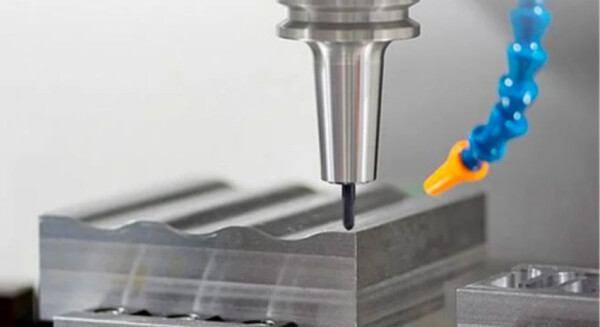
The same quantity question looks different across processes because the fixed block behaves differently. On a CNC-machined part, the fixed block is programming and setup, and it is modest; moving from one piece to five pieces reduces unit cost noticeably, but from twenty-five to fifty the saving is small, because machining has no tooling to amortize. On a 3D-printed part, the fixed block is small again, but the variable block is high, so the per-part price barely moves with quantity; the economy comes from geometry, not volume. On an injection-molded part, the fixed block is the mold, and it dominates entirely: the first piece of a prototype tool is far more expensive than the same quantity of machined parts, and the per-part price falls sharply as the run absorbs the tool.
That is why the quantity decision should be made together with the process decision. A one-piece validation of a geometry that is headed for injection molding is usually worth doing in a cheaper process first, with the molded quantities planned against the tooling. Comparing a 3D-printed prototype to a CNC-machined one on quantity alone misses the point, because the two processes price volume differently and serve different stages. The supplier that quotes the same part across processes, as 6CProto does through its CNC machining, 3D printing, and injection molding services, makes the trade visible before you commit to a quantity.
The cost structure of each process is ultimately governed by standards and measurement practice. Dimensional and surface verification follows the same discipline that NIST documents for measurement uncertainty, so a quantity decision made on price alone should be checked against how the parts will actually be inspected and accepted.
Get a Multi-Quantity Quote
A single number on a quote hides the structure. Ask for the multi-quantity breakdown, one, five, ten, and twenty-five, and the fixed and variable blocks become visible: the fixed block is the jump between the first part and the second, and the variable block is what each additional part actually costs. That comparison is the data for the decision.
When you request a quote, ask the engineering team two questions: what is the fixed block for this part, and how does the per-part price change as the quantity steps up? The answers tell you whether the design is cheap to repeat and whether the stage justifies a larger order. For parts moving toward production, the same breakdown connects the prototype run to the low-volume manufacturing cost guide, which explains how fixed, variable, and one-time charges behave as volume grows.
FAQ
Why is a single prototype so expensive?
Because the fixed block, programming, setup, tooling, and first-article work sits entirely on that one part. More parts spread the block and lower the per-piece price.
How many prototypes should I order?
The count of uses for the stage: one for concept, a few for repeated tests, enough for user-test participants, and a working unit plus a spare for demos. Count the uses, not the desires.
When does ordering more prototypes save money?
When the extra parts will be used or the design is stable. If the design is likely to change, a large batch before the change wastes the fixed block on parts that will be revised.
How should I read a prototype quote?
As a structure: the fixed block divided by the quantity, plus the variable cost. Ask for the multi-quantity breakdown to see the split and make the quantity decision, and compare prototyping routes with the 3D printing vs CNC machining guide when the process choice is open.
Conclusion
The first prototype piece is the most expensive because it carries the fixed block; the per-part price falls with quantity, and the right count follows the stage’s uses. The math is simple, but the decision is contextual: it depends on the process, the stage, the design’s stability, and the test plan, which is why a fixed rule like “always order fifty” is wrong just as often as “always order one.”
The next step is to count the stage’s uses, ask for the multi-quantity breakdown, and order the quantity that fits. When the process choice is open, compare the routes; when the design is moving, keep the order minimum; when the design is stable, order the count of uses plus spares. The budget is spent on questions, not inventory, and the program advances on evidence, not guesses.
The first prototype piece is the most expensive because it carries the fixed block; the per-part price falls with quantity, and the right count follows the stage’s uses. Strategic ordering, minimum for unstable designs and the count of uses for stable ones, spends the budget on questions instead of inventory. Count the stage’s uses, ask for the multi-quantity breakdown, and order the quantity that fits.