

Explore Injection Molding Assembly & Process Control Guides
Two material interfaces need approval before an overmolded grip becomes a dependable product: the rigid substrate must retain its shape, and the outer material must stay where the design requires it. Overmolding services add value when that integrated result removes a real assembly or performance problem. A second material alone does not justify a second molding operation.
What overmolding services actually deliver
Overmolding services are worthwhile when molding the second material delivers a validated functional benefit or removes enough downstream assembly work to justify added tooling and process control. Define the required interface, material pair, production route, and acceptance tests first. Compare complete delivered assemblies rather than the quoted price of isolated components.
The purchased scope should include the substrate supply, second-material molding, handling between operations, and verification of the resulting part. Clarify whether the supplier proposes a multi-shot system or separately loads a previously made substrate. These routes can carry different tooling, handling, and material-history assumptions.
Avient’s overmolding guide treats material selection, component design, and processing as connected subjects. The RFQ should do the same. Ask the overmolding service review to identify the production route and qualification activities, rather than accepting a quotation that leaves those decisions until sampling.
Mechanical interlock vs adhesion assumptions
Decide what retains the second material before deciding what bond strength to request. Mechanical retention and interfacial adhesion can contribute differently to the final assembly. A retained sleeve may resist removal while still lifting at an exposed edge; a seal can require a continuous interface even if other regions are mechanically locked.
Specify the relevant load case: peeling, twisting, compression, or repeated user contact. Teknor Apex’s overmolding academy distinguishes adhesive failure at the interface from cohesive failure within the elastomer. That distinction makes failure inspection useful, but does not establish a universal pass value for the buyer’s part.
Agree a test geometry, conditioning state, and acceptance criterion tied to the application. Do not treat a supplier demonstration strip as proof for every edge and corner in a production grip. Local geometry can expose an interface to a different loading mode from the coupon used in material screening.
When insert molding is the simpler path
Insert molding can be a practical route when the substrate already exists as a discrete component and can be located consistently in a mold. It can avoid specifying a dedicated multi-shot arrangement before demand and design stability justify it. The trade-off is the need to control loading, storage, surface condition, and part-to-part substrate variation.
For a metal component surrounded by plastic, review the insert molding route directly. For a previously molded plastic substrate receiving a soft layer, explain the sequence rather than relying on terminology alone: different suppliers may use overlapping process names.
Ask who supplies the inserts, who inspects incoming dimensions, and who bears the cost if an insert becomes unusable during molding. A simpler tool does not necessarily produce the lowest delivered cost when manual handling or substrate rejection dominates. Conversely, expensive automation may add little value while the geometry is still changing.
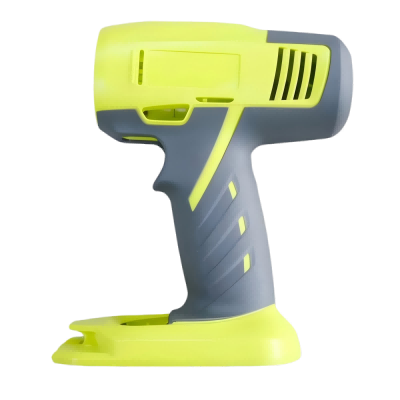
Tooling complexity that drives quote lines
Tooling cost follows the work required to form, locate, seal off, cool, and eject both materials. Quotation lines may include additional cavities, transfer or indexing arrangements, substrate fixtures, shut-off development, and trials. The buyer needs those activities described well enough to understand what a later design revision will affect.
Avient’s processing guidance identifies substrate temperature, moisture, cleanliness, coloring, and cooling as factors influencing its overmolding systems. These factors can add preparation and process-control work even when the part looks simple in CAD.
Compare economics without inventing prices. If the overmolding route adds fixed program cost ΔF and saves verified recurring cost Δc per accepted assembly, an elementary break-even quantity is ΔF / Δc, provided Δc is positive. Include inspection, handling, yield loss, and removed assembly operations consistently. If recurring savings are negative, increasing volume alone will not create a cost break-even under those assumptions.
Table: decision criteria second shot vs assembly
Use the same functional requirement on both sides of the comparison. A removable grip and an integrated grip are not equivalent if service replacement is required. Likewise, a separate gasket may be easier to replace but introduces its own assembly and retention requirements.
The following comparison is a screening tool. Confirm the preferred route with representative samples and an actual quotation before committing to tooling.
| Decision factor | Overmolded route | Separate assembly | Evidence to obtain |
|---|---|---|---|
| Retention in use | Depends on interface and retention design | Depends on fastening, interference, or adhesive | Representative load and environment trial |
| Service replacement | Integrated layer may be difficult to replace | Can permit individual component replacement | Service procedure and damage assessment |
| Design changes | May affect more than one tool or interface | May isolate changes to one component | Revision impact and tooling responsibilities |
| Recurring work | Can remove later assembly steps | Requires controlled assembly operations | Complete operation and inspection scope |
Keep cosmetic benefits separate from quantified savings. A design can justify overmolding for handling or appearance even when it does not reduce total cost, but that should be an explicit product decision.
Materials pairs that commonly succeed
Successful material pairs are grade-specific, not simply polymer-family combinations. PP substrates with a suitable PP-bonding TPE and PC/ABS substrates with a suitable engineering-substrate overmold grade are candidates for evaluation. Neither statement means that every formulation in those families will bond adequately.
Avient’s substrate-specific product guidance lists different solutions for different rigid plastics. Use the exact substrate designation, including fillers and additives, when asking the elastomer supplier to recommend a candidate. A TPU overmold request still needs a grade and substrate compatibility review.
When an interface fails, review material choice alongside processing and geometry. Avient’s troubleshooting guidance treats poor adhesion and incomplete filling as distinct problems. A hotter process or more aggressive retention detail is not a substitute for identifying which problem occurred. Confirm any corrective change against substrate distortion, appearance, and the final functional test.
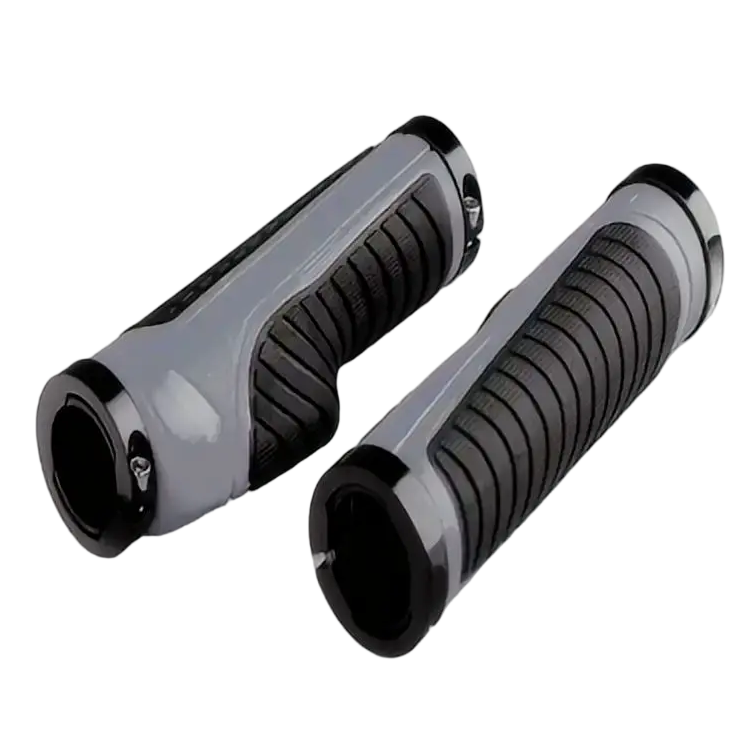
RFQ details that prevent re-quotes
Send both material regions as controlled geometry with a common revision. Include the substrate drawing, overmold boundary, cosmetic faces, functional loads, environmental exposures, and any restriction on material changes. If the substrate is purchased, supply its dimensional variation and surface condition requirements, not just the nominal model.
Ask for the proposed sequence, material pair, gate and shut-off locations, sample plan, and bond-verification approach. For the rigid component, link the review to the plastic injection molding scope so that its tooling and acceptance obligations are not lost inside the second-operation quotation.
Request explicit assumptions for rejected substrates, tool ownership, engineering changes, and replacement components. These terms explain the commercial consequence of a failed trial or revised design without requiring a speculative price table. Release the program when the technical route and those responsibilities are clear enough to compare against the alternative assembly.
FAQ
These questions address specification details that should be settled before sample approval.
If the soft layer cannot be peeled off by hand, is the bond approved?
No. A hand check is an informal screen, not a defined acceptance test. It may miss vulnerable edges or environmental effects and does not control the applied force. Agree the test method and required condition for the actual application, then record both the result and failure mode. Mechanical retention can also prevent removal while local adhesion remains inadequate.
Does a higher forecast automatically justify two-shot tooling?
No. Forecast quantity is only one input. Compare design stability, recurring handling, process yield, required equipment, and the cost of maintaining the proposed tools. A stable program with substantial removed assembly work may support the investment; an uncertain design can consume those savings through revisions. Use the quoted program costs and accepted-part economics rather than a generic volume threshold.
Can a different color masterbatch be introduced without a new interface review?
Only when the change is covered by the approved material and process specification or has been evaluated. Colorant carriers and additives may affect processing and bonding. Identify the new concentrate, review supplier guidance, and decide whether representative trials are needed. Cosmetic approval alone should not silently authorize a formulation change affecting the interface.
Send both material models and interface requirements to 6CProto for a quote and DFM review. Ask the response to distinguish tooling investment, recurring operations, and the evidence needed before production release.