

Printing a bracket is not necessarily an alternative to machining it; the printed route may still depend on CNC for its critical interfaces. That makes metal 3D printing vs CNC a comparison of complete manufacturing routes. Buyers need to evaluate the geometry benefit together with support removal, post-processing, inspection, material evidence, and the accepted delivered condition.
Geometry that favors AM
Compare metal 3D printing vs CNC for complex brackets by geometry access, material requirements, quantity, supports, finishing, inspection, qualification, and complete delivery risk. AM can enable useful forms, but those forms must remain manufacturable and verifiable. Request matched accepted-part routes rather than comparing an unfinished print with a fully machined component.
Start with the function that makes the geometry valuable. A consolidated component, an otherwise inaccessible feature, or a load-directed shape may justify an AM review. A conventional bracket with open machining access may have little benefit from a more complex route.
Renishaw’s metal-AM design guide addresses residual stress, orientation, and supports. Treat those as design inputs, not afterthoughts. A topology result that cannot be supported, cleaned, finished, or inspected has not yet become an accepted manufacturing design.
Post-machining still required
Mark the mounting faces, holes, threads, and other features that need a controlled finish or close geometry. Agree whether they are accepted as built or receive another operation. Include machining allowance, locating features, and fixture access in the AM review before the build begins.
NIST’s tolerance-transfer work discusses the relationships among design intent, build direction, process variation, and post-processing datums. Use a coordinated reference strategy so finishing does not depend on locating surfaces whose geometry is themselves unresolved.
Review support removal and build-plate separation alongside final machining. A thin optimized region can be difficult to hold after release. A support attached to a functional face may require extra finishing. Ask the supplier to explain the sequence through the final inspected component rather than supplying a build-only description.
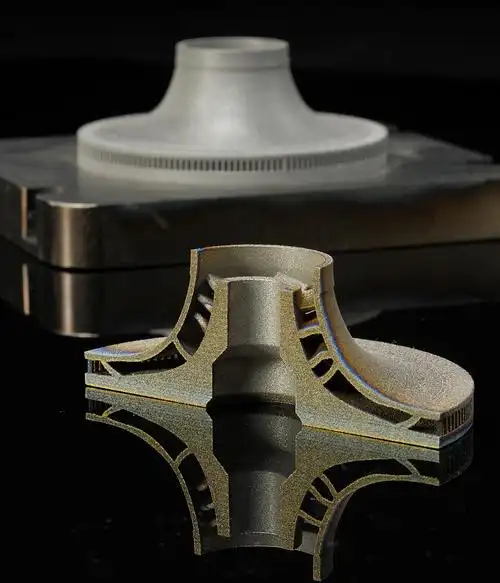
Table: lead time and risk factors
Lead time and risk follow the full route, including outside operations and required approvals. Neither a shorter build nor fewer cutting operations guarantees a shorter accepted-part delivery. Obtain actual schedule assumptions from the supplier without inventing universal days or rates.
| Stage | AM route review | CNC route review | Question for both |
|---|---|---|---|
| Preparation | Build design, orientation and supports | Stock, setups and fixtures | Which development work is included? |
| Primary manufacture | Build and controlled processing assumptions | Roughing, access and finishing strategy | What controls the actual route? |
| Secondary work | Removal, treatment and machining as required | Treatment and finishing as required | Who performs and schedules each step? |
| Inspection | Complex geometry and material-related requirements | Feature and surface acceptance | Can the required characteristics be verified? |
| Approval | Material/process and part qualification where applicable | Required material and part acceptance | What evidence precedes release? |
ASME Y14.5 provides geometric communication rules for the selected convention. Keep the same functional acceptance in the matched comparison, while recognizing that each route may need different process controls to achieve it.
Material allowables caution
Do not approve a printed alloy by transferring a wrought product’s design values without review. Powder identity, process, orientation, thermal history, finishing, and inspected condition can affect the evidence needed for the bracket. Typical tensile data and approved design allowables serve different purposes.
NIST’s AM part-qualification work identifies dimensional, surface, defect, and mechanical-property challenges, including the effects of post-processing. A part that matches its exterior dimensions may still have unresolved material or internal-condition requirements.
NASA-STD-6030’s public scope addresses AM for NASA spaceflight hardware. It illustrates an application-specific qualification framework, not a universal requirement for every commercial bracket or a claim that a supplier is approved. Identify the actual governing project requirements and responsible approval authority.
FAQ
These questions address specification details that should be settled before sample approval.
Does complex geometry automatically favor metal AM?
No. The geometry must also be buildable, removable from its supports where required, cleanable, finishable, inspectable, and suitable for the material and qualification route. Compare complete delivered components rather than treating geometric complexity as a sufficient reason to print.
Will a printed bracket avoid CNC operations?
Not necessarily. Critical bores, mounting faces, threads, or other interfaces may require machining. Define the required geometry and surface, review allowances and workholding, and include those operations in the quotation. A printed near-net shape is not always the finished deliverable.
Related process selection notes
Review three alternatives where appropriate: machining the conventional geometry, redesigning for AM plus required finishing, and using another suitable near-net starting form with machining. Keep the performance target constant while allowing a controlled geometry or route change.
Use the 5-axis machining review to assess access and setups. Multi-axis equipment can address some complex faces without making every enclosed feature reachable. Conversely, AM does not make every internal surface accessible for finishing or examination.
Ask for a route-specific explanation of the proposed advantage. Reduced part count, material removal, or mass may matter, but compare their effect on the complete assembly and acceptance plan. Approve any redesign and material-basis changes before treating the offers as interchangeable.
Internal links and next steps
Provide the controlled model and drawing, quantity, material requirements, functional loads and environment, critical interfaces, finish, and required records. State whether geometry changes are allowed and what evidence is needed to approve them. Identify build-only and finished-part requests distinctly.
Coordinate the metal-AM discussion with the CNC machining scope. For an aerospace-related order, supply the actual approval and documentation requirements rather than inferring them from an industry page.
Request a 6CProto AM-versus-CNC bracket review with the final acceptance package. Compare the complete delivered component, its evidence, and the confirmed route before selecting the process.
FAQ
These questions address specification details that should be settled before sample approval.
Can wrought-alloy design allowables be used automatically for an AM bracket?
No. Material name alone does not establish equivalent properties or an approved design basis. The powder, process, orientation, post-processing, inspection, and applicable qualification requirements need review. Use allowables and evidence approved for the actual material and manufacturing route.
Can build time be compared directly with CNC cutting time?
Only as limited inputs, not as complete delivery estimates. Both routes include preparation, machine availability, handling, finishing, inspection, and possible qualification work. Compare the complete accepted-part scope and supplier-confirmed schedule rather than isolated machine-operation times.