

Metal additive manufacturing is priced by the hour and by the cubic centimetre, which makes it a good deal for geometry that machining cannot reach and a poor deal for geometry that a mill can cut in one pass. Understanding the cost structure is what turns the decision from a preference into a calculation.
What drives the cost of a metal printed part
Seven line items explain most quotes. Machine time is charged for the duration of the build, whether the part fills the chamber or not, so nesting parts together spreads that cost. Powder is consumed both in the part and in the surrounding support structure. Supports are built to anchor overhangs and to conduct heat away, and they are removed by hand afterwards. Heat treatment relieves stress and sets the material condition. Post-machining establishes the interfaces that printing cannot hold accurately enough. Inspection verifies the features that matter. And the preparation of the build file, including orientation and support design, is engineering time charged once.
| Cost line | Scales with | How to reduce it |
|---|---|---|
| Machine time | Build height and part volume | Nest parts; design for the smallest height |
| Powder | Part volume plus supports | Hollow sections where allowable; reduce overhangs |
| Supports | Number and reach of overhangs | Orient to build on a flat face; redesign steep overhangs |
| Heat treatment | Mass and material | Unavoidable where the material requires it |
| Post-machining | Interfaces to be established | Print near-net; reserve machining for controlled faces |
| Inspection | Controlled features | Control the features that carry function |
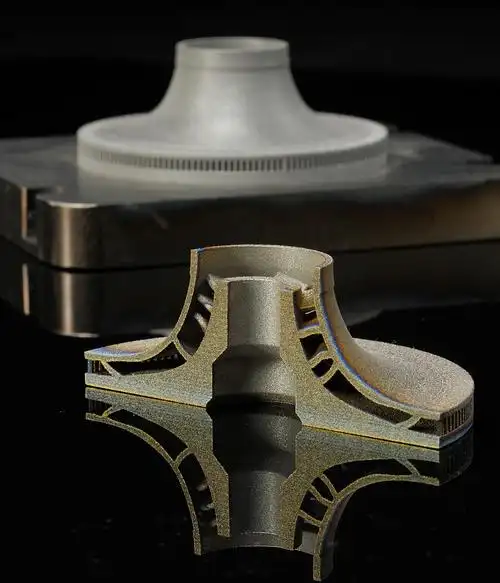
Is metal 3D printing cheaper than CNC?
Sometimes, and geometry decides rather than quantity.
Machining is cheaper whenever a cutter can reach the features, because the material is removed quickly and the surface finish comes directly off the machine. Printing becomes cheaper when the geometry cannot be reached by a cutter, when several parts are consolidated into one, or when a conformal internal channel or lattice makes the function possible at all. In those cases the comparison is against a much more expensive alternative than a simple machined part.
Quantity moves the balance in both directions. For a handful of simple parts, machining wins on price and speed. For a geometry that would require several operations, fixtures and a multi-part assembly, printing can win even at small quantity because it removes those steps. The honest comparison is total cost to a usable part, including fixtures and joining, not price per cubic centimetre.
Where the price becomes defensible
Three situations justify metal printing. The first is internal geometry that no cutter can produce, such as conformal cooling channels or curved internal passages. The second is weight reduction, where a lattice or hollow section reduces mass in a way that solid machining cannot match. The third is consolidation, where a printed part replaces an assembly of several components and eliminates the joints between them.
Outside those situations, the cost argument is weak. A bracket, a plate, a shaft or a housing with simple features belongs on a mill or a lathe. That is why the useful first question on a metal printing enquiry is not which material, but which feature cannot be made any other way. Process terminology for additive manufacturing is standardised through ASTM Committee F42, and qualification guidance is published by UL Solutions.
Design choices that reduce the bill
Four design decisions move the price noticeably. Reducing build height by orienting the part to sit low in the chamber shortens the most expensive phase. Reducing overhangs cuts both support material and the hand work of removing it. Hollowing a large solid region saves powder and time, provided the internal volume can be emptied. And printing near-net so that only a few controlled faces need machining keeps post-processing small.
Two further habits help at the quoting stage. Nesting several different parts into one build is the single largest lever for a small programme, because the machine time is shared; this only works if the parts are designed and ordered together rather than one at a time. And stating which features must be machined after printing, rather than leaving that to the supplier, prevents an assumption that adds an operation. Process guidance is published by ASME.
What to send for a metal printing quotation
A quotation from a model alone will be an estimate, because the orientation and support strategy are not yet decided. The information that turns it into a price is the quantity and whether the parts can be nested, the material and any heat treatment, the interfaces that must be machined after printing, the inspection requirement, and the function of the part so orientation can be chosen sensibly. Providing the intended load path helps the supplier avoid an orientation that puts build-layer boundaries across a stressed section.
Two references support the technical conversation. Material behaviour and heat-treatment data are published by ASM International, and dimensional verification practice is described by the NIST Manufacturing Extension Partnership. Powder handling and waste obligations are covered by US EPA rules, which also affect how a build is scheduled and cleaned. Where the cost case does not hold, the route back to conventional manufacturing is set out on the CNC machining pages.
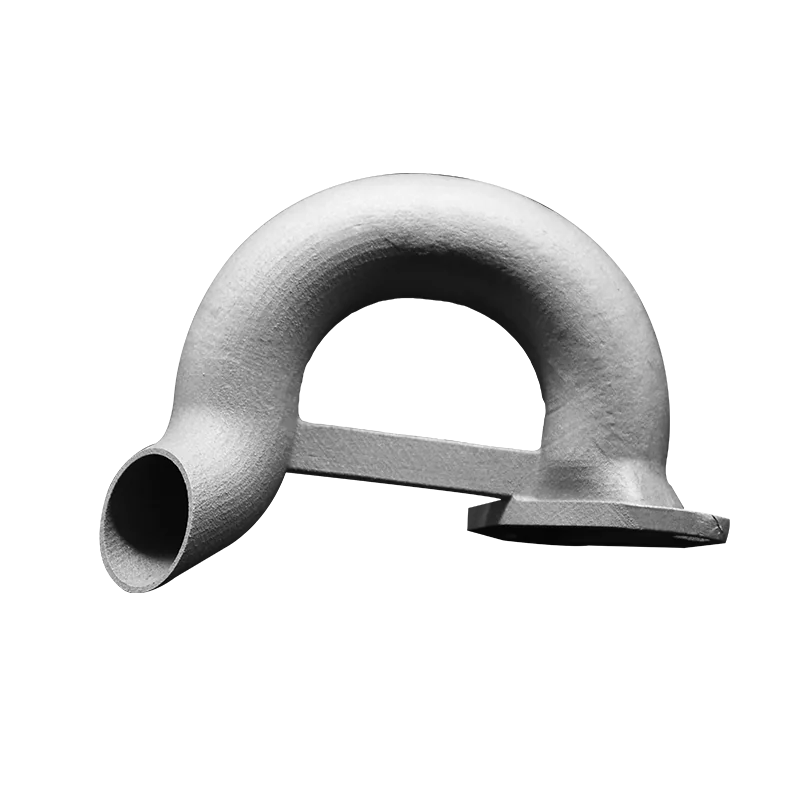
Send the model with the feature that cannot be machined and the quantity, and request a metal 3D printing quote with orientation and post-processing costs broken out.
FAQ
Is metal 3D printing cheaper than CNC machining?
Only when geometry decides it. Machining wins wherever a cutter can reach the features, because material is removed quickly and the finish comes off the machine. Printing wins where the geometry is unreachable, several parts are consolidated, or internal channels are required.
What drives the cost of a metal printed part?
Machine time for the duration of the build, powder consumed including supports, support removal, heat treatment, post-machining of controlled faces, and inspection. Build height and part volume influence the price more than the complexity of the geometry.
When should metal printing be chosen over machining?
When a feature cannot be cut, when mass has to come out through a lattice or hollow section, or when a printed part replaces an assembly and removes joints. For simple brackets, plates and shafts, machining is usually faster and cheaper.