

Every silicone mold is a copy of something, and the quality of the cast part is set before the silicone is poured: the master pattern’s surface, geometry, and durability transfer into the mold and then into every part. Choose the master route badly and the mold repeats the master’s defects; choose it well and the mold produces parts that match the approved sample. The master decision is a trade among 3D printing, CNC machining, and casting routes, and it depends on the finish the parts need, the number of molds and parts, the undercuts, and the budget.
What a master pattern must deliver to the silicone mold
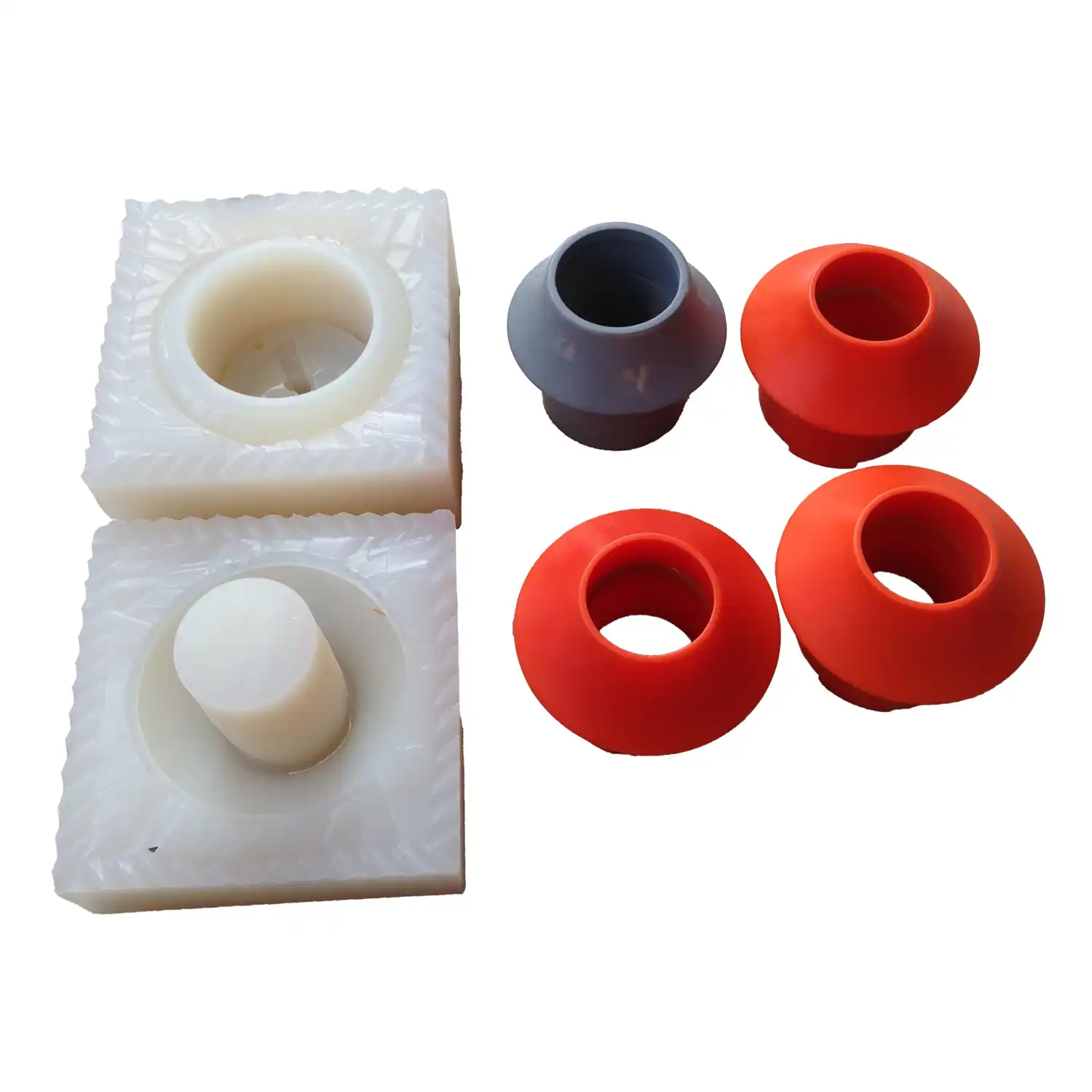
The master pattern defines the mold cavity: its geometry, its surface, and its draft and parting behavior all transfer into the silicone. The master must be dimensionally correct for the resin’s shrinkage, smooth or textured to the finish the parts need, and robust enough to survive the mold-making process without damage. It must also release cleanly from the silicone, which means the surface condition and any release treatment matter as much as the geometry. A master that is perfect in CAD but rough or fragile in hand produces a mold that repeats those problems in every cast part.
The master also sets the mold’s life and the part’s consistency: a master with a weak detail can break during mold making, and a master with an unstable surface can degrade between molds. The master is a production tool in its own right, not a one-off print.
3D-printed masters: speed, finish limits, and undercuts
3D printing is the fastest master route, and it is the natural choice when the part is complex, the finish requirement is moderate, or the design is still changing. Printed masters carry the process’s surface: SLA resin masters can be smooth enough for many appearance parts after finishing, while FDM masters show layer lines that transfer into the silicone. The master’s surface can be sanded, filled, and coated to improve the finish, but the post-processing adds labor and can round sharp details. Printed masters are also less durable than machined metal, so they suit short runs and single molds rather than long production life. Undercuts are handled by the silicone mold, so the printed master does not need draft for the mold’s sake, but it still needs to release cleanly from the silicone.
Resin choice matters for the master: a resin that is brittle can crack when the silicone is cut open or the master is pulled, and a resin that reacts with the silicone can contaminate the mold. Confirm the master material’s compatibility with the mold-making process.
Machined masters: durability and precision when runs are long
CNC machining produces masters with the best dimensional control and durability of the common routes. A machined aluminum or steel master holds its geometry across many molds, carries a controlled surface finish, and survives the mold-making process repeatedly, which makes it the choice for longer production or for parts that need precise, repeatable geometry. The trade-offs are cost and lead time: machining a master takes longer and costs more than printing one, and complex internal geometry that a printer can make may be difficult or impossible to machine. The machined master earns its cost when the program will produce many molds or the parts must hold tight, repeatable dimensions.
The machined master’s surface finish is set by the machining and any polishing or texturing, and it transfers directly into the silicone. The finish requirement should be specified on the master, not assumed from the machining default.
Cast and molded masters for replicating existing parts
When the part already exists — a customer sample, a molded production part, or a part from another process — the master can be cast or molded from the original. This route replicates the existing part’s geometry and surface without CAD or machining, and it is the practical choice for matching an existing product or reverse-engineering a legacy part. The limitation is fidelity: the replicated master carries the original’s defects as well as its features, and the cast master may need finishing to correct surface issues. The material of the cast master should be stable and compatible with the silicone, and the master should be verified against the original part before the mold is made.
Replicating a production part also raises the question of the master’s origin: if the part is proprietary or regulated, the right to replicate it and the accuracy of the replication belong in the program’s documentation, not assumed.
Choosing the route by finish, life, and budget
The master route is chosen from three inputs: the finish the parts need, the number of molds and parts the master must support, and the budget and schedule. A short run with a moderate finish favors a 3D-printed master; a long run or a precise geometry favors machining; replicating an existing part favors a cast master. The decision should also include the master’s finishing cost, because a printed master that needs extensive sanding and coating can approach the cost of a machined one. The master is the first production tool in the cast part’s life, and the route that looks cheapest at the start is not always the cheapest when the finish and the mold life are counted.
The vacuum casting service and the mold-design guide cover the surrounding process; the master decision above is what feeds both. When the master route is chosen by finish, life, and budget together, the silicone mold and the cast parts inherit a controlled starting point rather than a compromise.
Comparing master routes on a real program
A program example shows how the route decision is made. A product team needs urethane cast housings with a textured exterior and a smooth interior, first for twenty parts to validate the design and later for a few hundred if the pilot succeeds. The first master is printed in SLA resin, finished to the texture sample, and used for the validation molds; the cost is low and the schedule is fast, which fits the stage where the design may still change. When the pilot succeeds and the program moves to a few hundred parts, the printed master is replaced by a machined master, because the production molds need a master that holds its surface and geometry across many mold cycles without degrading. The machined master costs more, but it is amortized across the production molds and the parts, and the finish consistency justifies it. The example shows the route decision following the program stage: printed for speed and change at validation, machined for life and consistency at production.
The cast route enters when the part already exists. If the housing is an existing product sample that must be replicated, casting a master from the sample is faster than modeling and machining it, and the replicated master carries the sample’s texture directly. The limitation is that the replicated master inherits the sample’s defects, so the master should be compared against the original and finished where the surface matters. The route decision should also include the finishing labor: a printed master that needs extensive sanding and coating can approach the cost of a machined one, and the comparison should be made on the finished master, not on the raw print. When the finish, the mold life, and the budget are all in the comparison, the master route is an engineering decision with a clear answer for each stage.
Master choices by program stage can be planned as a sequence. A development program may start with a printed master for the first molds, move to a machined master when the design freezes, and keep the machined master as the reference for the production molds and for any future re-molds. The sequence spends the least money early, when the design is changing, and invests in the durable master when the design is stable. The program should record which master produced which molds, because a mold made from an early printed master carries that master’s finish and geometry, and the part history is only readable if the master lineage is documented. The master plan also sets the re-mold path: when a production mold wears out, the replacement mold is made from the same reference master, keeping the parts consistent across the program’s life. The master is the program’s memory, and the route decision is the plan that keeps that memory accurate.
The master’s storage and handling deserve a line in the plan too. A machined master that is stored unprotected can corrode or pick up damage that transfers to the next mold; a printed master that is left in sunlight can warp. The master should have a storage case or a protected location, a handling procedure that avoids contact with the functional surfaces, and an inspection schedule that checks the surface before each mold is made. The master is the program’s reference, and the reference is only as good as its care. The plan that includes storage, handling, and re-inspection is the plan that keeps the master accurate for the life of the program.
If you are planning a silicone mold program and want the master route compared on your finish, quantity, and schedule, the 6CProto urethane casting team can review the master geometry and recommend the printed, machined, or cast route before the mold is made.