

Explore CNC Design & Material Selection
Polypropylene is cheap, chemically resistant and tough, which makes it attractive for machined parts. It is also soft, flexible and low-friction, which means clamping, cutting and measuring it all behave differently from a metal or a rigid plastic.
What the material does to a machining setup
Three properties dominate. Its low stiffness means thin sections deflect away from the cutter rather than being cut cleanly, so a nominal cut can leave an under-size wall. Its low melting point means friction at the cutting edge melts the surface, producing a smeared finish or a stringy chip welded back onto the part. And its low friction and high thermal expansion mean it moves as it warms and cools, so a dimension measured hot is not the dimension the part will hold.
| Property | Effect during machining | Practical response |
|---|---|---|
| Low stiffness | Thin walls deflect, cut depth varies | Support the part; take lighter finishing passes |
| Low melting point | Melting, smearing, chip welding | Sharp polished tooling, high feed, coolant or air blast |
| High thermal expansion | Dimensions change with temperature | Measure after stabilising; control coolant temperature |
| Low friction | Part slips in the fixture | Positive stops and soft jaws rather than friction alone |
| Toughness | Stringy chips tangle and mark the surface | Interrupted cuts and chip control; avoid dwelling |
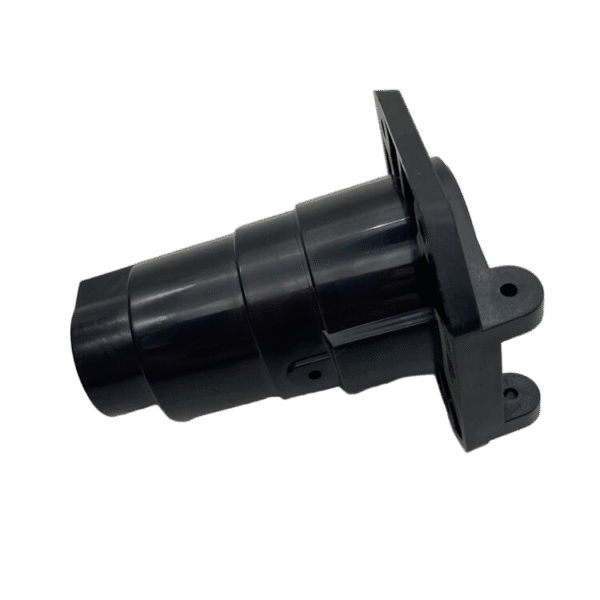
What makes polypropylene difficult to machine
It deflects, melts and moves.
The three problems compound each other. A light finishing pass intended to avoid deflection generates more rubbing heat, which softens the surface and produces a worse finish; a heavier pass removes material cleanly but pushes the material away from the cutter. The workable compromise is sharp, highly polished tooling with a positive rake, generous feed per tooth and a rigid setup, so the cut is positive rather than scraping.
Cooling is applied mainly to manage temperature rather than to lubricate, and an air blast is often sufficient because it removes chips without creating a thermal shock. Where coolant is used, a consistent temperature helps, because the part’s dimension at the moment of measurement depends on how warm it is. Letting the part stabilise before inspection is as important as the machining parameters.
What are the downsides of polypropylene as a material?
Lower stiffness, modest heat range, hard to bond.
Its limitations are not the same as its machining difficulties, though the two overlap. Polypropylene has a lower stiffness than ABS or polycarbonate, so parts must be designed with more section or with ribs to reach the same rigidity. Its temperature range is modest, and it becomes brittle at low temperatures despite being tough at room temperature. It is difficult to bond or paint without surface treatment because of low surface energy, which is the same property that gives it chemical resistance.
Two further characteristics matter in service. Polypropylene is susceptible to ultraviolet degradation without stabilisation, so outdoor parts need a suitable grade. And it is notch sensitive to some degree, meaning a sharp internal corner under load becomes a crack origin. Both are addressed by grade selection and design rather than by machining. Material property references are published by ASM International.
Can polyethylene be machined?
Yes, with the same approach polypropylene needs.
Yes, and with similar considerations. Polyethylene shares polypropylene’s softness, low friction and thermal sensitivity, so it needs the same treatment: sharp polished tooling, positive feeds and support against deflection. HDPE machines more cleanly than the softer and more flexible low-density grades, and it produces stringy chips that require chip control. As with polypropylene, the practical difficulty is not cutting the material but holding a dimension in it.
Where the part requires tighter tolerance than either material comfortably holds, the usual responses are to add an operation rather than to squeeze the process. Machining oversize and finishing after the part has stabilised, or adding a machined or inserted feature for the critical fit, is often more reliable than chasing a tolerance in a material that moves. Related materials are described under materials.
Design choices that make a PP part machinable
Four design decisions improve the outcome. Nominal wall thickness should be generous enough to resist deflection during cutting, with ribs used for stiffness rather than thin walls. Internal corners should carry radii, which reduces stress concentration and lets the cutter pass without a sudden change in load. Where a hole must hold a tight tolerance, it is better designed with a boss around it so the material has local support. And where a thread is required, a metal insert is preferable to a tapped plastic thread for any joint that will be opened more than once.
Two further points apply to the drawing. State the measurement condition for any critical dimension, since polypropylene changes size with temperature and time, and identify which features are functional, because tolerance spent on non-functional surfaces in this material is usually wasted. Drawing conventions follow ASME standards, and measurement practice is described by the NIST Manufacturing Extension Partnership.
Where machined polypropylene makes sense
Machining suits polypropylene when the quantity is low, when the geometry is simple enough that a mold is not justified, or when a prototype needs to be in the production material. It is particularly useful for chemical-resistant fixtures, tank fittings, ducting components, insulators and covers where the part interacts with aggressive media. Molding becomes the better route once volume justifies tooling, since the material flows well and is inexpensive.
The comparison is worth making explicitly, because polypropylene is one of the few materials where machining a prototype is usually cheaper than tooling for the same part at low volume, and where molding becomes clearly cheaper at moderate quantities. Surface and coating terminology follows ASTM Committee B08, and the process and waste obligations that apply to polymer machining are set out by the US EPA. Process options are set out under CNC machining and injection molding.
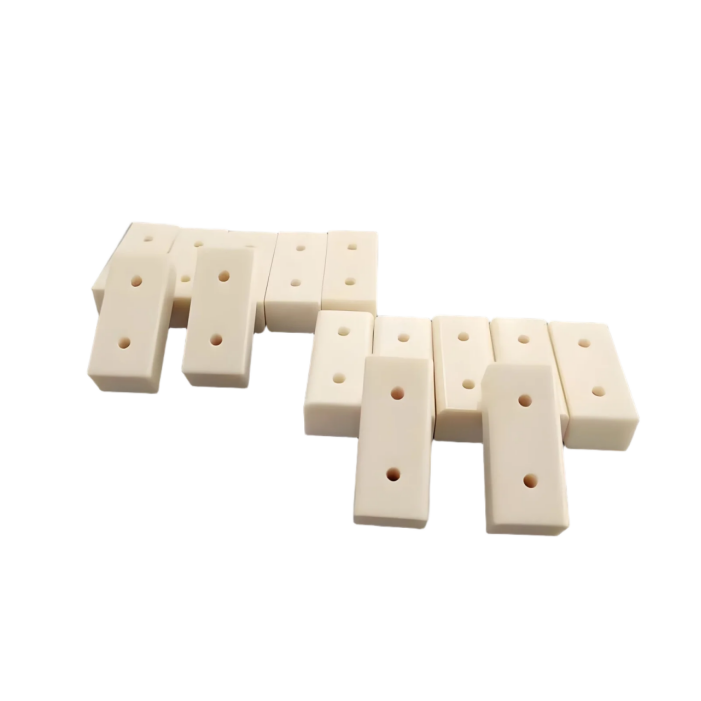
Send the part with the chemicals it will contact and the tolerances that matter, and request a polypropylene machining quote with the measurement condition stated.
FAQ
What makes polypropylene difficult to machine?
Its low stiffness makes thin sections deflect under the cutter, its low melting point causes smearing and chip welding from friction heat, and its thermal expansion means dimensions change with temperature. Sharp polished tooling, positive feeds and support against deflection are the countermeasures.
What are the downsides of polypropylene as a material?
Lower stiffness than ABS or polycarbonate, a modest temperature range with brittleness when cold, and difficulty bonding or painting without surface treatment. It also degrades in ultraviolet light without stabilisation and is sensitive to sharp notches under load.
Can polyethylene be machined?
Yes. It shares polypropylene’s softness, low friction and thermal sensitivity, so it needs sharp tooling, positive feeds and support against deflection. HDPE machines more cleanly than the softer low-density grades, but holding tight tolerance is the real difficulty in both.