

Titanium is machined for its strength-to-weight ratio and corrosion resistance, and the properties that make it useful in service are the same ones that make it awkward in the machine: it conducts heat poorly, work-hardens readily and reacts with tooling at temperature.
Can titanium be CNC machined?
Yes, routinely, with the right tooling and speeds.
Titanium is machined into aerospace fittings, medical implants, chemical process components and high-performance bicycle and motorsport parts. It cuts successfully when the cutting parameters match its behaviour: sharp positive-rake tooling, lower surface speeds than steel or aluminium, generous feed rates to keep the tool engaged rather than rubbing, and abundant coolant delivered to the cutting edge.
The difference from machining aluminium or steel is that the margin for error is smaller. A parameter set that would merely produce a poor finish in mild steel will destroy tools in titanium, because the heat has nowhere to go. Most titanium machining problems appear as tool failure rather than as a defective part, which is why the process is judged on tool life rather than only on the finished component.
Why titanium is difficult to machine
Three characteristics explain the difficulty. Titanium conducts heat poorly, so cutting heat concentrates at the tool edge instead of dissipating into the chip and the workpiece, and the edge reaches temperatures that soften or chemically attack the tool. It work-hardens, so a light rubbing pass leaves a harder surface layer that makes the next pass more difficult. And it is chemically reactive at high temperature, tending to weld to the tool edge and produce chipping or a sudden failure.
| Behaviour | Effect at the cutting edge | Countermeasure |
|---|---|---|
| Low thermal conductivity | Heat concentrates in the tool | Lower surface speed, high coolant volume and pressure |
| Work hardening | Rubbing creates a hard skin | Positive feed per tooth; never dwell |
| Chemical reactivity | Material welds to the edge | Sharp uncoated or specifically coated carbide |
| Low stiffness | Thin sections deflect and chatter | Rigid setups, supported sections, reduced overhang |
| Springback | Finished dimensions move slightly after cutting | Allow for it on critical fits; finish after stabilising |
Tooling and cooling that make it work
Tool selection narrows quickly. Sharp carbide with a positive rake and a geometry designed for high-temperature alloys is the starting point; coatings are chosen for thermal and chemical stability rather than hardness alone. Because the material tends to weld to the edge, a sharp uncoated grade sometimes outlasts a coated one, and the practical answer is testing on the specific alloy rather than assuming.
Coolant matters more than in most machining. High-pressure delivery aimed at the cutting edge removes heat and clears chips that would otherwise be re-cut, and a generous flow is usually more important than the specific chemistry. Rigidity is the other requirement: titanium deflects under cutting load and chatter accelerates tool wear, so setups with short tool overhang and firm support outperform technically better tools held loosely.
Is machining titanium expensive?
Yes, for structural reasons rather than rates.
Yes, and the cost is structural rather than incidental. Material is expensive per kilogram and the stock is often bought near net shape because removing titanium is slow. Cutting speeds are lower than for steel, so a part occupies the machine for longer. Tool consumption is higher, because edges wear faster and are replaced more often. And scrap is costly, because an error late in the process wastes expensive material and the hours already spent on it.
The cost comparison that matters is usually against a different material rather than against a different supplier. Titanium is chosen when its combination of weight, strength and corrosion resistance is required, and in those cases the alternative is often a heavier or shorter-lived component rather than a cheaper titanium one. Material data for the grade is published by ASM International.
Designing a titanium part for a predictable process
Several design habits lower both risk and cost. Keep wall sections thick enough to resist deflection, since thin walls in titanium chatter and force lower cutting parameters. Radius internal corners generously, because the notch sensitivity of the material makes sharp transitions a crack risk in service and a tool-loading problem in machining. Minimise deep pockets that require long tools, and where they are necessary, provide a relieved floor so the cutter has clearance. Avoid specifying tolerances tighter than the function requires, since every additional controlled dimension adds inspection time to an already slow process.
Two specification notes help. State the alloy grade explicitly, since commercially pure titanium and the various alloys machine differently and have different properties. And state the surface condition and any finishing requirement, because titanium takes anodizing and passivation-type treatments, and the sequence with machining affects the outcome. Drawing conventions follow ASME standards, and measurement practice is described by the NIST Manufacturing Extension Partnership.
Where titanium is the right choice
Four situations justify it. Aerospace and motorsport components where weight reduction matters more than material cost. Medical implants and instruments, where corrosion resistance and biocompatibility are requirements rather than preferences. Chemical and marine equipment exposed to aggressive media where stainless steel would pit or corrode. And any part where the combination of high strength and low weight cannot be achieved in steel or aluminium without a design compromise.
Where those conditions do not apply, another material usually wins on cost. Aluminium is lighter and much cheaper to machine when strength allows; stainless steel is heavier but easier to cut and cheaper to buy; and engineering plastics serve parts that do not need metal at all. Making that comparison explicitly at the design stage is what prevents titanium being specified for a part that did not need it. Surface and coating terminology follows ASTM Committee B08, and the process and waste obligations that apply to machining titanium are set out by the US EPA. Related materials are described under materials, and process options under CNC machining.
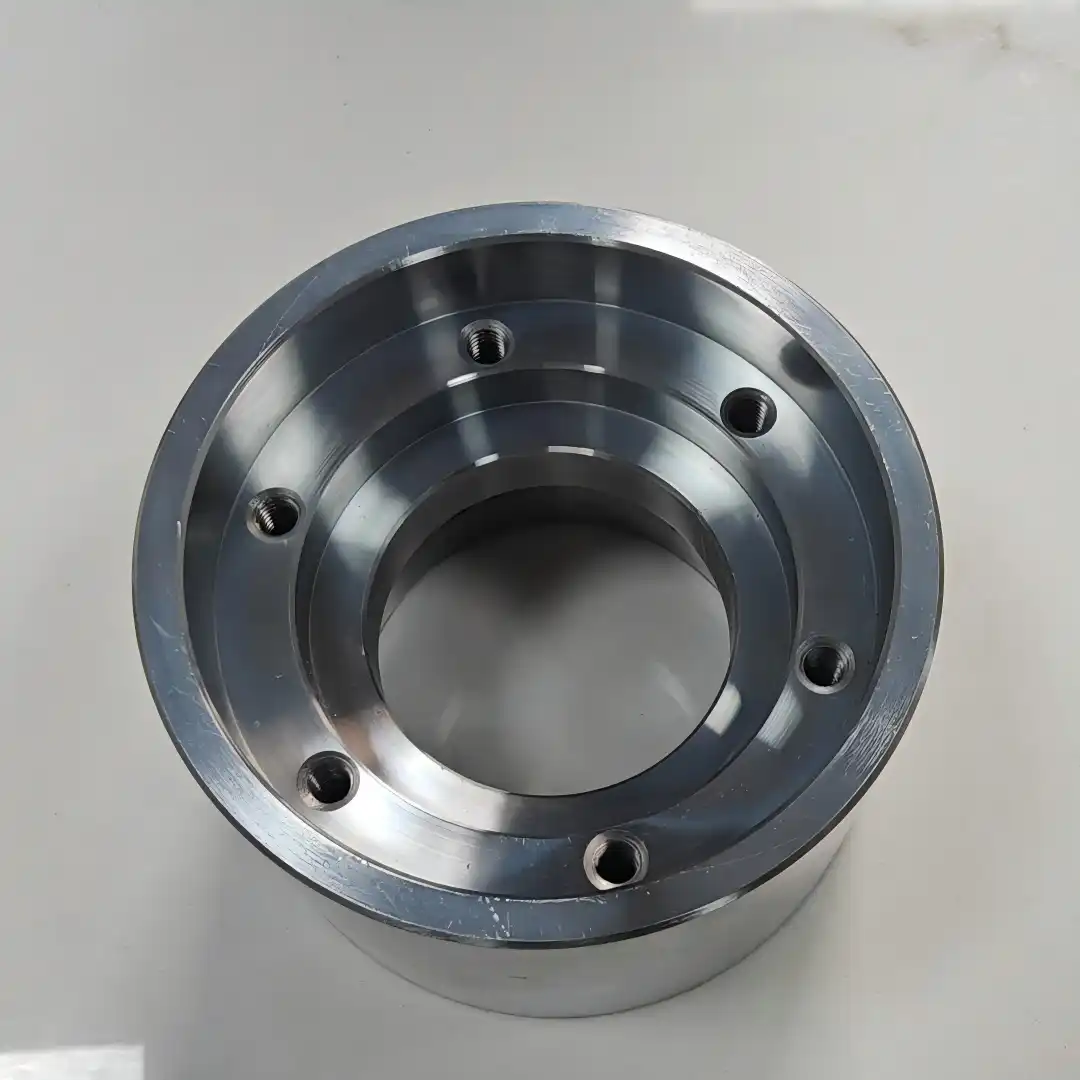
Send the part with the alloy grade and the tolerances that matter, and request a titanium machining quote with the tooling strategy stated.
FAQ
Can titanium be CNC machined?
Yes, routinely, with parameters matched to its behaviour: sharp positive-rake carbide, lower surface speeds, generous feed per tooth rather than rubbing, and high-volume coolant aimed at the cutting edge.
Why is titanium difficult to machine?
It conducts heat poorly, so cutting heat concentrates in the tool; it work-hardens, so a rubbing pass makes the next one harder; and it is chemically reactive at temperature, tending to weld to the tool edge. The result is tool failure rather than a bad surface.
Is machining titanium expensive?
Yes, for structural reasons: costly material, lower cutting speeds so the part occupies the machine longer, higher tool consumption, and expensive scrap if an error occurs late. The relevant comparison is usually against a heavier or shorter-lived alternative rather than another supplier.