

Explore Injection Molding Assembly & Process Control Guides
Compare two hypothetical seal programs after sample review. Both requested the same nominal hardness. One specified only a CAD model; the other also controlled cure state, flash location, compression testing, and batch records. The second specification gives a buyer a basis for accepting repeat parts. The first leaves the supplier guessing what a successful sample must prove.
What makes LSR different from thermoplastic molding
Liquid silicone rubber molding requires control of material metering, mixing, cavity filling, and heat-driven cure rather than thermoplastic cooling alone. Buyers should ask how the proposed grade and tool produce repeatable functional properties, what defines the acceptable process window, and which records support release after trimming, post-cure, and inspection.
Dow describes its LSR materials as two-part systems that are mixed and heat-cured. That processing distinction affects what a quotation needs to include: material delivery and cure control are part of the manufacturing scope, not optional checks added after the shape has been made.
For the hypothetical programs, hardness was a shared input, but it did not define sealing performance. The useful retrospective question is what evidence was missing from the weaker specification. Start with the required function, then ask the LSR molding review to connect each critical requirement to a controllable process or inspection step.
Process window questions for quotes
Ask how the supplier established the operating range, not merely which nominal settings it intends to use. A process window needs acceptance criteria for the resulting parts. The same recorded temperature does not by itself demonstrate acceptable filling, cure, or release across all cavities.
WACKER’s material and processing guidelines discuss metering, mixing, injection, cure, demolding, and troubleshooting as related stages. Use the selected grade’s documentation to define the starting conditions, then request evidence from the actual tool and part. Do not substitute a generic temperature table for that work.
In the better-defined hypothetical program, sample review would ask what happens near the proposed limits and after a production interruption. Agree who approves adjustments, how startup output is handled, and which variables are recorded. A set of attractive first samples is weaker evidence than a documented relationship between controlled inputs and the functional acceptance test.
Flash and cull management
Define where flash or gate remnants are unacceptable and how any permitted excess material is removed. A thin edge on a decorative cover may be a cosmetic issue; on a sealing lip, it can interfere with the contact geometry. The drawing should distinguish these areas before the tooling proposal is accepted.
Ask the supplier to identify parting lines, vents, gate locations, and any runner or cull removal operation included in the quote. Review the condition of the surface after trimming, not simply whether the excess material has disappeared. A cut or local tear may create a new defect.
For the hypothetical seal, the second program would inspect the functional edge after the complete finishing sequence. The first program’s CAD-only approval could leave that edge subject to an undefined visual judgment. Include a representative cross-section or annotated photograph to communicate the intended boundary. Require a revised approval if a tooling or trimming change moves that boundary.
Medical vs industrial documentation asks
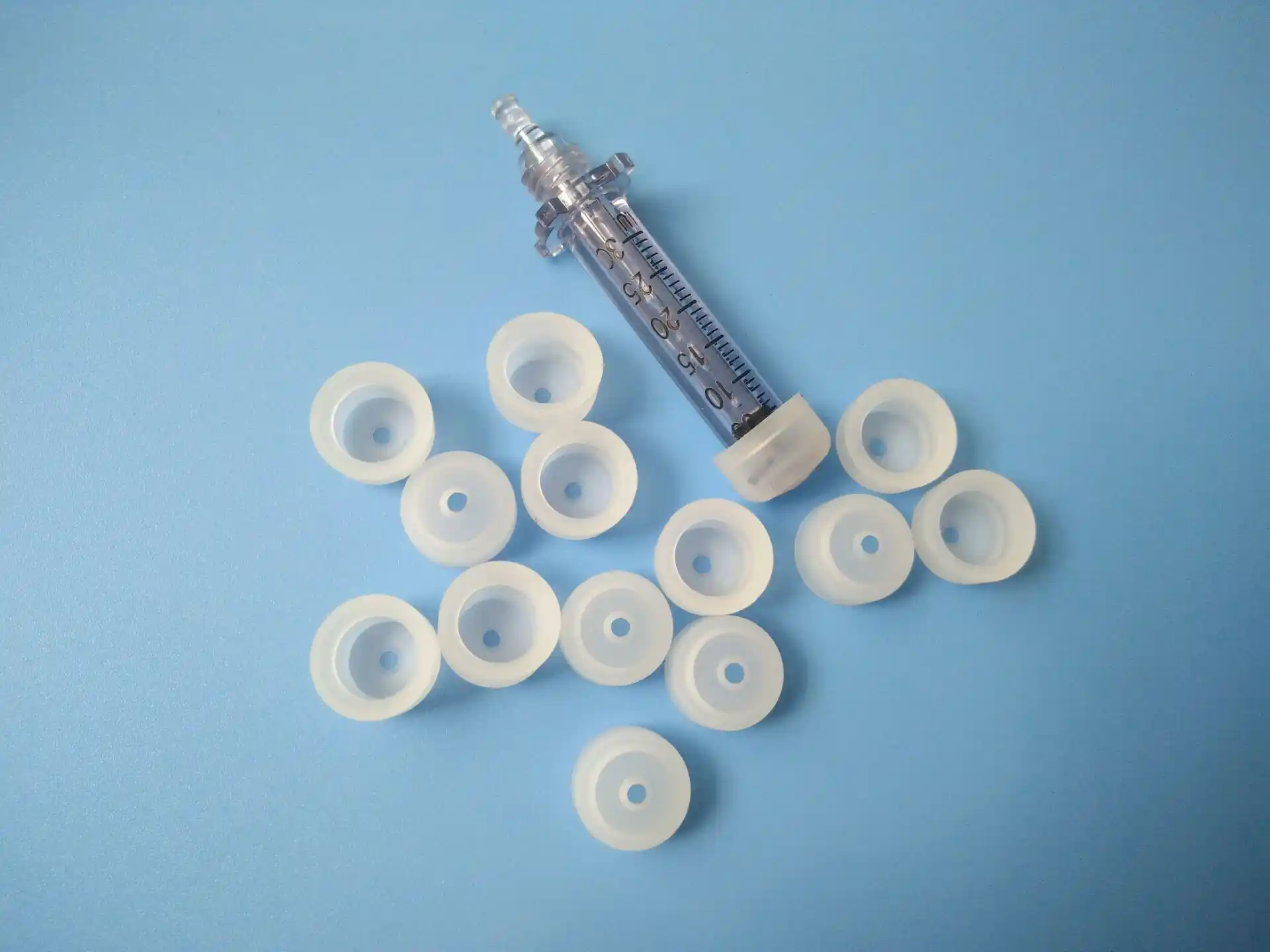
Documentation should follow intended use and the component’s role. An industrial dust cover and a patient-contact component may share a broad material description while requiring different evidence. Ask what exact grade, manufacturing state, contact conditions, and finished-device assessment the project requires; avoid a blanket request for a generic medical certificate.
The FDA biocompatibility resource center provides a route into assessment concepts and documentation. It does not make a resin description or a supplier service page a substitute for the device manufacturer’s evaluation. Define the relevant market and intended contact before specifying the evidence package.
For both industrial and medical programs, identify material lot traceability, change notification, inspection records, and any processing steps that affect the delivered state. A reference to medical manufacturing applications provides context for the inquiry, but project-specific requirements still need explicit review. Do not imply that 6CProto holds an unverified certification or product authorization.
Table: LSR vs TPE overmold paths
Compare LSR and TPE against the actual environment, interface, and process restrictions. A lower-temperature substrate, required surface feel, expected compression behavior, and adhesion needs can change the choice. Neither route wins solely because one sample has the requested hardness.
Avient’s TPE overmolding guidance identifies factors such as substrate condition and processing that affect its systems. A TPE overmold therefore also needs grade-specific validation. Use comparable functional tests rather than treating a change of polymer family as a shortcut around interface development.
| Decision | LSR route | TPE overmold route | Buyer evidence |
|---|---|---|---|
| Part formation | Mixing and cure must be controlled | Melt processing and cooling must be controlled | Grade-specific process proposal |
| Substrate compatibility | Review cure exposure and adhesion method | Review melt exposure and compatible grade | Representative interface trial |
| Delivered state | Confirm any post-cure and trimming | Confirm conditioning and finishing | Samples after the complete sequence |
| Functional acceptance | Test the required sealing or other behavior | Use the same application requirement | Agreed protocol, limits, and records |
Prototype LSR options
A prototype route should close a named uncertainty: geometry, sealing contact, demolding, material behavior, or production feasibility. A cast silicone mock-up can answer some geometry questions while leaving injection filling and production cure unresolved. State that boundary in the sample plan.
Ask which prototype tool features represent the intended production method and which are simplified. A one-cavity trial may show local geometry behavior without proving cavity-to-cavity consistency in a later multi-cavity tool. Preserve the distinction when approving scale-up.
Post-cure requirements are also grade-specific. Shin-Etsu identifies particular LIMS series designed without post-cure. That is evidence that the requirement depends on the selected material system; it is not a general exemption for all LSR parts. Confirm the delivered state against the actual grade, application, and required properties before using prototype results as the acceptance baseline.
RFQ checklist
Translate the hypothetical program comparison into an RFQ with clear release gates. Provide the controlled CAD, drawing, exact or candidate material, intended environment, functional test, cosmetic restrictions, and required quantity. If a requirement remains open, identify its owner and the evidence needed to close it.
Ask the quotation to cover tool design, sampling, trimming, any required post-cure, inspection, and documentation separately where those activities affect scope. Tooling lead time depends on the proposed work, design readiness, trials, and approval requirements; it should be confirmed in the quotation rather than inferred from an unrelated project.
For the broader injection molding program, keep material and process changes traceable across sample and production releases. Approve a representative finished sample and the acceptance method together. The lesson from the comparison is practical: a reproducible specification gives later batches a measurable target, while a nominal hardness and CAD model leave too many decisions unresolved.
FAQ
These questions address specification details that should be settled before sample approval.
Can a softer sample be approved by touch alone?
Touch can contribute to an appearance or handling review, but it does not replace the specified hardness or functional test. Geometry, thickness, and support influence perceived softness. Use the agreed specimen and method for measured properties, and retain a controlled sample where tactile approval matters. Record whether the approval concerns user feel, material data, or actual part performance.
Does a no-post-cure grade remove every downstream validation step?
No. It addresses a material-system processing requirement under the relevant conditions. The part still needs the specified dimensional, functional, cleanliness, and documentation checks. Confirm that the grade and delivered manufacturing state meet the intended application. A change to pigment, geometry, processing, or use conditions may require additional review even when post-cure is not part of the approved route.
Should a production interruption trigger new sample approval?
The response should follow an agreed restart procedure and the significance of the interruption. Identify what must be checked before output returns to accepted production, including relevant material, tool, and process conditions. A full customer reapproval is not automatically necessary for every stop, but the supplier should not rely on an undefined restart practice when critical properties depend on controlled processing.
Request a 6CProto LSR quote with the functional test and documentation requirements. Ask which process-window questions must be resolved before tooling and sample approval.