

A larger batch does not necessarily make tooling the better choice when the design is still changing. Between 50 and 500 parts, fixed work, repeated operations, material identity, and revision exposure can outweigh the quantity label. Compare the manufacturing ladder as a set of tradeoffs, then select the route that delivers the required evidence and accepted parts.
Volume and revision risk
Choose low-volume manufacturing by matching geometry, material, quantity, revision exposure, finish, inspection, and intended use to complete process routes. Compare CNC, sheet fabrication, printing, casting, and soft tooling on the same accepted output. Quantity alone cannot set a universal crossover; preserve the approved baseline and evaluate what changes when the route or design changes.
Start with the stability of the interfaces and the decisions still open. A fixed external envelope with an evolving clip can create different tooling exposure from a fully approved bracket. Identify whether demand is committed, forecast, split across variants, or dependent on a development result.
ISO 10007’s public description identifies configuration-management guidance. The practical task here is to connect each quote, tool, sample, and inspection record to a controlled revision. A higher quantity does not compensate for uncertainty about which design will be ordered.
Ask how a change affects stock, programs, fixtures, masters, molds, finished inventory, and existing acceptance evidence. Separate work that can be reused from work that must be replaced or reviewed. Do not assume that every process accommodates revisions at the same cost or with the same technical consequences.
Unit economics without fake prices
Use supplier quotations to populate a transparent model. For a simplified route i, write total cost Tᵢ = Fᵢ + N × vᵢ, where Fᵢ is the included fixed work, N is accepted quantity, and vᵢ is the included recurring cost per accepted part. Define exactly what those terms contain.
For two routes with equivalent scope and v₁ greater than v₂, the simplified crossover is N* = (F₂ − F₁)/(v₁ − v₂). The expression is useful only when the inputs and assumptions apply over the compared quantities. It supplies no price, universal batch threshold, or guarantee that a real quote behaves linearly.
Include finishing, hardware, inspection, setup repetition, expected yield treatment, and required records consistently. Evaluate change and reapproval scenarios separately where they are uncertain rather than hiding an invented allowance in the unit price. If the routes produce different materials or performance, resolve equivalence before treating the calculation as a selection result.
NIST’s 2014 cost-effectiveness study provides historical analysis of manufacturing economics. It supports examining the cost basis, not importing old equipment costs or crossover quantities into a current 6CProto quote. Obtain actual scoped inputs for the present design.
Table: process ladder
The process ladder is not a mandatory sequence. Select one route or a defined combination based on the part’s constraints and the purpose of the batch.
| Route | Reason to investigate | Fixed-work question | Requirement to preserve |
|---|---|---|---|
| CNC | Available stock material and accessible features | Programs, fixtures and setup reuse | Material condition and final interfaces |
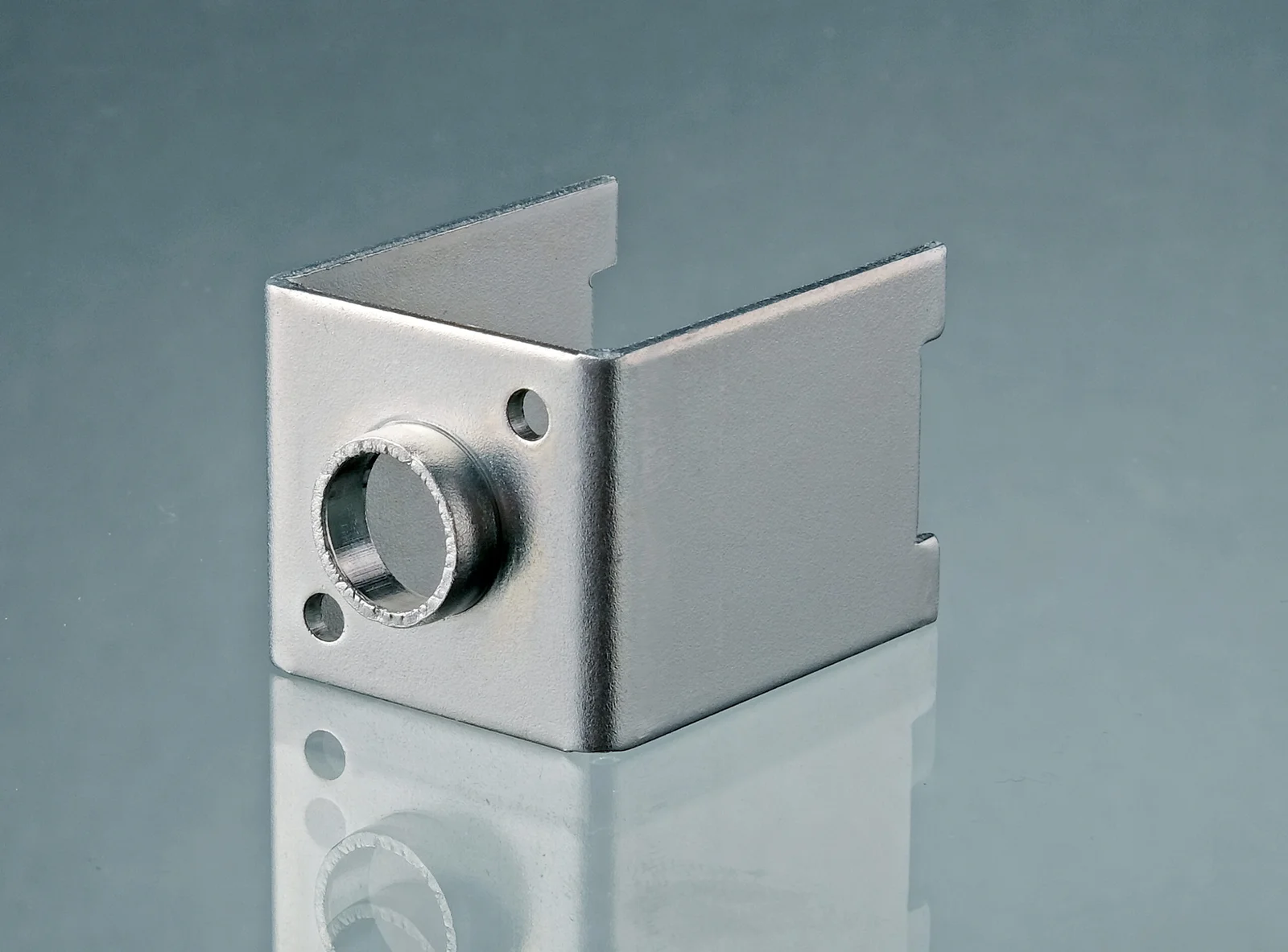
| Sheet fabrication | Suitable constant-thickness panels or brackets | Cutting, forming and joining preparation | Bends, assembly geometry and finish |
| Printing | Complex geometry or controlled development work | Build preparation and downstream route | Actual material, orientation and final state |
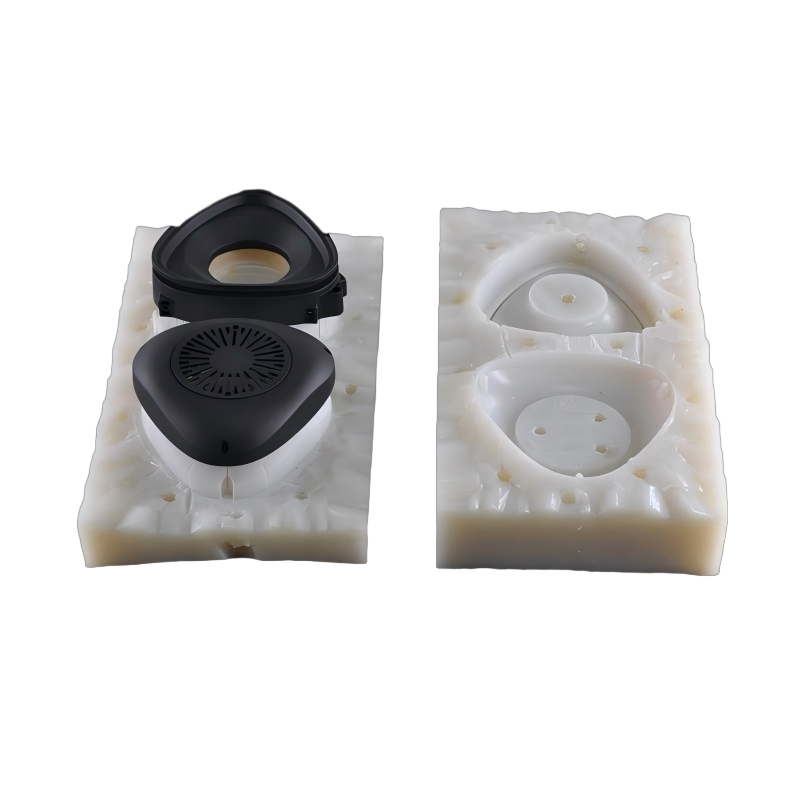
| Urethane casting | Repeated parts from an approved master | Master, molds and replacement assumptions | Cast formulation and permitted surrogate limits |
| Soft-tool molding | Defined molded geometry and resin | Tool development, changes and maintenance | Representativeness of the approved process |
Formlabs’ manufacturing guide discusses several low-volume options. Use such process overviews to build a shortlist, then verify the proposed material, geometry, and complete route. General manufacturer examples do not establish the economics or capability of another supplier.
Autodesk’s sheet-metal rules reference illustrates thickness, bend, relief, and unfolding inputs. A change from machined solid to formed sheet therefore needs a geometry and interface review rather than a simple process-name substitution.
Quality plans by volume
Set the quality plan from the requirements and risks, then adapt its execution to the batch and route. Identify critical characteristics, final condition, inspection method, sampling or coverage, traceability, and required records. Agree who reviews exceptions and approves the output.
ISO 10005’s public scope gives guidance for quality plans across different outputs and organization sizes. It does not prescribe a universal sample count for a 50-part or 500-part order. Select applicable requirements and a justified inspection approach for the actual program.
Review how evidence transfers between batches. New tooling, material, cavities, finish, or manufacturing route can affect earlier results. A low quantity does not remove an important functional requirement, and an increased quantity does not by itself demonstrate a stable process.
When to dual-path
Dual-path when it answers a defined technical or supply question. One route might support early assembly decisions while another develops a representative production process. Alternatively, two approved routes may provide supply flexibility if the required output and permitted differences are understood.
Define common interfaces, route-specific materials and properties, acceptance, and revision ownership. Use a comparison matrix to state what each trial demonstrates. Do not merge evidence from dissimilar parts into an unsupported claim that both routes satisfy every requirement.
Compare the cost of running both paths with the uncertainty they reduce. Include duplicate programming, tooling, testing, and records where required. Keep the decision based on a defined benefit rather than treating two suppliers or processes as automatic insurance.
FAQ
These questions address specification details that should be settled before sample approval.
Does an order of 500 parts automatically justify a mold?
No. Geometry, material, design stability, tooling scope, recurring work, inspection, and future demand affect the decision. Compare complete quotations for the same accepted output and evaluate change exposure. A quantity band alone cannot select the route.
Can the lowest unit price identify the cheapest program?
No. Include fixed work, secondary operations, quality activities, changes, requalification, and other agreed scope. Compare the total for the required quantity and revision. A quoted unit line may exclude work that another provider includes.
Can a cast or printed surrogate approve the production material?
Not automatically. Identify the actual material and processing differences and determine which test results remain representative. Approve the route for a defined purpose rather than treating a similar appearance or a material-family label as equivalence.
Does dual-path sourcing mean both routes are interchangeable?
No. Define which features and properties must be common, what each route proves, and how changes are controlled. Qualify the actual delivered configurations and document permitted differences. Two routes can serve one program while retaining different evidence boundaries.
Related process selection notes
Before release, reconcile the quotation baseline, quantity assumptions, fixed and recurring scope, quality plan, and change conditions. Select the route whose complete proposal meets the intended use and acceptance. Resolve exceptions and record the approved configuration.
At reorder, reassess the remaining fixed work and any changed assumptions. A repeat order can differ from a first build, but that difference should be visible in the scope. Preserve the evidence needed to know which programs, fixtures, tools, materials, and results remain applicable.
Internal links and next steps
Send the model, drawing, quantities and variants, revision outlook, material requirements, finish, test purpose, and record needs. Review the program through low-volume manufacturing and compare CNC, sheet fabrication, urethane casting, and low-volume molding where appropriate.
Request a process comparison with fixed work, recurring scope, and revision assumptions separated. Use the accepted-part requirements as the common basis.