

Four inputs organize an injection molding RFQ package: controlled CAD, a defined resin and color route, cosmetic acceptance, and the evidence required for release. Engineers can use them as a decision path. Where an input remains preliminary, label the assumption and identify what must be resolved before the quotation becomes an instruction to build tooling.
Files and revision control
Prepare an injection molding RFQ package with controlled models and drawings, quantities, resin and color, critical dimensions, cosmetic references, tooling assumptions, and defined acceptance records. Identify preliminary decisions and document precedence. Request a response against that baseline, resolve exceptions, and approve changes before tooling release rather than allowing missing information to become a manufacturing assumption.
Start by deciding whether the request is for feasibility, an estimate, prototype tooling, or a released production proposal. Identify part numbers, drawing and model revisions, assembly context, and the authority for changes. Keep annotated proposals separate from approved manufacturing files.
NIST’s STEP viewer and analyzer description distinguishes geometry, product-manufacturing information, and file checks. Confirm what the export actually contains. A model that opens correctly may still omit a critical annotation, and a file check does not resolve conflicts with a drawing.
Provide mating components or an interface envelope when they explain a requirement. Mark functionally fixed features and areas where changes can be proposed. The supplier can then evaluate draft, walls, access, parting, gates, and ejection against known design intent.
Resin and color
If the material is approved, specify the manufacturer and grade or the controlled material specification, including reinforcement, additives, and relevant restrictions. State whether alternatives are permitted and who approves them. If selection is still open, request clearly separated alternatives rather than an unspecified substitute.
Define color as part of the material and processing route. Identify precolored resin or an approved colorant system, the reference, and the required evidence. Include any restrictions on reprocessed material and lot traceability where the application requires them. Resolve the final combination before treating the tool and process assumptions as fixed.
BASF’s Ultradur processing brochure provides a product-family example of drying, reprocessing, and compatible coloring considerations. Its PBT guidance is not a universal recipe for other polymers. Obtain the selected resin supplier’s current grade-specific instructions and confirm the actual approved formulation.
A family label such as ABS or nylon cannot establish all molded-part properties. Record the material condition and relevant test requirements. Avoid extending a result from another grade, color system, or processing history to the proposed component without review.
Cosmetic standards
Decide which surfaces the user sees or touches and map them on the drawing. Define the approved physical reference, texture, gloss where relevant, viewing conditions, and permitted local defects. Identify surfaces where gate vestiges, parting lines, ejector marks, or handling damage need a specific disposition.
ASTM D1729’s public scope addresses controlled visual color appraisal of diffusely illuminated opaque materials. Review its relevance to the intended method. The public summary does not establish compliance or define a universal viewing distance for every molded surface.
Keep color, texture, dimensional fit, and local marks separately identifiable. A flat color chip can establish only part of the intended appearance. Request representative geometry where recesses, flow patterns, transitions, or neighboring parts influence the acceptance decision.
State how photographs will be used: design intent, defect location, review record, or a specifically agreed acceptance method. Retain the approved reference and its identification so that a later email image does not silently redefine the standard.
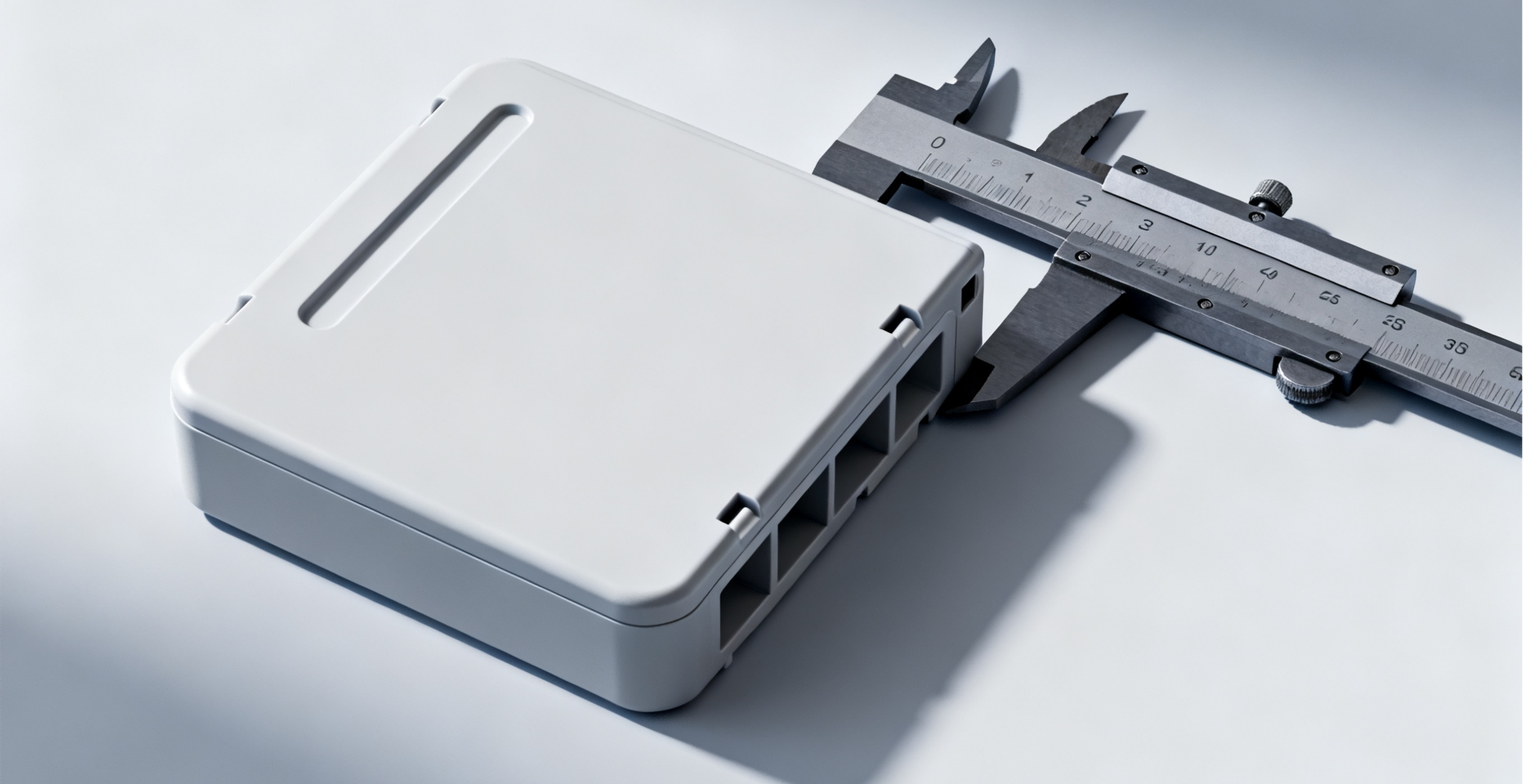
Validation scope lines
Separate dimensional sample inspection, material checks, cosmetic review, assembly trials, process evaluation, and any application-specific validation. List each required activity, test article, condition, acceptance, report, and approval authority. Ask what the supplier includes and which work remains with the customer or another party.
ISO 10005’s public scope gives guidance for developing and revising quality plans. Use a project-specific plan to define the actual deliverables. A generic report title or a reference to quality management does not prove that every required activity is included.
Autodesk’s orientation-related warpage guidance illustrates why molding conditions, gating, and wall geometry can matter to the result. Record the relevant process configuration when assessing samples. An attractive first shot or a favorable simulation cannot replace the required final-part evidence.
Confirm whether the quote covers tool changes, sample rounds, cavity identification, required records, and the handling of nonconforming results. Do not infer a fixed number of included trials, a capability level, or an approval from an unspecified sampling statement.
Table: RFQ contents
Use this package checklist to close the decision path. Mark open items with an owner and release condition instead of allowing them to disappear into general notes.
| Package item | Information to supply | Response to request |
|---|---|---|
| Design | Models, drawings, revisions and precedence | File review and identified conflicts |
| Demand | Quantities, variants and reorder assumptions | Tooling and production scope by scenario |
| Material | Actual grade, color route and restrictions | Supported material and unresolved substitutions |
| Cosmetics | Zones, master, texture and defect criteria | Gate, parting, ejection and sample-review proposal |
| Validation | Tests, records, conditions and acceptance | Included work, exclusions and approval points |
| Tooling | Required ownership, storage and maintenance terms | Defined tool configuration and change conditions |
Compare complete quotations against the same package. Identify changes in material, cavity, tool construction, secondary operations, and records before comparing the commercial response. Those differences can change what the delivered parts establish.
FAQ
These questions address specification details that should be settled before sample approval.
Is a STEP file enough for an injection molding quote?
It may support an initial geometry review, but the quotation also needs the controlled revision, material, quantity, critical requirements, appearance, and acceptance scope. Confirm which annotations the export contains and resolve drawing precedence and open assumptions before tooling release.
Can I specify a generic resin family and decide the grade later?
That can be an explicitly preliminary quotation assumption, but it is not a final material release. The actual grade, reinforcement, additives, and color route can affect processing, properties, and tool decisions. Resolve the material baseline and review affected assumptions before committing the tool.
Does a color code define all cosmetic acceptance?
No. Define the physical reference, texture, gloss where relevant, viewing conditions, cosmetic zones, and permitted defects. Identify gate, parting, and ejector locations requiring review. A color name or number alone does not establish the complete surface requirement.
Does first-sample approval complete every validation requirement?
No. State what the sample and its records demonstrate and which process, material, functional, or customer requirements remain open. Define the applicable validation and acceptance work explicitly. A passing sample should not be presented as broader evidence than the actual evaluation supports.
Related process selection notes
If design or resin remains uncertain, select an early build that answers the next question without overstating equivalence to production. Define what may change and which evidence must be repeated. Prototype tooling can be useful while retaining a different configuration from the eventual production route.
When the package is ready, resolve supplier exceptions through the responsible design authority and issue a controlled release. Keep the approved geometry, resin, color, tool, processing evidence, and acceptance records linked for repeat orders. A later change should trigger review of affected assumptions and results.
Internal links and next steps
Send the package through the injection-molding discussion and confirm the proposed plastic molding route. Where development evidence is still needed, review prototype tooling against the stated test purpose.
Request an injection molding quote with the controlled package and open-decision list attached. Confirm the supported material, tooling scope, sample review, and records before release.