

Silver is the better conductor, so a contact designer asks why anyone pays for gold — then the silver contact tarnishes in a humid environment and the low-voltage circuit fails at the oxide. Contact plating is not a material-purity contest; it is a surface-behavior decision. Silver conducts superbly but tarnishes and can migrate; gold resists tarnish and carries low, stable contact resistance but costs more and wears differently. The right choice depends on the voltage, the current, the environment, the cycle count, and the cost — and the specification should be written as a contact requirement, not as a metal preference.
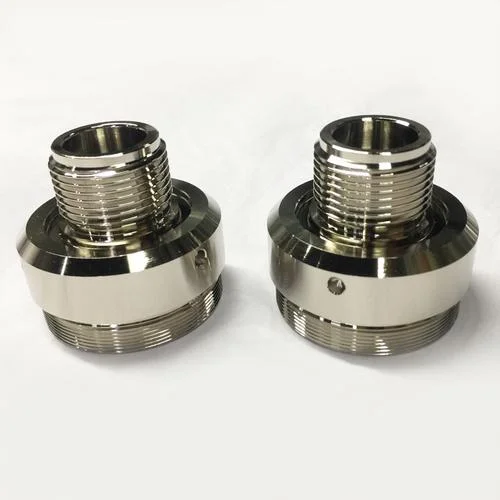
Conductivity vs corrosion: silver, gold, and the contact surface
Silver has the highest electrical conductivity of the common metals, which makes it the economical choice for high-current contacts where bulk conductivity matters. Its weakness is the surface: silver tarnishes in sulfur and humid environments, and the tarnish film raises contact resistance at low voltages where the film is not broken down by the signal. Gold does not tarnish, so its contact resistance stays low and stable in low-voltage, low-current circuits, which is why it appears in signal contacts and connectors. The choice is between silver’s bulk conductivity and gold’s surface stability — and the application decides which property the contact needs.
Contact resistance is a surface phenomenon: two silver contacts under low voltage can fail at the tarnish film while a gold contact of lower bulk conductivity passes the same signal. The contact requirement — voltage, current, environment, and cycles — is what the plating decision must serve.
When gold plating is worth it: cycles, environment, and low voltage
Gold earns its cost when the contact is low-voltage, low-current, frequently cycled, or exposed to an aggressive environment. Signal contacts in connectors, test probes, and instrumentation are the classic cases: the circuit cannot break through tarnish, and the contact must stay stable across thousands of cycles. Gold also suits contacts that must not corrode in humid or sulfurous air. Where the current is high enough to break through surface films, or the environment is benign and the contact is rarely cycled, silver can serve at lower cost. The threshold is not a fixed number; it is the combination of voltage, current, environment, and cycle life in the contact specification.
Gold is also chosen for its wear behavior in sliding contacts when the plating system is designed for it; a hard gold or a gold with the right underplate can survive many cycles, while a soft pure gold wears quickly. The wear requirement is part of the gold decision.
Underplates and barrier layers for copper alloys
A gold or silver top layer is rarely plated directly onto a copper alloy. The base metal’s copper can diffuse through the coating and reach the surface, where it corrodes and raises contact resistance, so a barrier underplate — commonly nickel — is plated between the base and the top layer. The underplate also provides a harder foundation for wear and can level the surface. The plating system is the combination of the underplate and the top layer, and the specification should name both: the nickel thickness and the gold or silver thickness, because a top layer without the right underplate fails by diffusion even when the top layer looks correct.
The underplate also affects solderability and the contact’s mechanical behavior, and the system should be validated on the actual contact geometry rather than assumed from a plating chart.
Thickness and selective plating choices
Coating thickness sets the cost and the life of the contact. Thicker gold lasts longer in wear and resists diffusion longer, but gold is expensive, so the thickness is often specified only where the contact actually rubs. Selective plating places the precious metal only on the contact area, cutting cost dramatically on parts with a large nonfunctional surface. The specification should define the plated area, the thickness at the contact, and the method of measurement, because a thickness measured on a flat area does not prove the contact surface is plated to the same value. The drawing should mark the contact zone when the precious metal is selective.
The thickness range should come from the application requirement — the cycle count and the wear mechanism — and be confirmed with the plater’s process capability. A contact plated too thin fails early; one plated too thick pays for metal that never wears.
Testing contact resistance and wear
The plating specification should carry the test that proves the contact works: a contact-resistance measurement at the service voltage and current, a wear or cycle test where the contact slides or mates repeatedly, and an environmental test where tarnish or corrosion is a risk. Contact resistance should be measured with the method and the force the application uses, because the reading depends on both. The wear test should use the mating contact material and the real geometry, because a flat coupon result does not predict a connector’s life. The tests convert the plating choice from a material decision into a measured performance, and they are the record that the contact will work in the product.
The electroplating service page covers the process capability; the contact requirements above are what the specification must carry. When the voltage, current, environment, and cycles are on the drawing, the plater can quote the system — underplate, top layer, and selective area — that meets them.
How a contact requirement becomes a plating spec
A connector example shows the decision in practice. A signal connector in a humid instrument carries millivolt signals through thousands of mating cycles, and the contact specification is written from those three facts: low voltage means the surface film cannot be relied on to break through, humidity means tarnish is a risk, and thousands of cycles means the plating must survive wear. The specification selects gold over the contact area, with a nickel underplate as the barrier, and defines the gold thickness from the cycle requirement and the contact force. A second connector on the same product, carrying power at higher voltage with occasional mating, uses silver-plated contacts because the voltage and the current handle the surface and the cost saving is real. The same product, two contact systems, chosen from the requirements — that is the gold-versus-silver decision done properly. The specification carries the voltage, the current, the environment, the cycles, and the test, and the plater quotes the system that meets them.
The test plan is the second half of the specification. Contact resistance is measured with the application’s force and method; the wear or cycle test uses the real mating contact and the real geometry; and the environmental test covers the humidity or the sulfur exposure that drives tarnish. The results decide whether the plating system — the underplate, the top layer, and the selective area — meets the requirement, and the record travels with the part. When the contact fails in testing, the record shows which element failed: the top layer wearing through, the underplate diffusing, or the surface tarnishing. The fix targets that element, and the next sample validates it. That is how contact plating is engineered: from the circuit and the environment to the system and the test, not from a preference for a precious metal.
The contact test that settles the choice is the one that runs the real circuit at the real condition. A contact-resistance measurement at the service voltage and current, repeated after environmental exposure, shows whether the tarnish or the plating wear will break the circuit. The test should use the production contact geometry, the production mating surface, and the production force, because a flat coupon with a different force will not predict the connector. If the test shows the silver contact failing after exposure, the gold system is justified; if the silver contact passes the exposure and the cycle test, the gold premium is unnecessary. The test result is the evidence the specification needs, and it should be recorded with the plating system, the environment, and the cycle count. When the choice is settled by the test, the contact design is an engineering decision with a record — and the next connector starts from the data instead of from the debate.
The specification should also state what is not plated. Masked areas, solder points, and surfaces that must stay bare for grounding are as important as the plated contact, because an over-plated part can fail soldering or grounding just as an under-plated part fails the contact. The drawing marks the plated zone and the bare zones, and the inspection verifies both. Selective plating makes the plated zone explicit, and the masking plan makes the bare zones explicit; together they turn the plating into a controlled feature with a defined boundary. This boundary discipline is what keeps a contact part functional after finishing, and it is easy to overlook when the specification focuses on the precious metal.

If you are specifying plating for an electrical contact and want the gold-versus-silver decision reviewed against your circuit and environment, the 6CProto surface finishing team can work from the contact requirement to the plating system and the test plan.