

A custom extrusion project usually begins with a sketch of a section and no die in existence. What happens between that sketch and a delivery of cut lengths is mostly a sequencing exercise: the section is agreed, the die is made, the first run is measured, and the profile is corrected before the order is cut to length.
From section idea to die
The process starts by formalising the cross-section into a drawing that can be built. That means settling wall thickness, resolving any feature that cannot be formed by a die, and choosing a material whose flow and shrinkage suit the shape. The die is then cut from that drawing, with its dimensions compensating for the shrink that will occur as the profile cools — which is why a die is specific to the material, not only to the shape.
| Stage | What is decided | What can still change cheaply |
|---|---|---|
| Section review | Wall thickness, features, material | Everything: no tooling exists yet |
| Die design | Flow path, cooling, shrink compensation | Minor adjustments before cutting |
| First run | Actual dimensions and profile behaviour | Die correction if the tolerance was built in |
| Production run | Lengths, holes and finishing | Cut length and secondary operations only |
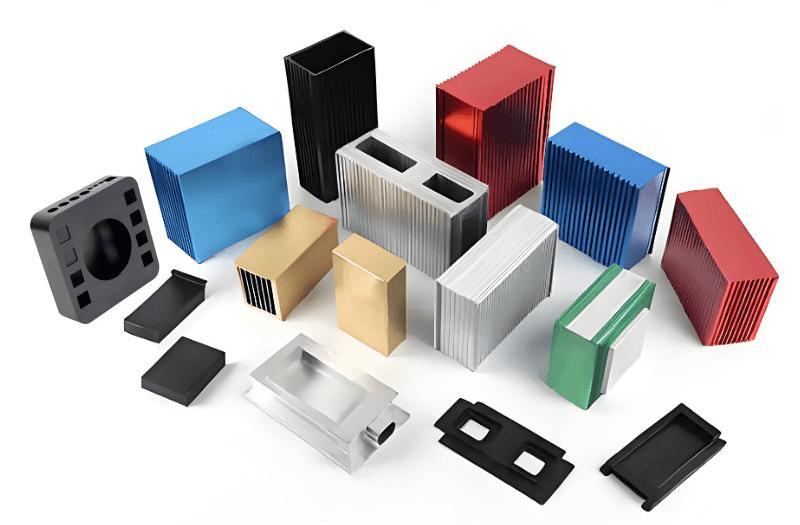
What a custom extrusion enquiry should contain
Five items make an enquiry answerable. The section drawing, even if it is a sketch with dimensions, showing the features and the wall thicknesses. The material or the properties the profile must have. The lengths required and the quantity, since both affect how the die cost is amortised. The dimensions that mate with other components, so tolerance can be concentrated where it matters. And the function of each feature, which takes a sentence and prevents the die being designed around a misreading.
Two additional items improve the answer considerably. A sample or drawing of the component that fits into any groove or channel removes ambiguity about how the profile must interface, and a statement of the environment the profile will see — sunlight, chemicals, heat, repeated flexing — guides the material choice. Where the design is not yet fixed, saying so is better than presenting a sketch as final, because a die review can then be scheduled before tooling is cut.
When extrusion is the right process
When the part is long, constant and needed in quantity.
Extrusion wins where the geometry repeats along a length: frames, trim, channels, ducts, rails and seals. It is economical because the die is the only tooling and the process runs continuously, so the per-metre cost falls as the run lengthens. It also produces features that would be expensive to machine along a long part, since every groove and rib is free once it is in the die.
It loses where the part varies along its length, where the quantity is too small to justify a die, or where the tolerance required is tighter than the process can hold. In those cases the alternatives are machining a profile from solid, molding it if the part is short and the quantity supports a tool, or printing it for a one-off. Making that comparison explicitly at the start is what prevents a die being cut for a part that should have been machined.
How a custom profile is priced
Two numbers make up the price. The die is a one-time cost that depends on the complexity of the section, its size and the tolerance required. The production cost is per metre or per cut length, and it reflects the material, the running speed and any secondary operations such as cutting, drilling or notching. Because the die is charged once, the effective cost per part depends heavily on how much profile is ordered against it.
That structure creates a useful planning question: whether to order more length than the immediate requirement to lower the effective die cost per part, provided the material and the design are stable enough that the extra lengths will still be usable. Where the design is likely to change, ordering the minimum is the safer choice, because length in stock does not survive a change of section. Material references for cost and property trade-offs are published by ASM International.
Common mistakes that cost a second die
The most expensive errors are geometric. A section with widely varying wall thicknesses will not cool evenly and will bow, and correcting it may mean a new die rather than an adjustment. Very sharp internal corners create flow problems and stress concentrations. A groove designed without reference to the component it must hold may be manufacturable but functionally wrong. And a section that is heavily asymmetric tends to twist, which the die can compensate for only if the orientation of use is known.
The second category of error is documentary: dimensions that matter left untoleranced, mating features described rather than dimensioned, or the material changed after the die was cut. Each of those produces a profile that is correct to its drawing and unusable in the assembly. Drawing conventions follow ASME standards, coating and surface terminology follows ASTM Committee B08, inspection practice is described by the NIST Manufacturing Extension Partnership, and process obligations are set out by the US EPA. Where a metallic profile is required instead, that route is described on the aluminium materials page.
Send the section sketch with the mating features and the material you have in mind, and request a custom extrusion quote with the die cost itemised.
FAQ
What should a custom extrusion enquiry contain?
A section drawing with wall thicknesses, the material or its required properties, the lengths and quantity, the dimensions that mate with other components, and the function of each feature. Adding a sample of any mating component removes ambiguity.
When is extrusion the right process for a profile?
When the part is long, constant and needed in quantity. Extrusion loses to machining, molding or printing where the geometry varies along the length, the quantity is too small for a die, or the tolerance is tighter than the process can hold.
How is a custom profile priced?
A one-time die cost based on section complexity, size and tolerance, plus a per-metre or per-length production cost covering material, running speed and secondary operations. The effective cost per part depends on how much profile is ordered against the die.