

Two individually acceptable panels can create an unacceptable seam when assembled. Their edge profiles, finish buildup, color, and reflected light all meet at that joint. Consumer electronics post-processing therefore needs an implementation path from drawing requirements to finish selection, controlled assembly, appearance approval, and protected delivery.
Cosmetic stacks in assembly
Plan consumer electronics post-processing around final assembly: map cosmetic zones, gaps, flushness, contacts, finish allowances, handling, and acceptance conditions. Approve the complete finish route and representative assembled samples. Inspect dimensions and appearance separately, then confirm their interaction; a passing loose-part measurement or attractive color sample cannot establish every requirement of the delivered device.
First identify the interfaces the user will see or touch. Mark the lid seam, display opening, connector cutouts, buttons, fastener seats, and adjacent panels as applicable. State which dimensions apply after all finishing and which assembled relationships need verification.
Chem Processing’s anodize-buildup guidance distinguishes total anodic thickness from outward growth. Confirm the actual allowance and preparation with the processor. Avoid copying a planning fraction into every feature without considering variation, masking, and the final assembly.
ASME’s Y14.5 overview describes a language for geometric requirements. Use the drawing’s chosen convention to communicate the controlling relationships. A tight width alone does not define the location, form, or orientation that determines an even seam.
Include contact with internal components and assembly fixtures. Define where tools, clamps, or fasteners may touch the cosmetic surface. Resolve the route before production so that a later assembly operation does not damage an already approved visible face.
Scratch and fingerprint specs
Second identify the damage and handling mechanisms that matter. A sharp metal contact, repeated rubbing, insertion mark, and fingerprint residue are different conditions. Specify the representative contact, load or action where relevant, observation conditions, and acceptable result rather than requesting a finish that is simply scratchproof.
ASTM D3363’s public scope concerns pencil testing of organic coating film hardness on an appropriate substrate. Check applicability before using it. A pencil grade cannot automatically characterize every anodized, bare-metal, textured, or coated consumer-device surface.
For fingerprints, distinguish visibility immediately after handling from cleanability and appearance after repeated cleaning. Agree the handling condition, waiting time where relevant, wiping procedure, and inspection state. Use a controlled protocol rather than comparing photographs taken after different amounts of handling.
Apple’s product-cleaning instructions provide a manufacturer example of surface- and product-specific cleaning limits. They do not establish a cleaning method for your new finish or a supplier relationship. Validate the approved cleaner and cloth for the actual component instead of assuming every electronics exterior tolerates the same treatment.
Table: finish choices
Third compare candidate routes against the same assembly and appearance requirements. The table is a selection aid, not a guarantee that a finish meets a named device’s requirements.
| Candidate route | Potential design priority | Assembly question | Evidence to approve |
|---|---|---|---|
| Specified anodizing on aluminum | Metal appearance and selected protection | How do preparation, growth and masking affect interfaces? | Actual alloy/finish master and final fit |
| Specified organic coating | Color, texture or surface feel | Where is film permitted, including edges and contacts? | Defined coating system, adhesion and relevant damage checks |
| Controlled brushed or polished route | Directional or reflective appearance | Are neighboring surface directions and marks consistent? | Direction map and representative assembly |
| Local treatment or hybrid finish | Different visible and functional surface needs | How are boundaries and protected areas controlled? | Masked-area drawing and final-state inspection |
Keep functional contacts and sealing surfaces explicit. A finish chosen for the exterior may require a different treatment or protection at a contact. Obtain the relevant engineering review and specify the completed assembly checks where electrical or sealing performance matters.
Sample approval
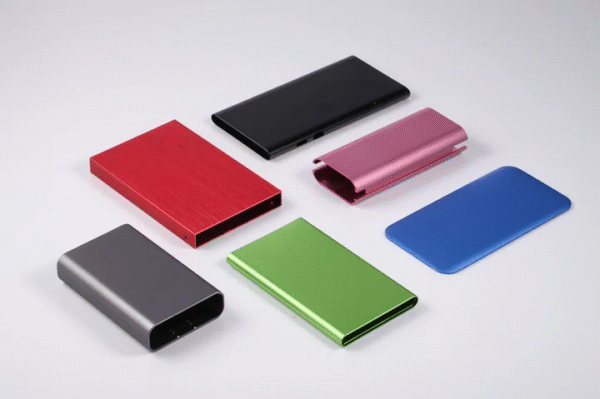
Fourth approve samples that represent the real geometry and route. Identify the material condition, preparation, finish, part revision, assembly hardware, and inspection state. A flat swatch may establish part of the color intent while missing recesses, corners, lettering, and tool-contact risks.
ASTM D1729’s public scope addresses controlled visual appraisal of diffusely illuminated opaque materials. Review its relevance to the chosen visual method and the actual surface. State lighting, background, orientation, viewing distance, and the reference used; do not claim full standard compliance from its public summary.
Retain an approved master and identified examples of permitted and rejected defects where useful. Define how the reference applies to each cosmetic zone. Record whether photographs locate defects or form part of an agreed acceptance method. An edited marketing image should not silently replace the controlled sample.
Inspect before and after the representative assembly and handling sequence. Investigate new marks by operation and location, then revise fixtures, protection, or the finish route as needed. Approve the resulting process rather than accepting an unexplained touch-up that changes the reference.
FAQ
These questions address specification details that should be settled before sample approval.
Does a passing cosmetic inspection before assembly prove the finished device will look acceptable?
No. Assembly adds neighboring surfaces, gaps, fasteners, tool contact, handling, and possible deformation. Define which checks apply to individual parts and which apply to the assembled product. Approve representative finished assemblies where those interactions control the result.
Can pencil hardness specify scratch resistance for every finish?
No. Review the method and substrate for the actual surface. A test for organic coating film hardness is not automatically suitable for bare metal, anodic coatings, or every service scratch. Specify the relevant damage mechanism, test conditions, and acceptance criteria.
Related process selection notes
Fifth freeze the approved combination of drawing, finish route, acceptance, handling, and packaging. Define which changes require review, including material, preparation, coating, masking, assembly tool, or cleaning method. A repeat part with the same color name can still represent a changed process.
Compare quotes on the same full scope: machining allowance, surface preparation, finish, masking, sample approval, inspection, protected assembly where specified, and packaging. Include acceptance records and any required damage or cleaning evaluation. A low finish price is incomplete if essential protection or rework remains outside the quoted route.
Use final inspection to verify the specified output and process records to understand how it was produced. Keep dimensional, cosmetic, and functional evidence linked to the actual part and revision so that later assembly feedback can be traced to a controlled baseline.
Internal links and next steps
Send the model, drawing, quantity, material, cosmetic-zone map, assembled gap and flushness requirements, contact exclusions, appearance reference, and handling protocol. Review the application through consumer electronics, coordinate the starting geometry through CNC machining, and confirm the complete finish route, including anodizing where selected.
Request a quote with the assembled appearance and final-fit acceptance attached. Confirm the supported route and representative sample review before ordering.
FAQ
These questions address specification details that should be settled before sample approval.
Does fingerprint resistance mean fingerprints will never appear?
Do not assume that. Define the handling or contamination condition, observation method, cleaning procedure, and acceptable residual appearance. Visibility, ease of cleaning, and durability after cleaning are different characteristics and may need separate evaluation.
Can a finish change be approved from a new color sample alone?
No. Review final dimensions, assembly gaps, contacts, texture, handling, and relevant functional requirements as well as color. Identify which earlier evidence remains applicable and reapprove affected characteristics using representative geometry and the controlled finish route.