

A parts supplier is judged on two things that rarely appear in a brochure: whether the quoted process list matches the features on your drawing, and whether the paperwork that arrives with the box lets you release the parts without re-measuring everything. Both are visible before you place the order, if you ask in the right order.
What a parts supplier should be able to show you
Ask for the process list as a matrix rather than a sentence, with each row naming an operation and each column stating whether it runs in house, runs at a partner, or is not offered. That single table answers the question most buyers ask late and regret: how many times will my parts change hands, and who is accountable when they do. Every handoff is another transport, another datum reference and another place where a revision can be missed.
| Operation | In house | Partner | What it means for you |
|---|---|---|---|
| CNC milling and turning | Yes | – | Datum control stays with one production team |
| 5-axis machining | Yes | – | Angled features without extra fixtures |
| EDM | Yes | – | Sharp internal corners and hardened material |
| Surface finishing | Varies | Yes | Adds a transit step; agree cosmetic acceptance first |
| Inspection reporting | Yes | – | One report covering the features on your drawing |
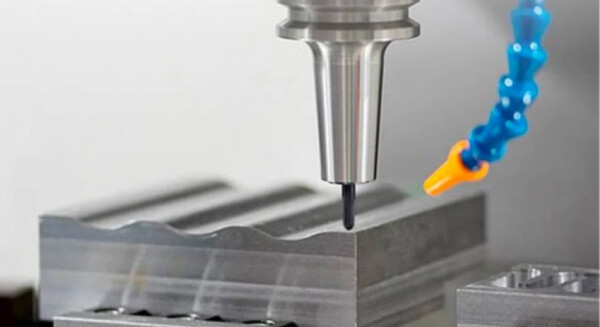
How a parts order is actually quoted
As a fixed block plus a per-part block.
Programming, fixturing and first-article inspection are charged once per order, then divided by quantity; cycle time, material and secondary operations are charged per part. Knowing which line belongs to which block tells you what a quantity change will do before you ask for it, and it tells you whether a rival quotation is genuinely cheaper or simply excludes the fixed work.
Two comparisons are worth making on every quote. First, whether the fixed block is itemised at all — a single lump sum hides the cost of a design change. Second, whether secondary operations and inspection appear as separate lines, because those are the lines most often left out of a headline price and added later.
Matching the process to the feature, not the material
Suppliers are usually chosen on material capability, but the process mix decides whether a part is economical. A rotational part with a cross-hole may finish faster on a lathe with live tooling than as two operations, while a flat plate with deep pockets is unambiguously a milling job. Bringing that routing question to the supplier before ordering is the difference between a quote you can compare and a quote you have to re-ask for.
Where a part family repeats, the routing question changes: a fixture that presents three faces to a 3-axis machine can be cheaper across ten releases than paying for multi-axis work on each. Suppliers who track that trade-off will tell you when a fixture is worth building, which is why the CNC machining capability pages are worth reading alongside your own drawing set.
Quality documentation that should arrive with the parts
The minimum useful pack is material identification, the inspection record for the features your drawing controls, and a clear link between the parts in the box and the revision they were manufactured to. Everything beyond that depends on the industry: regulated products need far more, and the requirement should be established before the batch runs rather than reconstructed during an audit.
Two details make a report usable. It should state the datum each measurement was taken from, and it should identify the measuring method where a feature can be checked in more than one way. A dimension recorded without its reference is difficult to defend six months later, when the same part is remade from a different bar lot and the numbers do not line up.
Where a parts order loses time between quote and shipment
Delay rarely comes from machining. It comes from the four gaps around it: an ambiguous drawing that has to be queried, a finish callout that arrives after production, a revision released mid-batch, and a packing method that was never specified for the way the parts will be handled. Each is avoidable with one page of instructions at the start.
The revision gap is the most expensive because it is the most tempting. Sending a small change while the machine is already running feels efficient, but it splits a batch into two revisions with one inspection record. Booking the change as its own release keeps the paperwork honest and makes the cost of the change visible while the decision is still cheap.
What to send with a parts enquiry, and what to expect back
A complete enquiry is shorter than most buyers expect: the solid model, the drawing that carries tolerances and finish, the quantity with an indication of whether it repeats, and one line describing what the part has to do. Anything the supplier has to infer becomes an assumption inside the price, and assumptions are what turn a comparison between two quotes into guesswork.
What should come back is equally specific. A usable reply states the material and condition quoted, the finish and where it applies, the inspection included, the revision the price refers to, and any feature the shop believes cannot be held as drawn. If a quotation omits the last item, the manufacturability conversation has not happened yet. Dimensional reporting practice is described by the NIST Manufacturing Extension Partnership, and material condition definitions are covered by ASM International.
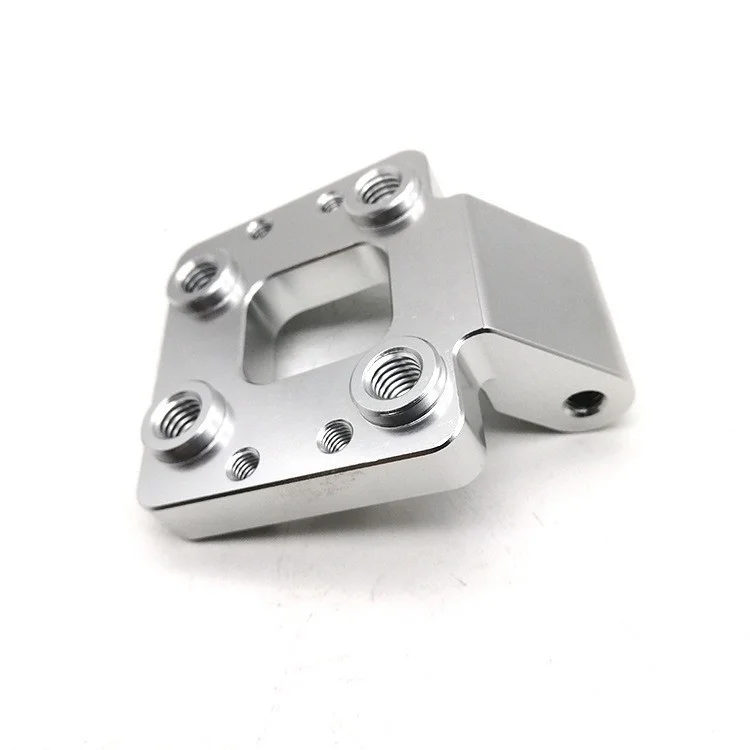
Two references are worth holding when this conversation happens. Coating and surface-condition terms are standardised by ASTM Committee B08, machining and measurement terminology by ASME, and the environmental rules that govern plating and blasting lines by the US EPA.
Send a model and drawing to request a parts quotation; 6CProto returns a manufacturability review with the price.
FAQ
Where can I order CNC parts online?
Order through a supplier that accepts a solid model plus drawing, returns manufacturability comments before quoting, and states what inspection is included. 6CProto accepts STEP, STP, IGES, IGS, SLDPRT, 3DM, SAT and X_T files and quotes from the uploaded model.
How much does it cost to get a part CNC machined?
Cost is a fixed block of programming, fixturing and first-article inspection plus a per-part block of cycle time and material. Splitting those two blocks in the quote is what makes a price comparable between suppliers and predictable across quantities.
Can one supplier cover both a prototype and a production batch?
Yes, and keeping the part on the same process family avoids re-qualifying the geometry later. What changes with quantity is the setup, not the drawings, so ask how the routing changes when the order moves from a few pieces to a repeat batch.