

Two quotes for the same part can differ by more than the part itself, because the price is mostly a reflection of time and risk rather than material weight. Understanding which line items move is what lets an engineer change a drawing instead of arguing about a number.
What are the line items inside a CNC machining quote?
Setup, cycle time, material and finishing, plus inspection.
Setup and programming are charged once per order, so their effect shrinks as quantity grows; cycle time is charged per part and is the only line that scales with volume. Material is quoted from the stock size the geometry demands, and finishing and inspection are added when a drawing calls for them.
The practical consequence is that a part priced expensively at five pieces can be competitive at two hundred without a single design change. When you compare suppliers, compare the fixed block separately from the per-part block, because that is where the differences usually sit.
| Cost line | Scales with quantity? | How to reduce it |
|---|---|---|
| Programming and setup | No, fixed per order | Order realistic batch sizes; keep revisions out of the same order |
| Cycle time | Yes, per part | Reduce setups, widen corner radii, avoid deep narrow pockets |
| Material and stock size | Yes, per part | Design to a standard bar or plate size instead of a near-net block |
| Finishing and inspection | Mixed | Specify finish only where it is functional or visible |
Why is CNC machining expensive on small quantities?
Because setup and programming are charged once.
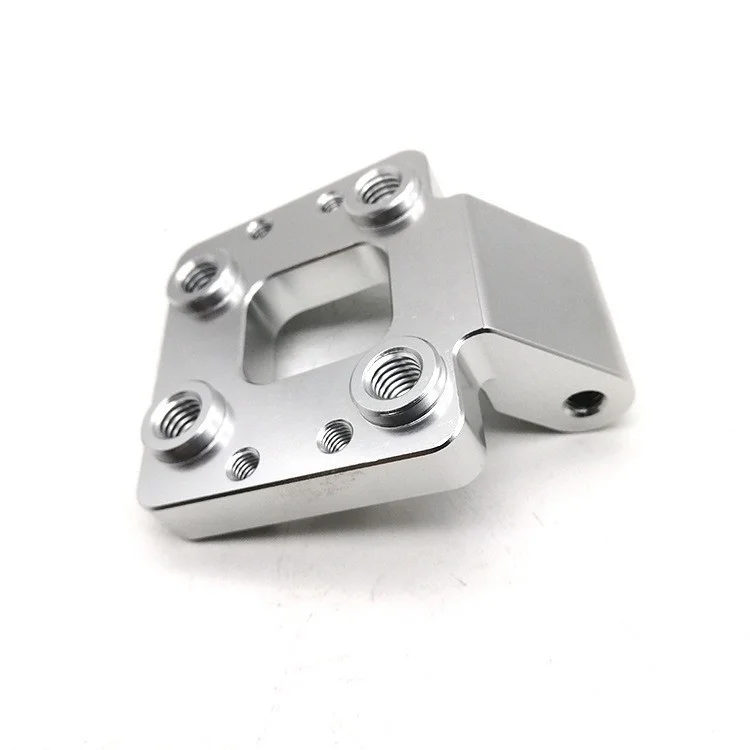
Every order carries a fixed cost for programming, workholding and first-article verification. Split over five parts, that block dominates the unit price; split over five hundred, it becomes a rounding error. Multi-setup parts amplify the effect, since each additional clamping face adds its own fixture and its own inspection.
Two levers change the arithmetic without touching function: consolidate revisions into one release so the program is proven once, and let the shop choose the holding method by asking for a quote on the drawing rather than on a fully prescribed process. Where a part only exists to prove a fit, CNC machining remains cheaper than tooling even at low volume.
Which drawing changes cut cost fastest
The fastest savings come from removing operations rather than removing material. Reducing the number of setups removes a fixture and a datum transfer; sizing internal corners to a standard cutter removes a second, slower operation; leaving tight tolerances only on functional dimensions removes inspection time and scrap risk. Roughly the same logic applies to surface finish, where a cosmetic callout across a whole part costs more than a callout on the face people actually see.
- Design to a standard stock size rather than a block that must be reduced on all six faces.
- Replace a tight tolerance on a non-functional dimension with a general note.
- Allow a larger corner radius or a relieved pocket floor where it does not affect function.
- Move decorative finishing off mating and sealing surfaces.
What changes the unit price between two revisions of the same part
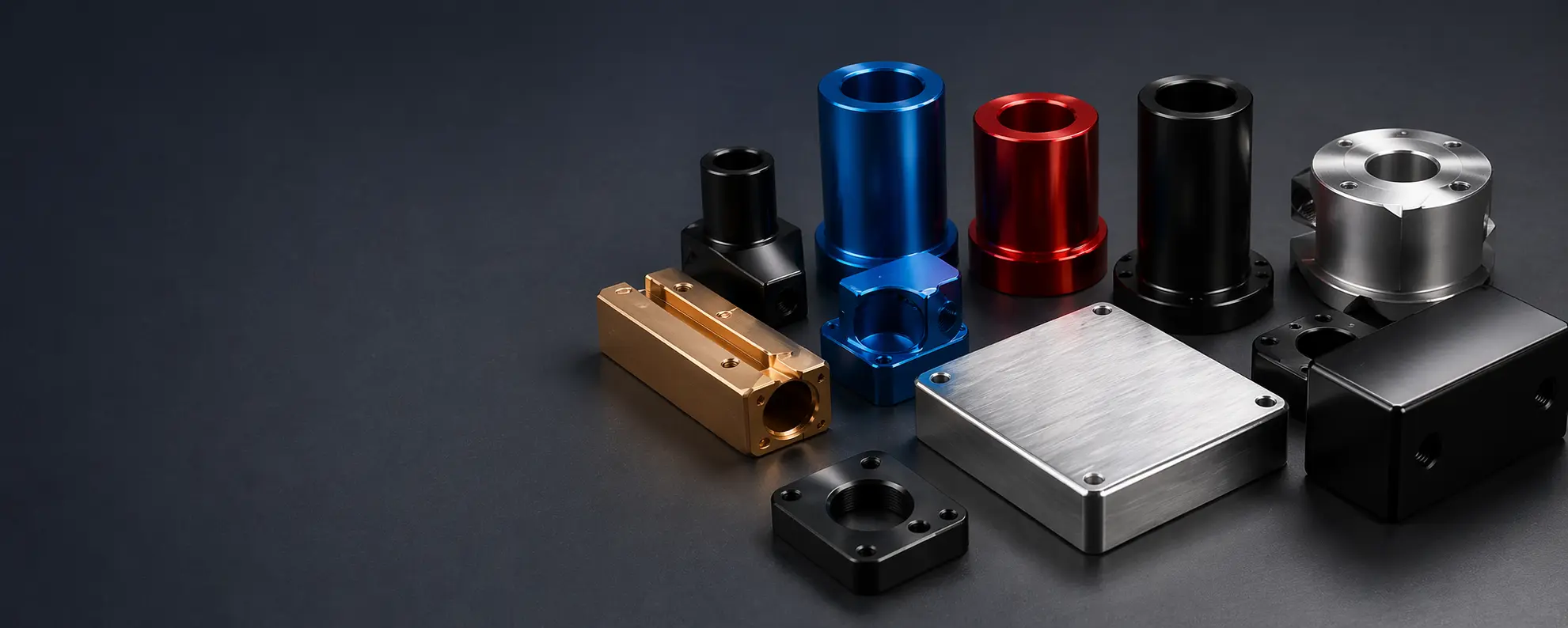
When a revised part is quoted higher than the original, the cause is usually one of four changes rather than a supplier adjusting its rate. A new feature can add an operation, a tightened tolerance can add a finishing pass, a material substitution can change the cutting speed, and a new cosmetic requirement can add hand work that does not appear on the drawing at all. Comparing the two quotations line by line identifies which of the four happened.
It helps to keep the fixed block stable across revisions. If programming and fixturing are quoted as a lump sum that changes every time, the effect of a small geometry edit becomes invisible. Ask for revisions to be priced as the incremental operation plus any inspection change, and the cost of each design decision becomes visible while it can still be changed cheaply.
What does not move the price, despite what it looks like
Some things look expensive and are not. Part weight rarely changes a quote by much on a small batch, because material is a minor line next to setup and cycle time. A complicated-looking 2D drawing is free to supply and free to read. A modest quantity increase from five to ten pieces usually lowers the unit price rather than raising it, because the fixed block spreads further.
Other things look trivial and are expensive. A single tolerance callout on a dimension that requires a special gauge or a separate machine can cost more than the feature it describes. A cosmetic requirement applied to the whole part rather than one face adds handling to every piece, and a radius or thread that falls outside the shop’s standard tooling adds a purchase to every order. Asking a shop which line items they would remove if the design allowed it is usually more informative than asking for a discount, because it tells you where the design, not the price, is doing the work.
Send your model and drawing to request a quote and receive a DFM review that lists which changes would reduce the price.
How should I compare quotes from different shops?
Compare like for like, then compare scope.
Compare like with like: identical revision, identical quantity, identical finish and identical inspection requirement. Ask each supplier to state what is included in the fixed block and what triggers a change order, then check the assumptions rather than the totals. A lower total that excludes first-article inspection is not a lower total.
Two references help when a quote is challenged. Machinability and material-behaviour data are published by ASM International, and machining and measurement terminology is standardised through ASME; coating callouts that affect price follow the terminology in ASTM Committee B08. Background on how small manufacturers price and quote work is published by the NIST Manufacturing Extension Partnership, and process-safety obligations that apply to finishing lines are set out by the US EPA.
FAQ
How do you estimate CNC machining cost before quoting?
Estimate setup hours, cycle time per part, stock size and any finishing or inspection, then divide the fixed block by quantity. The estimate is only as good as the assumptions about setups and tolerances, which is why a DFM review precedes the final number.
What is the typical hourly rate for CNC machining?
Rates are quoted per job rather than published as a single hourly figure, because machine type, tolerance and material all change the rate. Ask for the fixed block and the per-part block separately so the two can be compared across suppliers.
Does a tighter tolerance always cost more?
It costs more whenever it forces extra operations, slower feeds, specialised inspection or higher scrap risk. A tight tolerance on a dimension the assembly never reads buys nothing, so restrict close limits to the features that carry the fit.