

A weldment can sit square on a surface plate and still fail an OEM program review. Straightness is not the same as an accepted welded assembly. If the purchase order never named nondestructive testing, welding-procedure evidence, leftover machining stock, or how stampings and purchased hardware enter the same weldment, visual appearance will not close the order.
This article is about buying welded assemblies as a deliverable: scope, evidence, and acceptance. It is not a distortion-control tutorial. When you need a supplier to quote that package, start from a complete drawing set and a written examination plan, then use a 6CProto RFQ to test whether the quotation restates the same boundary.
What changes when you buy a welded assembly instead of welding it in-house
Buying a welded assembly transfers joint execution, in-process control, and stated acceptance to the supplier, while you retain only the leftover operations you explicitly keep. You are no longer purchasing loose details that your welders will finish; you are purchasing a weldment that must arrive already accepted to the order.
In-house welding lets your team choose sequence, fixturing, and examination under your own quality system. Outsourcing does not automatically import that system. The supplier will build to the drawing, the code or specification you cite, and the tests you fund. If those documents are thin, the factory will apply a commercial default that may be only visual inspection and a basic dimensional check.
The commercial change is evidence. Ask for the procedure, qualification, and examination records that your OEM customer will later request from you. If you cannot name those records, you do not yet have a welded-assembly purchase; you have a hope that a tidy weld will pass a later audit. Keep the fabricated-assembly scope and the weldment drawing on the same revision so joining work is not priced as an informal extra.
Weldment scope: joints, finishes, machining stock and leftover operations
Weldment scope must list the joints, the as-welded or as-finished condition, any stock reserved for later machining, and every leftover operation that is not in this shipment. Missing lines in that list become disputes at receiving.
Identify each required weld by location, type, and size, using a consistent symbol system. AWS A2.4 is the usual U.S. reference for welding, brazing, and nondestructive-examination symbols. State whether seams are continuous or intermittent, structural or cosmetic, and whether finishing after welding, such as grind, blast, or coat, is included. A general note that says “weld as required” cannot be inspected and cannot be priced honestly.
Name leftover operations with the same care. If datum faces or bores remain oversize for a later machining pass, state the stock and the surfaces that must stay free of spatter or coating. If hardware is welded or fastened after the primary seams, say whether that work is in this purchase order. Align those notes with the sheet metal fabrication drawings so formed details do not arrive already painted on a face that still needs weld prep or machining.
NDT, WPS/PQR evidence and what belongs on a commercial OEM RFQ
An OEM RFQ should request only the welding-procedure and examination evidence required by the governing specification and the risk of the joints, and it should name that evidence in commercial language. Extra certificates that were never specified will not appear by courtesy.
If a code or customer specification applies, cite it. AWS publishes welding codes and standards that many programs use as the joining baseline. For procedure and performance qualification, ASME BPVC Section IX is a widely referenced qualification system where it is invoked. Ask for the welding procedure specification and the supporting procedure qualification record, plus welder or operator qualifications, only when that system is actually on the order.
For examination, say the method, the extent (all joints, sample joints, or critical joints only), and the acceptance standard. ASME BPVC Section V addresses nondestructive examination methods when that code is in force. ASNT standards and ASTM practices, discussed below, are other common references. Do not paste an entire pressure-equipment list onto a light bracket, and do not leave a safety-critical joint on visual inspection alone if your customer will later require volumetric examination.
Table: visual, penetrant, ultrasonic and radiographic asks vs part risk
Match the examination method to the kind of discontinuity you need to find and to the access you actually have, then write that choice on the purchase order. The table is a buyer’s map, not a requirement to apply every method, and it does not replace the governing specification.
| Method | Typically used to look for | Common buyer question | Reference a commercial RFQ may cite |
|---|---|---|---|
| Visual examination | Size, location, surface quality, obvious cracks or undercut | Is a defined visual standard enough for this joint? | The drawing, the invoked welding code, and any stated visual acceptance class |
| Liquid penetrant | Surface-breaking discontinuities on suitable materials | Are critical surfaces accessible after finishing? | ASTM E1417/E1417M or the equivalent method in the invoked code |
| Magnetic particle | Surface and near-surface discontinuities in ferromagnetic parts | Is the alloy magnetic, and will residual fields matter later? | ASTM E1444/E1444M where that practice is specified |
| Ultrasonic examination | Internal discontinuities where geometry allows a meaningful scan | Can the joint actually be scanned, or is access only theoretical? | The method and acceptance standard named in the governing specification |
| Radiographic examination | Internal discontinuities where a radiograph is specified | Is the safety or contractual risk high enough to justify the method? | ASTM E1742/E1742M or the radiographic article of the invoked code |
Name the extent and the acceptance standard beside the method. “NDT required” is not a specification. If finishing will hide a surface, decide whether examination happens before coating. If a later machining pass removes weld metal, decide whether examination is repeated after that pass.
How stampings, CNC details and purchased hardware enter the same weldment
Stampings, machined details, and purchased hardware enter the weldment only through a bill of materials and a stated joining or installation step. If those items are shown on a model but never assigned, they will be omitted or improvised.
Identify which components are formed, which are machined, and which are purchased, including approved alternates and customer-furnished parts. State the weld, fastener, or other joint that attaches each item, and whether a protective finish must be applied before or after that joint. A stamping that arrives already coated can be unusable at a weld land; a CNC boss that arrives without leftover stock can make the post-weld machining hold impossible.
Hardware that is not welded still belongs in the same scope discussion. Clips, nuts, hinges, and seals that must survive welding heat or cleaning need a note. The purchase order should also say whether the supplier or the buyer installs them. A weldment plus a bag of unmentioned parts is two different deliveries, not one OEM assembly.
Acceptance criteria that go beyond “it looks straight”
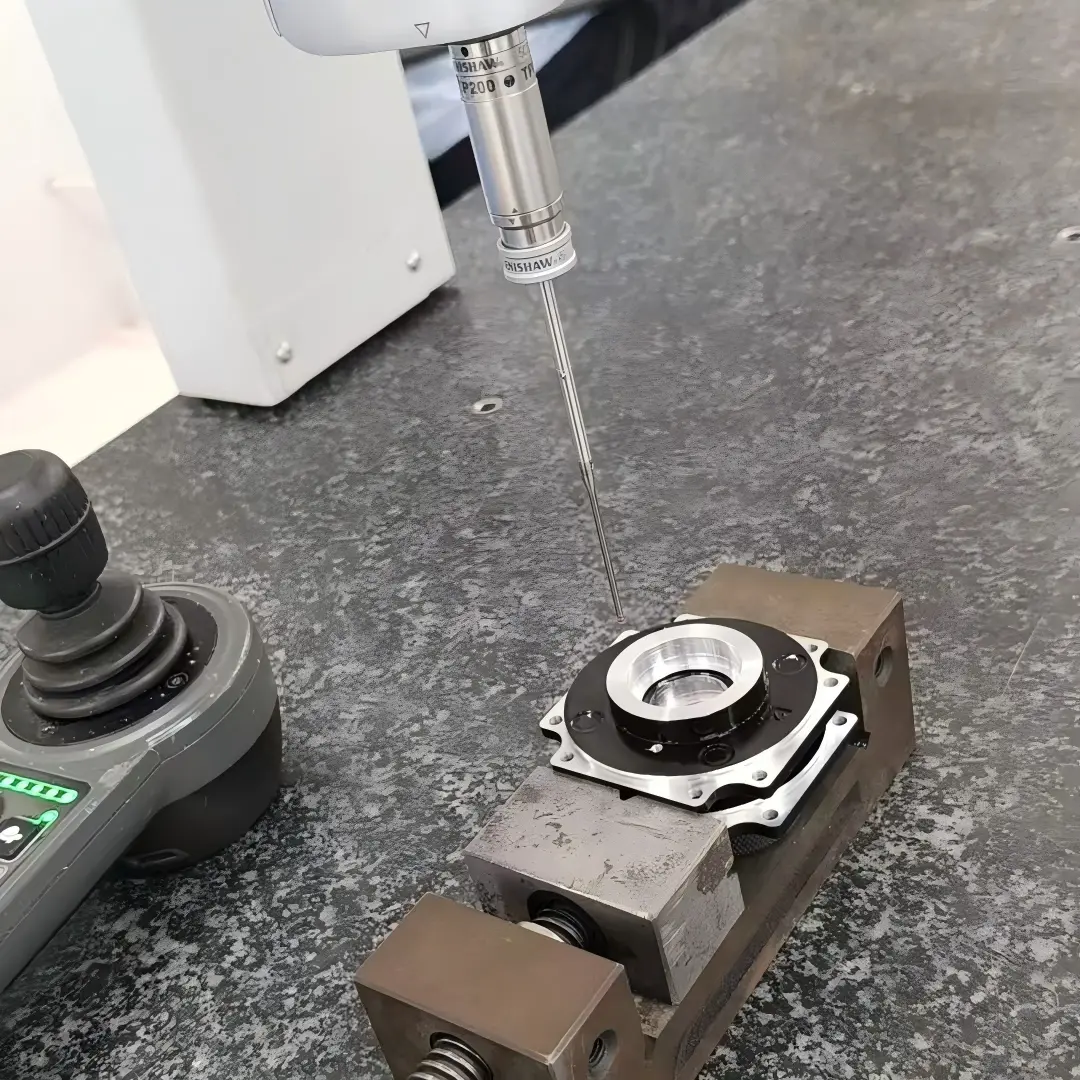
Acceptance should combine the named weld examination, the assembled dimensions that matter to the next process, and the leftover-work condition. A square sit on a table is not a criterion unless the drawing says it is.
Write the visual or NDT standard, the datums for final measurement, and any functional check, such as a hole pattern that must meet a customer fixture. Use the same datum language as the drawing; the 6CProto standards and tolerances page is a place to keep those drawing conventions in view when you build the RFQ. If a cosmetic class applies, state it separately from structural acceptance so a rough but sound joint is not rejected for the wrong reason, and a pretty joint is not accepted without the required examination.
Record what travels with the lot: inspection reports, procedure references, and any agreed photographs or maps of examined joints. If your OEM customer will audit those records, the purchase order is the moment to require them, not the receiving dock after the welder’s notes have already been discarded.
Packing, residual stress and downstream machining holds
Packing and hold conditions should protect both the weldment and any stock reserved for later machining, and they should respect the fact that a welded structure can move after release from a fixture. The purchase order needs a shipped condition, not only a process story.
State how the assembly is supported in transit, which faces are protected, and whether temporary braces stay in place until machining. If a machining hold is part of the design, identify the remaining stock, the surfaces that must stay uncoated, and the earliest time or condition after welding when machining is allowed, if the specification requires one. This is a scope and acceptance issue. It is not a substitute for a distortion-control study, and it should not re-open a welding-sequence debate that belongs on a different page.
If residual stress relief is required, name the treatment and the inspection state after it. If it is not required, say that too, so a supplier does not add or omit a thermal cycle as an unpriced interpretation. Receiving should be able to tell a protected machining allowance from damage, and a deliberate as-welded condition from a missing finishing step.
FAQ
What are the types of welded joints?
Common types specified on OEM drawings include fillet, groove, and various corner, edge, or plug joints, each with a stated size, length, and process. The purchasing issue is not a catalog of joint names. It is whether the drawing and purchase order identify which joints are required, which process may be used, and how each joint will be accepted. A general note that says "weld as required" does not give a supplier enough information to price or inspect a welded assembly.
Do I need nondestructive testing on every welded assembly?
No. Nondestructive testing should follow part risk, accessibility, and the consequence of an undetected discontinuity, not a habit of adding every method to every RFQ. Many commercial assemblies are accepted with defined visual criteria and dimensional checks. Add penetrant, magnetic particle, ultrasonic, or radiographic examination when the joint is critical, hidden, or required by the governing specification, and name the method, extent, and acceptance standard on the order.
What welding-procedure evidence belongs on a commercial OEM RFQ?
Ask for the evidence that matches the code or specification you actually impose. That may include a welding procedure specification and a supporting procedure qualification record, plus welder or operator qualifications, under the system named on the order, such as ASME Section IX where it applies. Do not request a full nuclear or pressure-equipment package for a lightly loaded bracket, and do not assume a supplier will include that package if the RFQ never asked for it.
Is a straight appearance enough to accept a welded assembly?
No. Straightness or a tidy bead can coexist with missing penetration, an unacceptable discontinuity, wrong leftover stock, or hardware that was never installed. Acceptance should include the named visual or NDT method, the assembled dimensions that matter to the next operation, and any leftover-work or machining-hold conditions. If those items are absent from the purchase order, a square-looking weldment can still be an incomplete deliverable.
Files to attach when quoting welded assemblies
Attach the weldment and detail drawings, the bill of materials, material callouts, the examination plan (method, extent, and acceptance standard), and any code or specification you intend to invoke. Include leftover machining stock, finish sequence, purchased and customer-furnished hardware, packing or brace requirements, and the records that must ship with the lot.
Ask the quotation to restate that package in commercial language. Upload it through the request-a-quote form, or send it to projects@6cproto.com or WhatsApp +86 180 2219 4001, and ask 6CProto to confirm the welded-assembly scope before you compare prices that may not include the same evidence.
Request a 6CProto welded-assembly quote with NDT and acceptance notes attached