

Explore Manufacturing Materials Guides
Ultem is a brand name for PEI, a high-performance engineering plastic chosen when a part has to hold its shape under heat, load and electrical stress at the same time. It is expensive, awkward to process and often the only material that will do.
What Ultem actually is
Ultem is a trade name for polyetherimide, usually abbreviated PEI, an amorphous engineering thermoplastic with high stiffness, good dimensional stability and inherent flame resistance. The combination is what makes it useful: most materials that tolerate high temperature are either brittle, difficult to machine, or not electrically insulating in the way an electrical component needs.
| Property | What it means in use |
|---|---|
| High stiffness | Holds shape under load without a metal insert in many cases |
| Thermal stability | Survives continuous elevated temperature better than commodity plastics |
| Dimensional stability | Low creep and low movement with temperature change |
| Inherent flame resistance | Meets flammability requirements without added flame retardants |
| Electrical insulation | Stable dielectric behaviour across a wide temperature range |
| Chemical sensitivity | Attacked by some solvents and affected by moisture absorption |
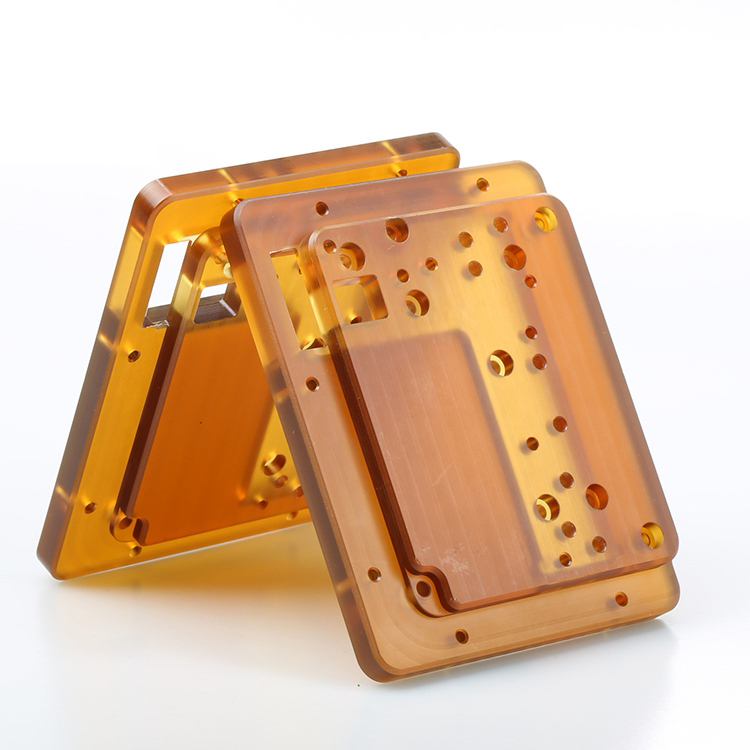
What Ultem plastic is used for
Four application families dominate. Electrical and electronic components, including connectors, insulators, coil formers and switch parts, where insulation has to survive heat and resist burning. Aerospace interior parts and brackets, where weight matters and flammability requirements are strict. Medical and analytical equipment components that must tolerate repeated sterilisation cycles. And industrial parts in hot environments, such as manifolds, housings and fixtures exposed to heat or steam.
The common thread is a combination requirement rather than a single property. If a part only needs stiffness, cheaper materials exist. If it only needs heat resistance, other options are available. Ultem earns its cost when stiffness, temperature, electrical performance and flame behaviour all have to be met by the same piece of plastic.
What are the disadvantages of Ultem?
Cost, moisture sensitivity and a narrow processing window.
The material cost is the first obstacle: stock shapes and pellets are expensive relative to commodity plastics, and the processing difficulty adds to it. PEI absorbs moisture, so it must be dried thoroughly before molding or extrusion, and moisture carried into the process produces surface defects and degraded properties. It is also sensitive to certain solvents and chemicals, which limits where it can be used despite its temperature range.
Two further limitations affect design. Machining PEI generates heat at the cutting edge, so tooling has to be sharp and feeds controlled to avoid a smeared or burnt finish. And it is notch sensitive, which means sharp internal corners and abrupt thickness changes become crack initiation points under load. Both limitations are managed by design and process rather than by choosing a different grade.
Is Ultem the same as Delrin?
No: PEI and POM are different materials.
No, and the two are chosen for entirely different reasons. Delrin is a trade name for POM, a semi-crystalline acetal plastic known for low friction, good wear behaviour and easy machining at low cost. Ultem is PEI, an amorphous material chosen for heat resistance, stiffness and flame behaviour. Delrin is the better answer for a sliding bushing at room temperature; Ultem is the better answer for an insulating connector that must survive heat.
The confusion is understandable because both are used for machined engineering parts, and both are supplied as rod and plate. The practical way to keep them apart is to specify the material by its polymer family and grade rather than by trade name, since a drawing that says only “Ultem” or only “Delrin” leaves the supplier to interpret a brand as a specification. Material grades and property data are published by ASM International.
How expensive is it, and when is that acceptable?
Costly, and justified when a cheaper material fails.
PEI sits among the more costly engineering plastics, closer to PEEK than to nylon or acetal, and the price reflects both the polymer itself and the processing care it requires. Whether that is acceptable depends on what it replaces. If Ultem allows a part to be molded as a single insulating component instead of assembling a metal bracket with a separate insulator, the material cost may be the smaller part of the comparison.
The useful test is whether a cheaper material fails one of the requirements. Where a glass-filled nylon would distort at the service temperature, or where a commodity plastic would need added flame retardants that change its mechanical behaviour, Ultem is doing work that the cheaper option cannot. Where none of the requirements is critical, specifying PEI is an unnecessary cost rather than a safety margin.
Machining and molding behaviour
Machined PEI behaves like a hard, stiff plastic: it cuts cleanly with sharp tooling and appropriate feeds, but it generates heat and can chip at unsupported edges if the setup is not rigid. Drilling and tapping need care because the material is notch sensitive, and threads benefit from generous engagement. Stress relieving stock before machining reduces movement on close-tolerance parts.
Molding PEI demands drying and a hot tool, because the material’s high melt temperature means a cold cavity produces poor surface and locked-in stress. Gate and runner design also matter more than with commodity plastics, since the melt is viscous. Where the part is a prototype, machining from stock is usually the faster route; molding becomes worthwhile when volume justifies a tool and the geometry suits it. Related process options are described under CNC machining and injection molding.
Specifying PEI on a drawing
Name the polymer family and grade, not only the trade name; state whether the part will be machined or molded, since that changes the stock form and the process; specify any flame or electrical requirement the part must meet; and identify the features that carry load or insulate, so tolerance and inspection effort sit where they matter. Where the part is a replacement for metal, state the loads and temperatures involved rather than a material name, because those are what justify PEI over a cheaper alternative.
Two practical notes reduce rejects. Specify drying and handling requirements for molded parts, since moisture is the most common cause of defects in this material. And allow generous radii at internal corners on machined parts, because notch sensitivity turns a sharp corner into a crack that appears after the part is in service. Drawing conventions follow ASME standards, surface and coating terminology follows ASTM Committee B08, measurement practice is described by the NIST Manufacturing Extension Partnership, and process and waste obligations are set out by the US EPA.
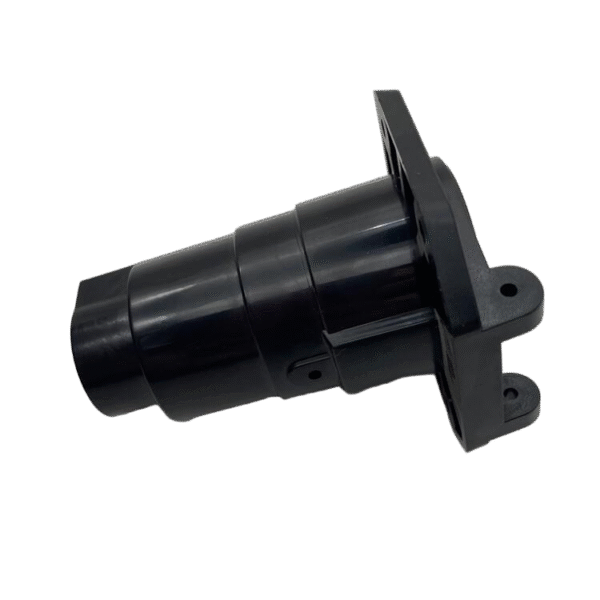
Send the part with the temperature, load and electrical requirements, and request a quote for machining or molding in PEI.
FAQ
What is Ultem plastic used for?
Electrical and electronic components such as connectors and insulators, aerospace interior parts, medical and analytical equipment that must survive sterilisation, and industrial parts exposed to heat or steam. It suits situations where stiffness, temperature, electrical performance and flame resistance must all be met at once.
What are the disadvantages of Ultem?
High material and processing cost, moisture absorption that requires thorough drying before molding, sensitivity to certain solvents, and notch sensitivity that makes sharp corners crack initiation points. Machining also needs sharp tooling and controlled feeds to avoid heat damage.
Is Ultem the same as Delrin?
No. Ultem is the trade name for PEI, chosen for heat resistance, stiffness and flame behaviour, while Delrin is POM, chosen for low friction and easy machining at lower cost. Specify the polymer family and grade rather than the brand name.