

Rapid prototyping shortens the loop between a design change and a part that can be fitted. What it does not do is remove the validation a vehicle programme has to pass, so the benefit is confined to the stages where iteration is still cheap.
What rapid prototyping means in manufacturing
Producing a part fast enough to inform the next decision.
The term originally described the additive processes that made physical models from CAD data in days. It has since widened to cover any route that produces a usable part quickly: machining from stock, sheet metal fabrication, casting in a silicone tool and additive manufacturing. What unites them is the absence of hard tooling, which is what allows a revision to be absorbed without rebuilding a mould.
Speed is the whole value proposition, and it comes from removing tooling rather than from working faster at the same operations. A machined bracket and a moulded bracket may take similar time on their respective machines, but the moulded one requires weeks of tooling before the first part exists. That distinction explains why rapid methods dominate prototype work and disappear from production.
The stages of the rapid prototyping process
Four stages are common. The design is completed to the point where geometry is defined. A route is selected according to what the part must prove and how quickly it is needed. The part is produced, usually in a small quantity and often alongside other components in the same order. And the part is used for its intended purpose, which produces information that feeds the next revision.
| Stage | What is decided | What makes it faster |
|---|---|---|
| Design definition | Geometry, interfaces, test intent | Working from a solid model rather than drawings |
| Route selection | Process and material | No tooling lead time |
| Production | Quantity and finishing | Small batches, often nested or batched together |
| Use and feedback | What changes next | Iteration begins immediately after the test |

What rapid prototyping is also called
The vocabulary has shifted with the technology. Additive manufacturing is the formal term for the process family that builds parts layer by layer, and 3D printing is the everyday version of the same phrase. Layer manufacturing and freeform fabrication appear in older literature. In automotive programmes, the term “rapid” is often dropped altogether, because what matters to the programme is the build stage — mule, engineering prototype, validation build — rather than how quickly an individual part was made.
That shift is worth noting because it changes what a supplier should be asked. Asking for “rapid prototyping” invites a quote for a quickly made part. Asking for a component that has to support a specific test in a specific stage invites a discussion about material, tolerance and evidence, which is what the programme actually needs.
Where speed helps in a vehicle programme
Rapid methods pay best at the stages where the design is still moving. They allow a bracket to be fitted, a clearance to be checked, an assembly sequence to be rehearsed and an ergonomic issue to be found, all before tooling exists. They are also valuable for manufacturing aids — checking fixtures, jigs and handling trays — because those are needed before the production line is built and can themselves be revised cheaply.
Two further uses appear in most programmes. Interior and exterior appearance parts for review builds, often cast in a silicone tool so the surface matches production. And thermal or fluid components where the geometry is complex enough that additive manufacturing produces the internal channels machining cannot reach. Material references are published by ASM International.
Where speed changes nothing
Validation does not compress. A durability programme takes the time it takes, a thermal cycle cannot be shortened without changing what is being tested, and a crash test consumes vehicles rather than saving them. Rapid prototyping shortens the path to the first testable part; it does not shorten the test.
The corollary is that a programme which accelerates prototype builds without adjusting anything else accumulates risk rather than removing it. If the design is still changing when the validation builds are made, the tests produce results that describe a superseded design. Sequencing the speed where it helps and protecting the validation gates is what makes rapid methods pay. Drawing conventions follow ASME standards, process terminology is standardised through ASTM Committee F42 for additive processes, and inspection practice is described by the NIST Manufacturing Extension Partnership.
How to brief a rapid build for an automotive programme
Name the stage and the test, since those determine material and tolerance. State the interfaces the component must match, because they are usually the reason a part is being made at all. Say whether appearance matters, and if so provide a sample rather than a description. Give the quantity and whether further revisions are expected, so the route can be planned around the next change rather than the current one. And say what evidence is required, because an inspection record costs time that a fit check does not.
Two habits improve the result. Order the components of a revision together rather than one at a time, since batching shares setup and build time. And keep the model under revision control so a repeat order is unambiguously the latest design. Related routes are described under rapid prototyping, 3D printing and CNC machining, with surface and coating terminology following ASTM Committee B08 and process obligations set out by the US EPA.
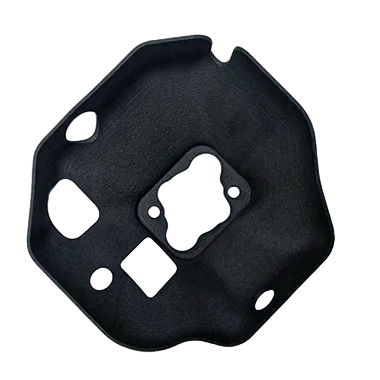
Send the component with the build stage and the test it supports, and request a rapid prototype quote with the route selected for your timeline.
FAQ
What is rapid prototyping in manufacturing?
Producing a physical part quickly enough to inform the next design decision, using routes that avoid hard tooling such as additive manufacturing, machining, sheet metal fabrication or casting in a silicone tool. The speed comes from removing tooling lead time.
What are the stages of the rapid prototyping process?
Defining the design to the point where geometry is fixed, selecting a route according to what the part must prove, producing the part in a small quantity, and using it for its intended purpose so the result feeds the next revision.
What is another name for rapid prototyping?
Additive manufacturing is the formal term for the layer-based process family, and 3D printing is the everyday version. Layer manufacturing and freeform fabrication appear in older literature, and automotive programmes often refer to the build stage instead.