

A polished medical-equipment housing is not necessarily easier to qualify than an unpolished one. Appearance, surface texture, cleanliness, and the finished device’s intended use answer different questions. Precision machining for medical equipment needs those requirements separated before a supplier treats a single Ra note as a complete surface specification.
Which surfaces need Ra callouts
For precision machining medical equipment, assign Ra callouts to surfaces whose function requires controlled texture, then define the parameter, units, evaluation conditions, and final processing state. Separate texture from form, cleanliness, corrosion treatment, and device suitability. A blanket Ra value cannot establish cleanability, biocompatibility, or compliance for every component and intended use.
Identify seals, sliding contacts, user-touch areas, mating interfaces, and any surfaces relevant to the device manufacturer’s cleaning or contact assessment. A concealed structural face may need a different requirement from an accessible surface. Do not apply the tightest local finish to the entire part without a functional reason.
ASME B46.1 addresses surface texture, including roughness, waviness, and lay. Use the chosen drawing convention to communicate the actual requirement. The precision machining review should identify which areas need measurement and which require another form of acceptance evidence.
Ra vs Rz confusion on drawings
Ra and Rz describe different aspects of the measured profile and should not be substituted by an assumed conversion factor. State the required parameter and applicable definition. If a legacy drawing uses an unclear Rz convention, resolve it before quotation rather than allowing supplier and buyer to use different interpretations.
Mitutoyo’s surface-roughness guide describes common parameters and measurement conditions. A meaningful comparison needs the relevant filtering, evaluation length, direction, and instrument access, not merely a number copied from a display.
For example, if the controlled drawing requires Ra 0.8 µm, the supplier still needs to know where and in what finished state that requirement applies. The example is not a universal medical-part limit or a claim about 6CProto capability. A reading from an accessible flat region may not represent a narrow groove or internal feature with a different machining history.
Cleaning and passivation interactions
Cleaning and passivation must be specified as separate operations where required. A smooth surface may retain machining residues, and a passivated stainless component is not automatically a validated clean device. Identify the contamination concerns, permitted chemistry, protected regions, and required evidence for the component’s intended role.
ASTM A967 addresses chemical passivation treatments for stainless steel parts. Its relevance depends on the specified material and treatment requirement. Do not apply a stainless-steel treatment note to another alloy or present the treatment as a substitute for the device manufacturer’s cleaning assessment.
The FDA’s reprocessing discussion emphasizes design-related cleaning challenges for reusable devices. A component RFQ should therefore identify inaccessible areas and the actual planned processing sequence. Confirm which characteristics are checked after machining, treatment, cleaning, and packaging, rather than relying on an earlier surface reading for every later state.
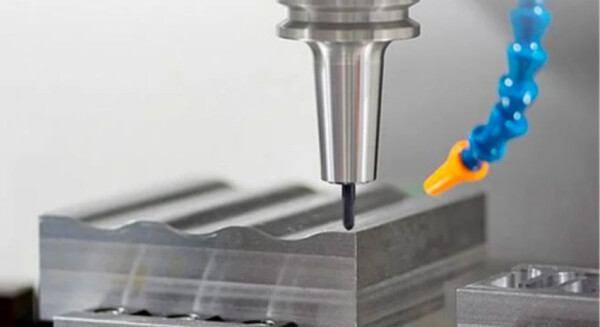
Table: finish vs function examples
Connect each finish request to the question it must answer. A visually uniform cover, a sliding interface, and a sealing land can all require surface control for different reasons. Their acceptance methods should reflect those reasons instead of sharing an unexplained medical finish label.
The examples below identify the type of evidence to request. They do not prescribe universal numerical finishes or establish that a particular design is suitable for clinical use.
| Surface role | Requirement to define | Evidence to request | Separate question |
|---|---|---|---|
| Sealing land | Texture, form, edge condition, and relevant direction | Specified surface and dimensional checks | Actual seal performance |
| Sliding interface | Texture and mating geometry | Measured condition and functional trial | Wear or lubrication behavior |
| User-facing housing | Appearance, touch, and required processing state | Controlled cosmetic sample and relevant measurements | Cleaning and intended contact assessment |
| Internal structural surface | Functionally justified finish and edge requirements | Drawing inspection and specified cleanliness evidence | Device-level suitability |
Use a surface map to keep those requirements local. The map should remain aligned with the controlled part revision and treatment instructions.
Documentation buyers often request
Request records that support the actual component specification. These may include material identity, relevant lot traceability, dimensional results, surface measurements, treatment records, and the agreed cleaning or packaging evidence. Identify the required content before quoting, because retrospective reconstruction can be incomplete.
The FDA’s biocompatibility resource center provides assessment concepts and documentation resources. A material certificate or supplier brochure does not by itself establish suitability for the finished device’s contact conditions. The responsible device team must define the applicable evaluation.
For a medical-equipment manufacturing inquiry, specify the required documents and intended component role without assuming that 6CProto holds an unverified certification. Ask which requirements can be supplied and which need separate qualification. Keep claims limited to the records actually reviewed rather than treating an industry service page as evidence of regulatory authorization.
FAQ
These questions address specification details that should be settled before sample approval.
Does Ra 0.8 µm make a part medically compliant?
No. It is a surface-texture requirement when specified under defined measurement conditions, not a general medical approval criterion. Intended use, material, design, processing, cleanliness, and other applicable requirements remain separate. Use the value only where the responsible engineering specification requires it, then evaluate the finished device through the appropriate validation process.
Can passivation replace cleaning validation?
No. Passivation is a specified surface treatment for suitable stainless parts, while cleaning validation addresses the effectiveness of a defined cleaning process for its intended purpose. The required evidence depends on the component and device. Identify both operations and their acceptance responsibilities rather than assuming that one treatment closes every contamination or reprocessing question.
Should a material certificate be accepted as biocompatibility evidence for the whole device?
It can contribute to material identification, but it does not establish every contact condition or the effects of subsequent manufacturing. Review the exact material, processing, and intended use within the device manufacturer’s assessment. Keep the certificate traceable to the delivered component and avoid extending its scope beyond the information it actually provides.
Related process selection notes
Choose finishing from the functional requirement and the material, not from the expectation that a shinier surface is always better. Machining, polishing, another finishing operation, and chemical treatment can produce different texture and dimensional effects. The manufacturing review should identify the complete sequence required for the accepted state.
Coordinate the surface-finishing scope with the machining drawing. Mark protected threads, mating surfaces, appearance zones, and any local region where material removal could alter fit. If a later process changes the surface, decide which earlier inspection results remain relevant.
Use representative samples to evaluate uncertain texture or appearance, while keeping the device-level validation requirements separate. A component that passes its drawing can be a conforming manufacturing deliverable without proving every intended-use claim. The finished-device manufacturer defines and validates the relevant safety, cleaning, and contact requirements for its application.
Internal links and next steps
Send the controlled CAD and drawing, material and condition, surface map, final treatment, required inspection records, and the intended delivery state. Clarify any Ra or Rz notation that could be interpreted in more than one way. Identify inaccessible features that may need an alternative measurement or manufacturing plan.
Use the standards and tolerances reference as background while retaining the actual local requirements on the project specification. Ask the supplier to return open assumptions and the proposed process and inspection sequence. Keep unresolved validation or documentation needs visible before release.
Request a 6CProto quote and DFM review with the medical-equipment surface and documentation requirements. Confirm what the component acceptance package proves and which device-level questions remain with the responsible engineering team.