

Aluminium is a common substrate for powder coating and a more delicate one than it first appears. The surface carries a natural oxide layer that forms within minutes of cleaning, it conducts heat far better than steel so thin sections heat and cool quickly, and it is soft enough that handling before coating leaves marks the film will show. This guide covers why aluminium behaves differently, what pretreatment it needs, how adhesion is verified, and how to plan a coating run for thin-wall or extrusion-based parts.
Will powder coat stick to aluminium?
Yes, with the right pretreatment.
Powder bonds to aluminium reliably when the surface is cleaned and given a conversion coating, and adhesion failures are almost always a preparation problem rather than a chemistry problem.
Aluminium forms a thin oxide layer spontaneously, and that layer is chemically different from the metal beneath. Powder can be made to adhere to a clean oxide surface, but the bond is more consistent when the surface has been converted to a controlled layer rather than left as a naturally formed film. That is the purpose of the conversion coating stage in pretreatment.
In practice, an aluminium part passes through cleaning to remove oils and forming lubricants, an etch or deoxidising step to remove the existing oxide, and then a conversion coating that establishes a surface the powder will bond to. The sequence matters: skipping the etch leaves a layer the conversion chemistry cannot fully address, and skipping the conversion coating leaves a bond that depends on mechanical interlock alone.
The evidence for a correct process is adhesion that survives a tape test and a bend. Where an aluminium part fails adhesion in the field, the investigation usually finds a contaminated surface, an incomplete deoxidising step or a conversion bath out of specification rather than a problem with the powder itself.
Why does aluminium need specific pretreatment?
Because its surface chemistry differs from steel’s.
Aluminium is softer, oxidises quickly and often arrives with extrusion or machining residues, so the cleaning and conversion stages have to be matched to it rather than borrowed from a steel line.
The three differences that matter are oxide formation, substrate hardness and alloy composition. The oxide forms quickly after cleaning, which compresses the window between pretreatment and coating. The substrate is soft, so handling marks, scratches and abrasive residues from earlier operations show through a thin film. And alloys differ: a 6000-series extrusion, a casting and a high-magnesium sheet respond differently to etch and conversion chemistry, so a process tuned for one may not suit another.
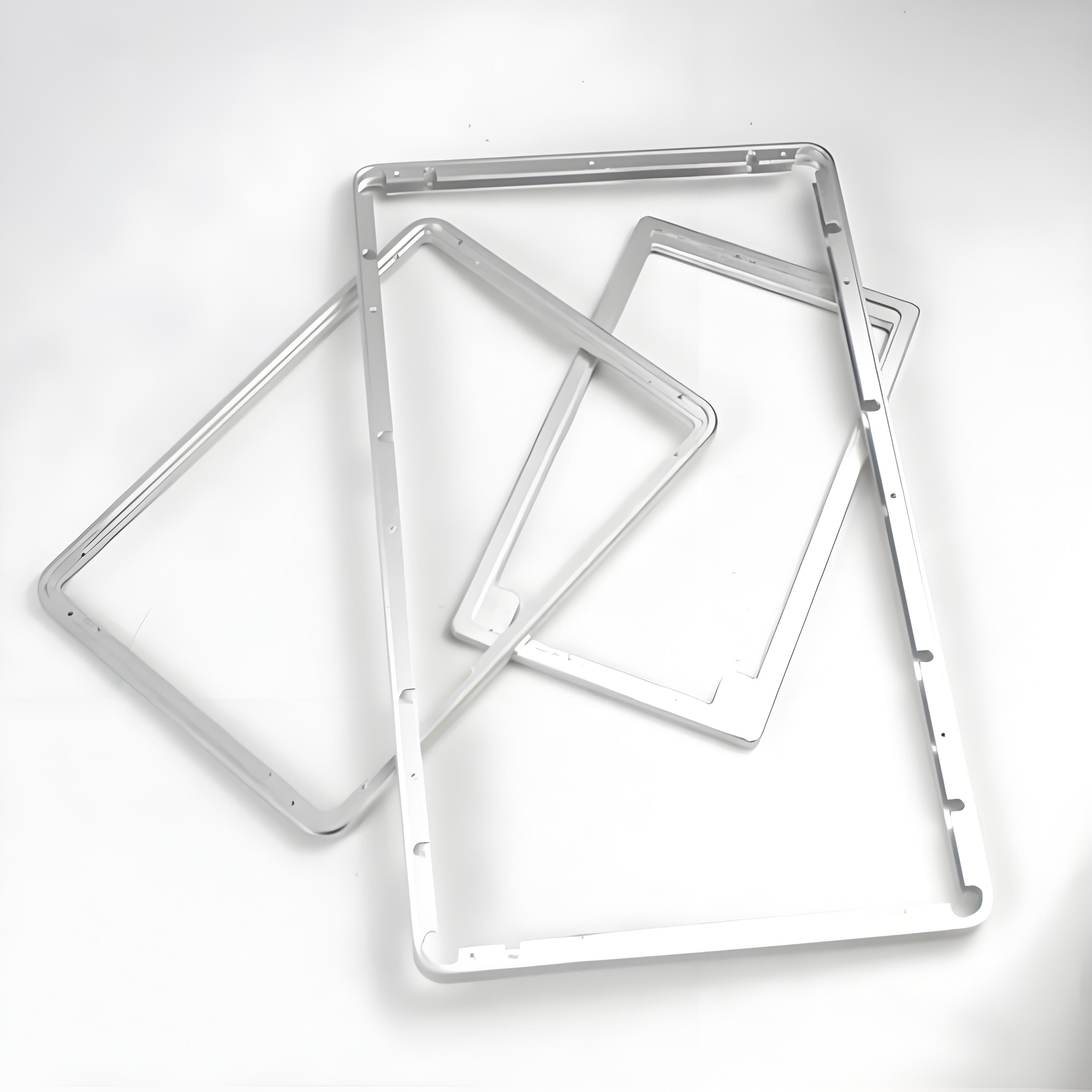
Extrusions add a specific consideration. They arrive with a surface finish produced by the die, often with visible flow lines, and that surface is usually coated without further mechanical preparation. The pretreatment has to clean it thoroughly without etching away the appearance the extrusion was chosen for, which is a different objective from preparing a machined surface.
The consequence for a specification is that the alloy and the surface condition belong in the request. A finishing shop that knows it is coating a 6063 extrusion for an outdoor product will choose a different route from one coating a machined 7075 component. The coating framework and its test methods are published by ASTM committee B08, and the substrate behaviour is documented by materials bodies such as ASM International.
How is adhesion verified?
With a tape test, and a bend or impact test.
Adhesion is assessed by cutting a grid into the film, applying and removing tape, and judging how much coating lifts, which is the method described in ASTM D3359.
The test is deliberately simple and repeatable, which is why it is widely used. A lattice pattern is cut through the film to the substrate, tape is pressed over the cut and pulled away, and the amount of coating removed is compared with a reference chart. A film that stays in place through that test has a sound bond on the area tested.
Two qualifications matter on aluminium. The first is that the test is destructive, so it is performed on a sample panel or on a part that can be sacrificed rather than on delivered parts. The second is that a flat panel does not demonstrate behaviour on a formed edge or a bend, where the film is under stress. Where a part will be formed after coating or will flex in service, a bend test is the more relevant check. The materials behaviour that governs those results is documented by bodies such as ASM International.
Impact testing addresses the other common failure mode, where the film has adequate adhesion but insufficient flexibility to absorb a knock. A coated aluminium panel that chips at an impact point usually indicates a film that is too hard for the application rather than a pretreatment problem, and the answer lies in the powder chemistry.
How does edge coverage behave?
Edges attract more powder, and thin material heats faster.
Electrostatic attraction builds a thicker film along sharp edges, and because aluminium conducts heat quickly, a thin section can overcure or distort while its edge carries a heavy film.
Edge build-up is a feature of the application process rather than a defect, but it becomes a problem on parts where a thick edge is visible or where the film cracks as it cures. A radius on the edge, or a deburring operation before coating, distributes the film more evenly and removes the risk. Where the edge is functional, such as a mating face, masking is the alternative.
Thin-wall aluminium parts introduce the thermal consideration. Aluminium conducts heat far faster than steel, so a light gauge panel reaches curing temperature quickly and its thinner sections can reach higher temperatures than its thicker ones. That can over-bake a thin area while a heavier boss or a cast section is still coming up to temperature, which produces inconsistent colour or gloss across the part.
Where that problem is likely, the response is usually a longer, gentler cure cycle or a different powder with a broader processing window. Both are process decisions, and both depend on knowing the part’s section thickness before the run rather than after the batch is inspected.
| Factor | Effect | Practical response |
|---|---|---|
| Rapid oxide formation | Narrow window after cleaning | Process parts promptly through pretreatment |
| Soft substrate | Handling marks show through the film | Control handling between operations |
| Alloy variation | Different response to etch and conversion | State the alloy in the request |
| Sharp edges | Extra powder builds a thick film | Radius or deburr before coating |
| High thermal conductivity | Thin sections cure faster than thick ones | Adjust the cure cycle to the part |
How does the cure schedule affect the part?
It sets the film’s final properties and the part’s colour.
Curing below the recommended time or temperature leaves a film that is under-reacted, while over-curing changes colour and gloss, and aluminium’s thermal behaviour makes the window narrower.
Powder cures by chemical reaction, so the film only reaches its intended properties when it has been held at the specified temperature for the specified time. The relevant measure is the substrate temperature rather than the oven air temperature, which is why the part’s mass and conductivity matter. A heavy casting takes longer to reach temperature than a thin sheet, and a mixed batch of parts will not all cure identically.
The visible effects of imperfect curing are shifts in colour and gloss. Over-cured polyester films can yellow or lose gloss visibly, and the change is not reversible. Under-cured films lose mechanical and chemical resistance, and the failure appears later as chipping or as poor resistance to a solvent wipe.
Outgassing is the related phenomenon. Cast aluminium and some extrusions contain porosity or trapped volatiles that release as the part heats, producing small bubbles or pinholes in the film. Where a part is known to outgas, a pre-bake before coating drives off the volatiles and allows the film to form cleanly. That step is worth requesting on cast or heavily machined aluminium rather than discovering the bubbles after the batch is cured.
Powder coating or anodizing for aluminium?
Different finishes for different requirements.
Powder coating builds a coloured film with excellent durability but adds thickness, while anodizing grows an integral oxide layer that does not chip but offers a narrower colour range.
The choice usually follows from the requirement rather than from preference. Where a part needs a specific colour from a wide palette, a thick protective film and the ability to coat over welds and mixed substrates, powder coating is the answer. Where a part must resist abrasion at a metal-to-metal contact, keep a metallic appearance, or avoid a film that can be chipped, anodizing is the better route.
Dimensions differ between the two as well. Anodizing grows into and out of the surface, so dimensions change slightly and predictably. Powder coating builds a film on top, which closes clearances by roughly twice the film thickness on a bore and can bridge threads entirely. Both require planning, but the numbers and the masking strategies differ.
Where both finishes are used on the same product, the practical approach is to keep the interfaces uncoated on one side. A powder-coated housing with an anodized insert, or vice versa, works when the coated part’s masking keeps the interface at its nominal dimension. The comparison of finishing routes for the same part is covered in the 6CProto article on material and finish compatibility, and the aluminium grades available are listed on the aluminium material page.
How do cost and lead time behave for aluminium batches?
Pretreatment sets the floor, handling sets the price.
An aluminium batch carries the same pretreatment sequence regardless of quantity, so the per-part cost falls with batch size, and handling between stages is what most affects quality.
The fixed cost is the pretreatment line, which runs whether the batch is large or small. That is why small quantities of aluminium parts carry a relatively high cost per unit, and why grouping parts into one batch is the main lever available to a buyer. Colour and chemistry add a variable: a standard shade in a common chemistry can run alongside other work, while a special colour may need a dedicated cycle.
Handling is the quality variable. Soft aluminium marks easily, and a part that is scratched or contaminated between pretreatment and coating will show the defect through the film. Controlling that interval, and the way parts are racked and moved, is what separates a consistent batch from one with visible rejects.
Lead time follows the same structure: pretreatment, coating, curing and inspection are sequential steps, so a batch cannot be accelerated by running the oven faster. Where a program needs parts quickly, the useful question is whether the parts can share a pretreatment cycle with other work rather than whether the coating step itself can be shortened. As with any finishing operation, the acceptance criteria are best agreed in advance, and the test methods behind them are published by ASTM committee B08, with adhesion testing described in ASTM D3359, process waste handled under the framework published by the US Environmental Protection Agency, and the materials context for the substrate published by ASM International.
Specifying powder coating on aluminium
Aluminium coats well when three things are right: the pretreatment matches the alloy and surface condition, the cure schedule suits the part’s sections, and the edges and masked features are planned before the run. Where those are in place, the finish is durable and repeatable; where any is missing, the defect appears after delivery rather than before.
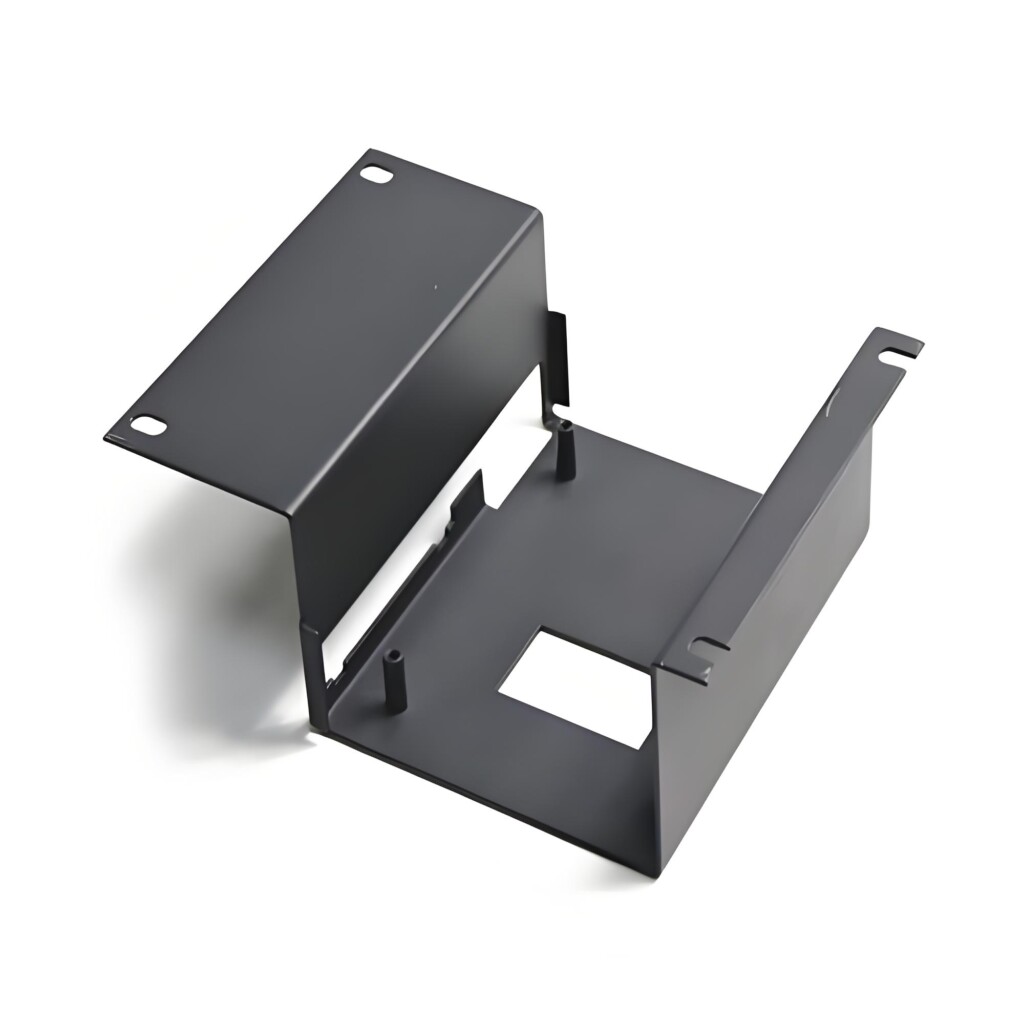
The specification that gets there is short. Name the alloy, the powder chemistry for the exposure the part will see, the colour reference, the film thickness range, and the features that must stay bare. Add the note that the parts will be handled as cosmetic, if they are, so the process is set up accordingly. The routes available for preparing and forming those parts are described on the sheet metal fabrication page.
FAQ
Will powder coat stick to aluminium without a conversion coating?
It can appear to at first, and the bond depends on mechanical key rather than on a controlled surface layer. In practice, powder coating aluminium without a conversion coating produces a finish that is far more sensitive to contamination and to moisture at a scratch, and adhesion failures in the field usually trace back to preparation. Where a part will be outdoors, the conversion coating step is not optional.
Is it better to paint or powder coat aluminium?
They suit different situations. Powder coating produces a more durable film in a single pass with no solvent, and it is the usual choice for metal parts in production quantities. Liquid paint is more flexible for small batches, for multi-colour work and for touching up after assembly. The decision usually comes down to quantity, colour complexity and whether the part will be repaired in service.
What coating is best for outdoor aluminium?
A polyester-based powder over a properly prepared surface is the common answer, because polyester films hold colour and gloss under ultraviolet exposure far better than epoxy. Where the part also needs abrasion resistance or must keep a metallic appearance, anodizing may be the better route. The exposure the part will see, rather than a general preference, is what should drive the choice.
Why do I see small bubbles in a powder-coated aluminium casting?
That is outgassing. Cast aluminium and some extrusions contain porosity or trapped volatiles that release as the part heats in the curing oven, pushing through the film while it is still fluid. The standard response is a pre-bake that drives the volatiles off before coating, allowing the film to form cleanly. It is worth raising when the part is quoted rather than after the batch has been cured. The test methods referenced in this article are published by ASTM committee D20.
If aluminium parts need a durable colour finish, send the model with the alloy, the exposure the part will see and the features that must stay bare. 6CProto reviews the part together with the finishing route and returns a DFM report with the quote, so pretreatment, cure and masking are planned before the batch runs. Upload the file at the 6CProto quote page or send it to projects@6cproto.com.