

In a hypothetical wear-part trial, a bushing rotates freely at receiving inspection but binds after installation and environmental exposure. Buying a harder replacement may miss the cause. A useful POM vs nylon machining decision checks the operating fit, moisture condition, housing, and wear pair before comparing the cost of the two finished components.
Wear and moisture uptake differences
Choose POM or nylon machined wear parts by the actual grade, load, speed, mating surface, lubrication, moisture exposure, temperature, and required fit. POM often offers a lower-moisture-uptake starting point, while nylon needs a grade-specific conditioning review. Neither material family guarantees wear life or installed clearance without an application-specific assessment and representative testing.
Start by identifying the resin family precisely. Delrin is acetal homopolymer, while a generic POM offer may refer to homopolymer or copolymer. Nylon can mean different polyamides, stock processes, or modified grades. Those differences are material choices, not interchangeable product descriptions.
The legacy Delrin design guide discusses friction and wear as dependent on load, speed, mating surface, lubrication, and clearance. Use its test context as background, then confirm current data for the proposed stock. An attractive friction value alone cannot rank complete bearing systems.

Dimensional stability
For the hypothetical binding bushing, follow the fit through three states: the supplied component, the installed component, and the component after representative exposure. An initially acceptable bore can change when installed or conditioned. Record which state determines acceptance and which changes the design must accommodate.
Toray’s nylon physical-property guidance describes water absorption and its effect on dimensions, including the influence of grade and geometry. Do not copy a molded specimen’s moisture percentage into a universal size allowance for a machined bushing.
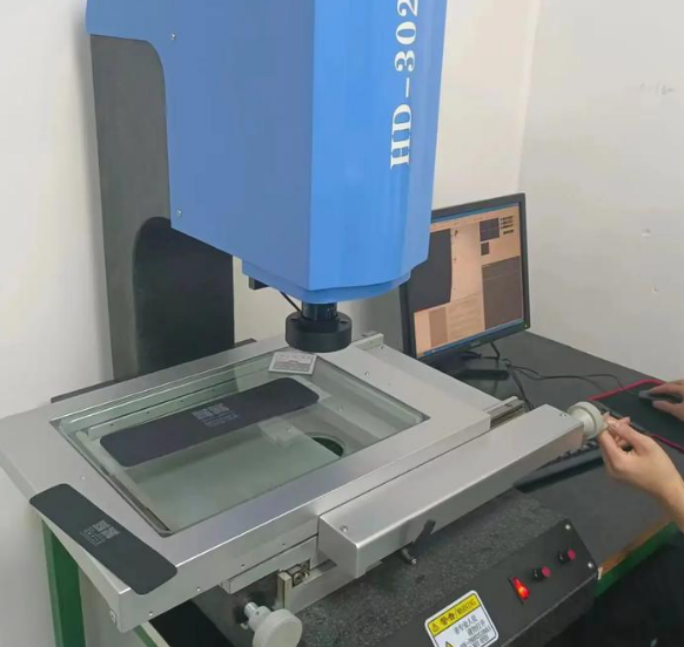
Temperature is another independent input. NIST’s dimensional-metrology FAQ explains the relevance of temperature to dimensional measurement. Agree reference conditions and a suitable inspection method. Receiving inspection should document the supplied state; the assembly trial should assess whether the required operating clearance remains available.
Table: application fit
Use a decision table to narrow the candidates before requesting samples. Define the operating pair and acceptance result first, then compare specified materials. A buyer can ask for evidence and assumptions without trying to replace the designer’s wear or fit assessment.
| Application need | POM review | Nylon review | Useful evidence |
|---|---|---|---|
| Close fit with humidity changes | Confirm grade and remaining environmental effects | Assess moisture state and dimensional response | Conditioned fit assessment |
| Repeated sliding motion | Assess grade, counterface and lubrication | Assess grade, counterface and lubrication | Representative wear and motion trial |
| Press-in bushing | Review installation and bore change | Include conditioning in the installation review | Installed bore and retention check |
| Cleaning or chemical exposure | Confirm compatibility for actual conditions | Confirm compatibility and moisture implications | Approved material data and relevant exposure trial |
Specify which output matters: permitted wear, retained clearance, movement force, debris, noise, or replacement interval. Different outputs may produce different material rankings even in the same nominal application.
Finishing and press fits
Define sealing and sliding surfaces separately from cosmetic surfaces. A polishing operation can change an edge or dimension without proving better wear. Agree the required texture, form, edge condition, and cleanliness, including the condition after any secondary work.
Mitsubishi Chemical Group’s plastics-machining guide discusses the distinct behavior of plastics during cutting and finishing. Ask how tooling, support, and heat management apply to the actual bushing, roller, or guide. Do not apply a metal-component inspection approach unchanged to every polymer feature.
A press fit is an assembly design, not just a tighter outer diameter. Review the housing, interference, lead-in, wall section, temperature, and time-dependent response. Measure the bore after representative installation if that bore establishes the running fit. Excessive interference can create the very binding that the replacement material was intended to solve.
FAQ
These questions address specification details that should be settled before sample approval.
Is Delrin the name for every POM material?
No. Delrin is a brand of acetal homopolymer; POM is the broader material family and also includes copolymer grades. Specify the exact product or approved material requirement. A generic acetal label does not establish the same stock history, additives, or properties.
Does nylon moisture absorption mean it cannot be used for precision parts?
No. It means the grade, environment, conditioning, geometry, and acceptance state need deliberate review. A nylon part may work well when its fit and service requirements account for those conditions. Evaluate the actual application rather than rejecting or accepting every nylon grade as one material.
Related process selection notes
Machining suits accessible rod, tube, or plate geometry and can support a developing design without committing to a mold. The starting form and processing history still matter. A large pocket or asymmetric removal can create different stability concerns from a simple turned sleeve.
Ensinger’s machinable-plastics FAQ discusses moisture uptake, dimensional stability, stress relaxation, and conditioning. Use supplier guidance for the exact stock and required conditions. Neither annealing nor conditioning should be added as an undocumented, universal fix.
Compare the complete route through machining, any agreed stabilization, cleaning, inspection, and representative fit approval. If later quantities justify molding, review geometry and material behavior again. A successful machined prototype does not automatically approve the molded equivalent or a different modified grade.
Internal links and next steps
Use the POM material page and nylon material page to begin a grade-specific sourcing review. Submit CAD, the controlled drawing, quantities, mating-part details, operating conditions, finish, and the required inspection state.
Ask the CNC machining quotation to state material assumptions, conditioning or treatment scope, and sample acceptance. Separate the price of the supplied component from any requested assembly testing so the quotation has a clear boundary.
Request a 6CProto POM or nylon wear-part review with the installed fit requirements. Return to the initial binding scenario during sample approval: check that the chosen grade and route address the identified cause under representative conditions.
FAQ
These questions address specification details that should be settled before sample approval.
Can a catalog friction value establish the service life?
No. Friction and wear depend on the grade, mating surface, loading, speed, lubrication, temperature, and clearance. Catalog tests provide evidence under their stated conditions. Validate a representative assembly and define the acceptable wear, fit, or motion result for the required operating period.
Should the supplier copy a metal press fit into a plastic bushing?
No. Review installation stresses, the housing, temperature, moisture, time-dependent deformation, and the effect on the installed bore. Define the required retention and operating clearance, then approve a representative assembly. A nominal interference value alone does not establish a satisfactory plastic bearing fit.