

Explore Vacuum, Urethane & Metal Casting Guides
A prototype latch cracks during an assembly trial, but the drawing identifies its material only as ABS-like. The team now has a failed part and an unanswered question: did the geometry fail, or did the substitute resin invalidate the test? Polyurethane vacuum casting is useful only when its specification makes that distinction possible.
When PU vacuum cast beats print or soft injection
Polyurethane vacuum casting suits functional test parts when the selected resin, geometry, finish, and conditioning represent the specific behavior being evaluated. Freeze those inputs before quoting. Compare casting with printing or injection molding against the test objective, and reserve production-material qualification for parts made with the required material and manufacturing route.
Soft tooling can spread master preparation over a batch of matching prototypes, but it also introduces mold work and sample approval. For a geometry still changing daily, 3D printing may avoid repeatedly replacing that work. When several teams need the same presentation and assembly configuration, casting may justify the additional preparation.
Compare the full iteration cost: model finishing, tooling, resin selection, secondary operations, inspection, and the cost of another test if the sample does not represent the intended condition. Do not base the decision on a unit-price comparison that leaves these activities outside one supplier’s offer.
Properties to freeze before quoting
Freeze the test-relevant properties rather than collecting the longest datasheet. A snap feature needs a different evidence set from a rigid cover used to verify connector clearance. Identify whether the trial evaluates stiffness, repeated deflection, impact, temperature exposure, sealing, or appearance, then ask what the selected formulation can represent.
ASTM D638 addresses tensile properties of plastics, while ASTM D790 addresses flexural properties. Values from these methods describe specified test specimens and conditions. They do not directly establish the life of a cast latch or the strength of a screw boss in the finished geometry.
Record the resin grade, cure and post-cure state, relevant property data, and test temperature. If the eventual production part uses another polymer, state the limitation in the test plan. A dimensional prototype can still answer a useful question without becoming evidence for every production requirement.
Color match and gloss limits
Color and gloss should be frozen only to the level needed by the test. An internal assembly fixture may need contrasting colors for identification, while a customer-facing demonstrator may require an approved physical sample. These are different cost drivers and should not share an unexplained instruction to match perfectly.
Smooth-On’s SO-Strong colorant instructions call for trial castings and warn against overloading the resin system. That illustrates why a cosmetic change belongs in the controlled formulation rather than being treated as a harmless adjustment after mechanical samples have been approved.
Ask whether the target appearance will be achieved through pigmentation, the master surface, or painting. A coating can change fit at a close interface and can obscure the surface condition being evaluated. For grip or wear trials, the contact surface must be identified explicitly; a painted prototype may answer a different question from an uncoated production polymer.
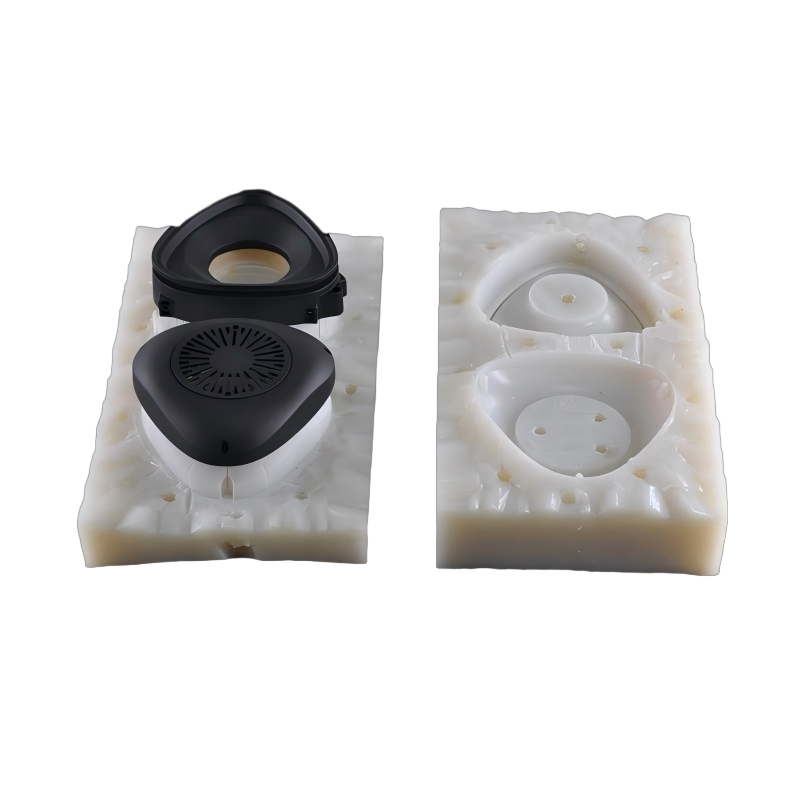
Gate and parting marks on cosmetic faces
Mark gates, vents, parting lines, and acceptable trimming areas on an annotated view. A prototype can meet its main dimensions yet interfere with a gasket because a witness mark sits on the sealing path. Cosmetic and functional exclusion zones should therefore be agreed before the tool is cut or split.
Distinguish a visible seam from a raised feature that changes assembly. For a hand-held enclosure, a small step near a grip can affect user feedback; for a test bracket hidden inside a fixture, the same mark may be irrelevant. Let the trial purpose determine the restriction instead of requiring cosmetic treatment on every surface.
The urethane casting process page is a useful route reference, but the project drawing must carry its own placement constraints. Require any sanding, filling, or painting used to meet the appearance target to be recorded when those operations could influence the test result.
Table: test purpose vs process choice
Choose the process that preserves the variable under investigation. A prototype does not have to duplicate production in every respect, but differences must not control the outcome being measured. The table separates useful prototype evidence from conclusions that require another specimen or manufacturing route.
For thermoset casting, formulation and section size also interact. Crystal Clear EU processing guidance gives a product-specific example of selecting resin to suit casting thickness and mass. Apply the selected material’s own instructions rather than importing those settings into another resin.
| Test purpose | Candidate route | Evidence to retain | Limit on the conclusion |
|---|---|---|---|
| Connector access and assembly sequence | Cast or printed geometry | Critical dimensions and assembly observations | Does not qualify final material durability |
| Presentation and user handling | Finished cast batch | Approved surface and color sample | Appearance does not establish polymer equivalence |
| Snap-fit durability | Route and material representing the required behavior | Cycle protocol and material state | Substitute-resin life may not transfer |
| Production process validation | Intended production route | Production controls and test records | Soft-tool prototypes alone are insufficient |
How many iterations soft tools usually survive
There is no universal number of design iterations that one silicone tool will accommodate. A revision that changes only an external color request is different from moving a clip, adding an undercut, or changing wall thickness. Ask whether the revision changes the cavity, master, mold split, or material-processing requirements.
The distinction between storage and production life in Smooth-On’s silicone guidance reinforces the need for application-specific evaluation. A tool’s physical survival does not establish that it can produce the revised design to the new acceptance criteria.
Control revision costs by separating open questions before ordering. First resolve high-risk geometry with a suitable quick prototype; next approve the cast master and test specification; then authorize the matching batch. This sequence avoids paying for presentation finishes on parts whose geometry still needs major changes. A local repair may be feasible, but approve its effects on surface quality and dimensions before relying on it.
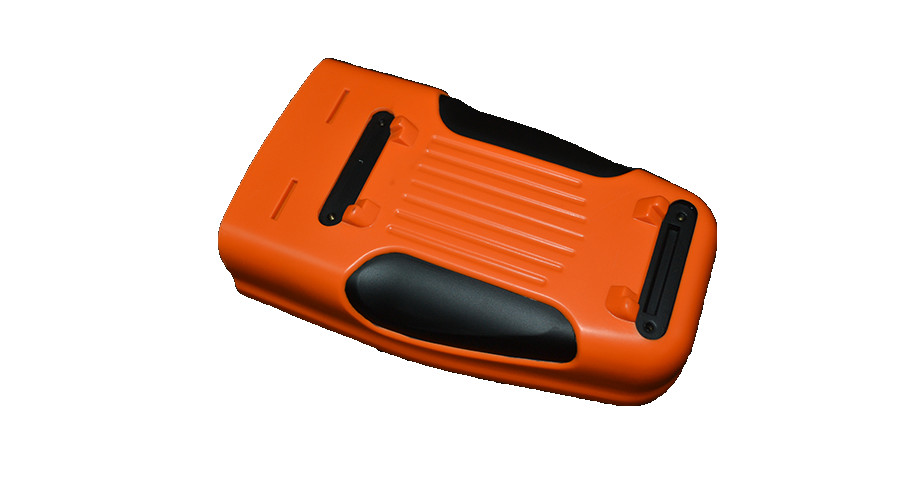
RFQ package for vacuum cast
The RFQ package should make the test objective visible to the manufacturing engineer. Send the controlled CAD, drawing, required quantity by revision, intended resin properties, critical interfaces, and any approved cosmetic reference. Identify the acceptance test separately from general background information.
A practical release sequence is to confirm the candidate material, approve the master or first sample where needed, verify the designated dimensions, and then release the remaining test batch. Keep a written decision when a material limitation is accepted for an early trial. That decision prevents a later team from treating the same parts as fully representative production samples.
For a broader rapid prototyping program, identify which questions each prototype route owns. Request separate quotation lines for tooling changes, finishing, and additional inspection where those activities could drive the next iteration. The supplier can then explain the cost consequence of a specification change before work begins.
FAQ
These questions address specification details that should be settled before sample approval.
Can the same casting be used for both a drop trial and a customer demonstration?
It can, provided both uses are planned and the sample remains suitable for each assessment. A drop trial may damage surfaces or introduce cracks that are difficult to see. Keep demonstrator samples separate when appearance approval must remain traceable. Record whether tested parts can return to the approved sample set, rather than assuming an intact-looking housing has retained its original condition.
Must every prototype property match the production resin?
No. Match the properties that could control the specific test outcome, and document the differences that remain. A clearance trial may need accurate geometry without matching impact behavior. A repeated-flexure trial needs a much stronger material-representativeness argument. The test owner should approve the substitution and the scope of the conclusion before the cast batch is ordered.
What should happen if a supplier proposes another resin during production?
Pause release of affected samples until the test owner evaluates the substitution. Compare the relevant properties, processing state, appearance, and compatibility with the planned trial. If the alternative is accepted, give the samples a traceable material identity and decide which earlier tests remain comparable. A similar commercial description is not enough to silently combine the results.
Give the manufacturing review a clear question to answer. Upload the CAD, drawing, and test requirements for a 6CProto quote and DFM review, with the proposed material limitations identified before sample release.