

Buyers often treat “made to order” as a scheduling label: the assembly is not on the shelf, so it will take longer. That reading is too narrow. A catalog lead time and a custom assembly can look similar on a purchase order, yet only one of them has a frozen drawing package, a hardware list with approved alternates, and an incoming standard that does not require you to tear the unit down to know whether it is acceptable.
For a made to order metal assembly, the phrase should describe a defined custom deliverable, not a vague promise of workmanship. The sections below are a drawing, hardware, and acceptance checklist for custom metal assemblies, including fabricated assemblies that mix cut, formed, machined, and purchased parts. They are not a decision guide for buying loose parts versus a joined module.
What “made-to-order” should mean for a metal assembly, not just a lead time label
On a metal assembly, made-to-order should mean a revision-controlled custom deliverable: named parts, hardware, leftover operations, and incoming checks, not merely a longer lead time than a catalog item. If those items are missing, the supplier will quote a shop’s default build and your receiving team will inspect a different product.
Lead time is a consequence of that definition, not the definition itself. A made-to-order fabricated assembly may still ship quickly when the design is complete and the hardware is standard. It may also take longer because a weld procedure, a special insert, or a first-article layout has to be agreed. Sheet metal fabrication capacity does not convert a thin drawing into a stable custom build.
Write the deliverable in purchase language. State whether the unit ships joined, kitted, or semi-finished; which purchased items are installed; and which records travel with the crate. When two quotations use the same “made to order” label but different assumptions, the cheaper line is often the one that left work for your dock.
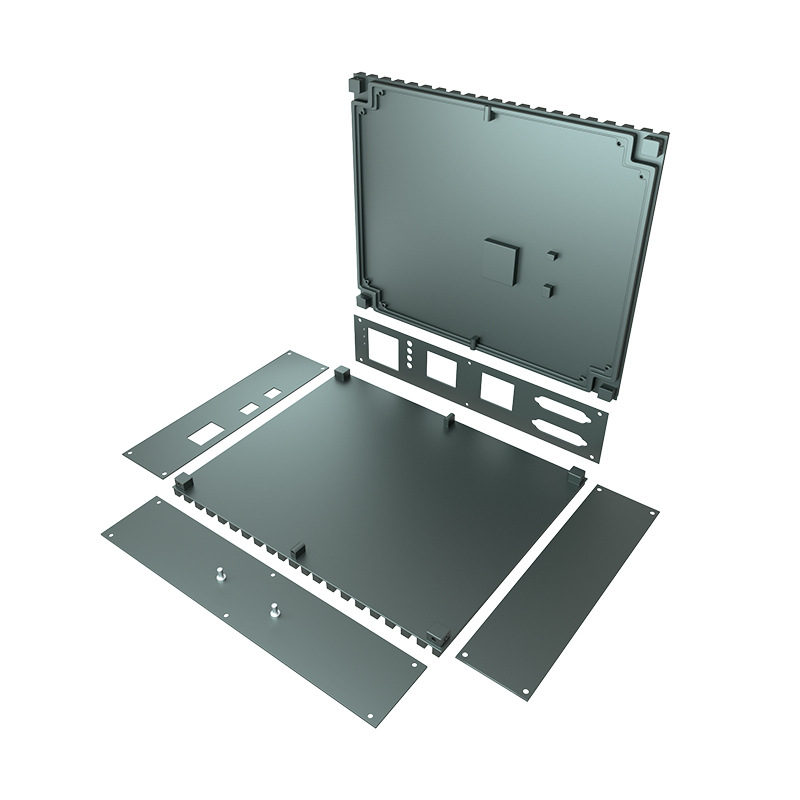
Drawing package: assembly view, BOM, ballooned hardware and leftover ops
The drawing package is the contract. It needs an assembly view that shows the completed state you will receive, a bill of materials that matches that view, ballooned hardware so each fastener or insert has a home, and a leftover-operations list for work that is intentionally incomplete. ASME Y14.100 drawing practices and ASME Y14.5 dimensioning rules help, but only if the package is complete enough to inspect.
An assembly view without balloons leaves hardware as a scavenger hunt. A bill of materials without installation notes leaves torque, adhesive, and press-fit work unowned. A detailed component drawing that never appears on the assembly view leaves the shop unsure whether that part is in this build. Cross-check part numbers, balloon numbers, and revision letters before you send the RFQ.
Leftover operations belong on the face of the assembly drawing, not in an email. Unpainted faces, untapped holes, open datums reserved for later machining, or customer-furnished parts installed at the line should be visible to anyone who picks up the print. If the package is later revised, follow a controlled practice such as ASME Y14.35 so the shop and the receiving team are not working from mixed issues.
Purchased hardware grades, finishes and approved alternates
Purchased hardware is where many made-to-order assemblies quietly change. A drawing that says “M6 screw” does not freeze grade, property class, coating, drive style, or whether a lock washer, patch, or prevailing-torque feature is required. Those details change strength, corrosion, tool access, and sometimes the installed height of a cover.
List approved alternates in advance when a specified insert, clinch nut, or fastener family may be scarce. Self-clinching hardware should be called out by series and finish, and installed to the supplier’s process limits; the PEM self-clinching fastener handbook is a practical reference for those installation and design limits. A verbal “or equivalent” is not an approved alternate. It is an invitation for two lots to look the same and behave differently.
Finishes on hardware have to be compatible with the assembly finish. A zinc-plated screw in a later paint cycle, or a stainless fastener against a coated aluminum panel, may be acceptable, but only if you say so. If the assembly is later plated, anodized, or powder coated, state whether hardware is installed before or after that finish, and which items are masked or fitted at the end.
Table: drawing items that change quote price and risk
The items below are not automatically expensive. They become expensive when they appear after the quotation, or when two bidders make opposite assumptions. Use the table as a pre-RFQ scan of the drawing package.
| Drawing item | Why the quote changes | Risk if it is left implicit |
|---|---|---|
| Ballooned hardware with grade and finish | Purchased-part cost, installation time, and special coatings | Shop substitutes a convenient screw; corrosion or strength changes |
| Approved alternates | Availability and tooling for inserts or clinch fasteners | A late substitution arrives with a different height or grip |
| Leftover operations | Work removed from or added to the supplier’s scope | You receive a “finished” unit that still needs paint or tapping |
| Inspection records and sample size | Layout time, reporting, and holding fixtures | Receiving cannot accept the unit without an unplanned teardown |
| Labeling and serialization | Marking method, unique identifiers, and pack list format | Traceability breaks as soon as units leave the crate |
| Spare-unit or spare-hardware policy | Extra assemblies, loose fasteners, and packing | Field service is short a screw or has no matching revision |
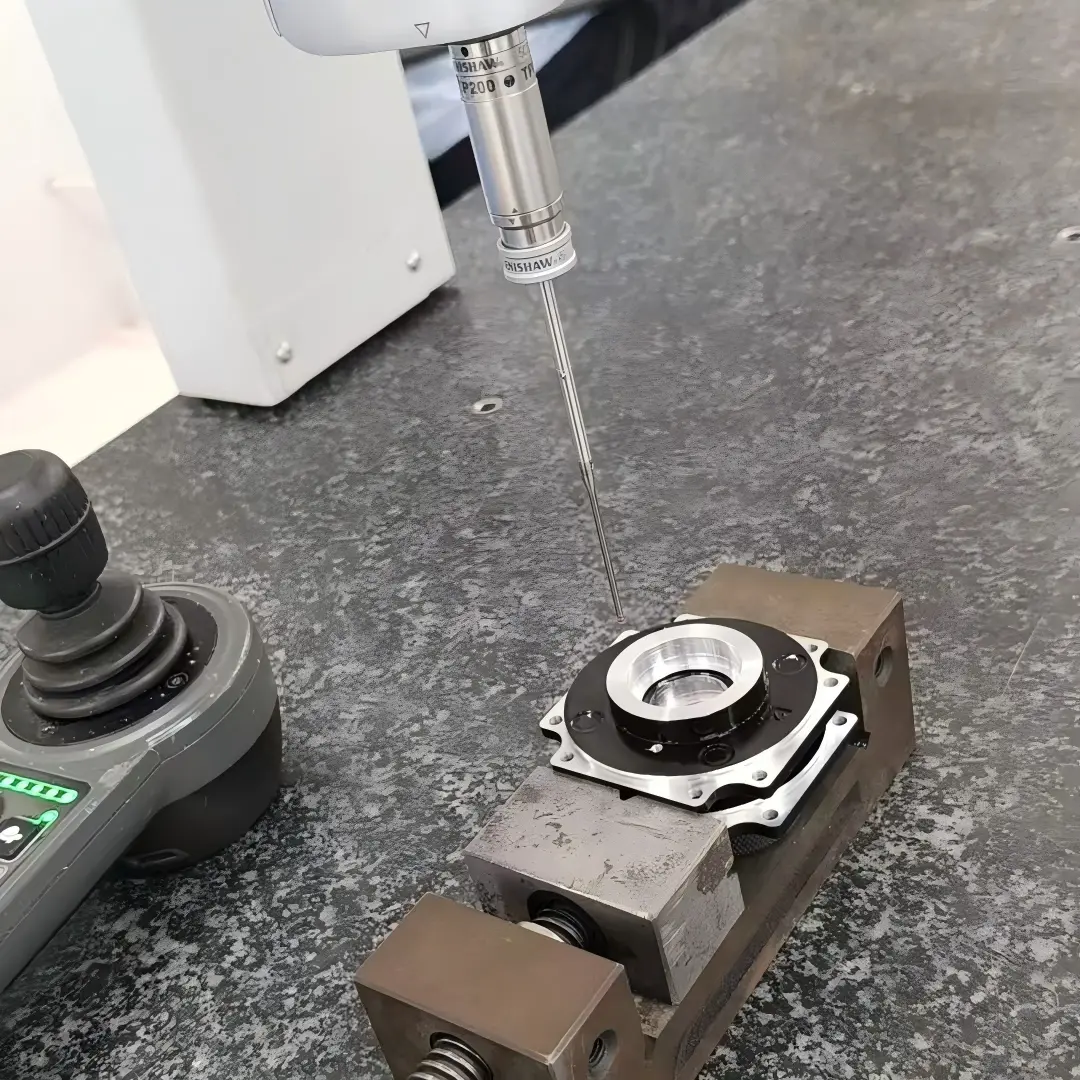
Incoming acceptance without a full teardown
A made-to-order assembly should be inspectable as a unit. Define the external checks: overall envelope, critical interfaces, hardware presence, finish, labels, and any test ports or windows you will use. Then define the records that replace a teardown, such as in-process photographs, torque charts, press-force traces, or a dimensional report against named tolerances. Dimensional metrology practice still applies; it simply may be performed before the covers go on.
A full teardown is a valid method when a hidden joint is critical and no trustworthy in-process record exists. It is a poor default. It consumes a good unit, delays the rest of the lot, and still may not represent the next crate if the process was never frozen. If you need a teardown, say on which units, at whose cost, and how the unit is restored or scrapped.
Write acceptance in the same language as the drawing. “Looks good” is not a criterion. “No visible gaps at the cover,” “flush to the named surface,” or “connector seated and labeled per the ballooned view” can be checked without disassembly. If a criterion cannot be checked on the complete unit and has no record, it is not yet an incoming standard.
Labeling, serialization and spare-unit policy
Labels and serials are part of the deliverable, not packing decoration. Say where the nameplate or label sits, what revision and part number it must show, and whether each assembly receives a unique serial. If the unit is later painted or plated, state whether marking happens after the finish so the text remains readable.
Spare-unit policy should be equally plain. Do you need a complete spare assembly at the same revision, a spare hardware kit bagged with the shipment, or neither? ISTA packing procedures can be referenced when transit risk matters, but packing methods do not replace a decision about whether a spare exists. A field-service team that opens a crate and finds no extra fasteners will invent a local substitute.
If mixed revisions must never travel in the same shipment, write that rule on the pack list. Made-to-order programs often accumulate small drawing changes; serialization and pack-list discipline are how those changes stay visible after the crate leaves the shop.
How to handle a first-article assembly that almost fits
An almost-fit is a decision point, not a compliment. Record the measured mismatch, the drawing revision, and the method the shop used to close the unit. If a mallet, a temporary shim, or an unrecorded clamp load was required, that method is now part of the process unless you reject it. A first article that only fits in the builder’s fixture may not fit on your line.
Choose one recovery path and document it: change the drawing, change the process, grant a one-time concession with a quantity limit, or reject the sample. Informal “we will watch it on the next parts” leaves the incoming standard unchanged and the next lot unanchored. Update balloons, hardware notes, or leftover operations before you authorize production quantities.
When the near-fit involves a purchased component, freeze the alternate or the supplier lot as well as the fabricated parts. A bracket can be perfect and still fail because a slightly taller insert appeared in the first article. That is a drawing-package problem, not a surprise to be absorbed at receiving.
FAQ
Does “made to order” just mean the assembly is not a catalog item?
It should mean more than that. On a custom metal assembly, made-to-order is a promise that the deliverable matches a revision-controlled drawing package, a named hardware list, and an agreed incoming acceptance method. A longer lead time or a unique part number is not enough. If leftover operations, alternates, and inspection records are undefined, you have a custom part number with a catalog-level description.
If the bill of materials lists hardware, is installation included?
Not automatically. A bill of materials can list screws, inserts, or adhesive without saying who installs them, to what specification, or whether unused items ship loose. Treat installation, specified tightening or curing, and leftover hardware as separate scope lines. Otherwise two made-to-order quotations can look comparable while only one of them includes the work your receiving team expects to skip.
Can incoming inspection accept an assembly without taking it apart?
Often yes, if you define the checks that are possible from the outside and the records that stand in for a teardown. Critical joints, hardware presence, finish, labels, and a sample of interfaces can be inspected on the complete unit, supported by in-process photographs, torque records, or dimensional reports. A full teardown is a different, destructive or time-consuming method and should be reserved for the cases you actually name.
What should happen when a first-article assembly almost fits?
Do not treat a near-fit as a silent pass or an informal shop tweak. Record the mismatch, the revision of the drawings, and whether the recovery is a drawing change, a process change, or a one-time concession. If a clamp, shim, or extra force made the sample assemble, that method will reappear in production unless you freeze or reject it now. Update the acceptance criteria before you release the remaining quantity.
Checklist to attach to a made-to-order assembly RFQ
Attach the revision-controlled assembly view, the matching bill of materials, ballooned hardware with grades and finishes, approved alternates, leftover operations, incoming checks that do not require a teardown, labeling and serial rules, and the spare-unit policy. Include the first-article quantities and what a near-fit should trigger.
Upload the package through the 6CProto request-a-quote form, or send it to projects@6cproto.com or WhatsApp +86 180 2219 4001. Ask the review to confirm the deliverable state, the hardware installation scope, and the incoming records so the quotation and the packing list describe the same made-to-order assembly.
Request a 6CProto quote with the assembly drawing package and acceptance list attached