

A low volume production run is the stage where parts have to be real. They must be in the production material, made by a repeatable process, and delivered on a schedule, but the quantity is still too small to justify full production tooling.
What counts as a small production run
Too many for prototyping, too few for hard tooling.
The number depends on the part, but the principle is consistent: a small production run is the quantity at which tooling cost cannot yet be amortised across the demand. For a simple machined bracket that may be a few hundred pieces, for a moulded housing it may be in the low thousands, and for a large fabricated structure it may be a handful. What defines the stage is not the number but the relationship between tooling cost and quantity.
Two characteristics distinguish it from prototyping. Parts are made to a frozen design rather than one under revision, and they are made repeatedly rather than as a one-off, which means process consistency matters as much as the individual part. That shift is what makes inspection records, material traceability and a repeatable process necessary rather than optional.
What a production run means in practice
A production run is a batch manufactured to a defined process, with the expectation that the batch is representative of the batch that follows. That expectation is what separates it from a prototype build. Where a prototype is judged on whether it answers a question, a production run is judged on whether it conforms to a specification and whether the next run will conform too.
| Stage | Quantity relationship | What matters most |
|---|---|---|
| Prototype | Tooling not justified at any quantity | Speed and iteration |
| Low volume production | Tooling not justified by expected demand | Repeatability and documentation |
| Bridge production | Demand outstrips the prototype route, tooling pending | Representative parts until production tooling is ready |
| Mass production | Tooling amortised and process optimised | Cycle time, cost and consistency |
Which processes suit a small run
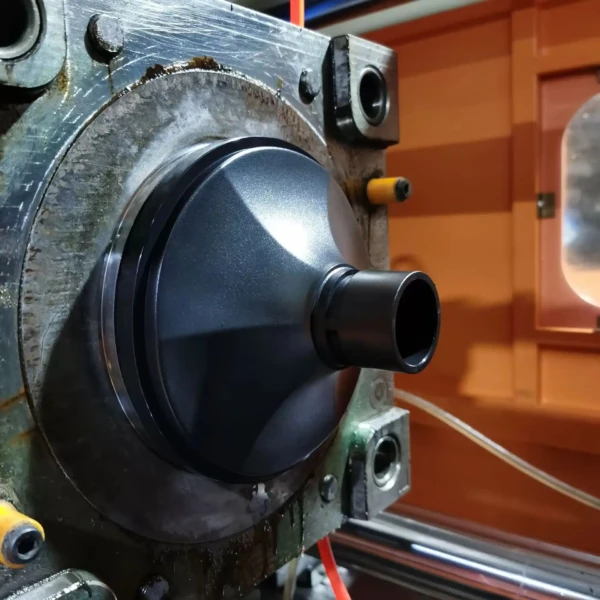
Four routes cover most low volume work. Machining produces parts in the final material without tooling, which makes it the default for metal components and for quantities that will never justify a mould. Casting in a silicone tool produces small batches that look like production parts, which suits enclosures and visible components. A bridge or soft tool produces real parts in the production material while the full tool is being prepared. And sheet metal fabrication covers frames, panels and enclosures without hard tooling.
Two considerations decide between them. What the part must do, because a component under load needs the production material and process, while a cover mainly needs to look right. And what comes next, because a part expected to move to moulding or stamping benefits from being designed for that process from the outset rather than re-engineered later.
When low volume stops being economical
The crossover arrives when the per-part cost of the tooling-free route exceeds the amortised cost of tooling plus the lower per-part price it enables. That calculation needs three inputs: the per-part price without tooling, the per-part price with it, and a volume forecast honest enough to be useful. Where the forecast is uncertain, the sensible approach is to place a smaller tooling commitment first and revisit the decision once real demand is visible.
Two further factors shift the crossover. Tolerance requirements can push it earlier, because processes that avoid tooling sometimes cannot hold what a moulded or stamped part can. And design stability pushes it later, because committing to tooling for a design that is still changing is usually more expensive than continuing on a flexible route. Material references are published by ASM International.
What changes when a part enters production
Four things become necessary. A frozen revision, so the batch and the drawing agree and stay agreed. A defined process, described well enough that a later batch can be made the same way. Inspection with recorded results against stated datums, because conformance has to be demonstrated rather than assumed. And material traceability, so a change of lot or supplier can be identified if the part behaves differently.
The practical consequence is that a low volume production order carries more documentation than a prototype order for the same part. That difference should be stated in the enquiry, because a quotation asked for as a prototype will often exclude the records the production stage requires. Drawing conventions follow ASME standards, and inspection practice is described by the NIST Manufacturing Extension Partnership.
How to brief a low volume production run
State the quantity and the expected annual volume rather than only the immediate order, because the second number is what determines whether tooling is worth considering. State the material and process where they are fixed, and say so where they are open. State the tolerances that matter and the inspection that has to accompany the parts. Say whether the design is frozen or still subject to change, because that affects the tooling decision more than anything else. And say what comes next, since a part destined for mass production should be made on a route that anticipates it.
Two further items reduce surprises. Mention the packaging and delivery requirements, because those affect handling and cost at every quantity. And ask for the quotation to be structured around a fixed block and a per-part block, so the effect of increasing volume is visible. Surface and coating terminology follows ASTM Committee B08, process obligations are set out by the US EPA, and the routes involved are described under low volume manufacturing and CNC machining.
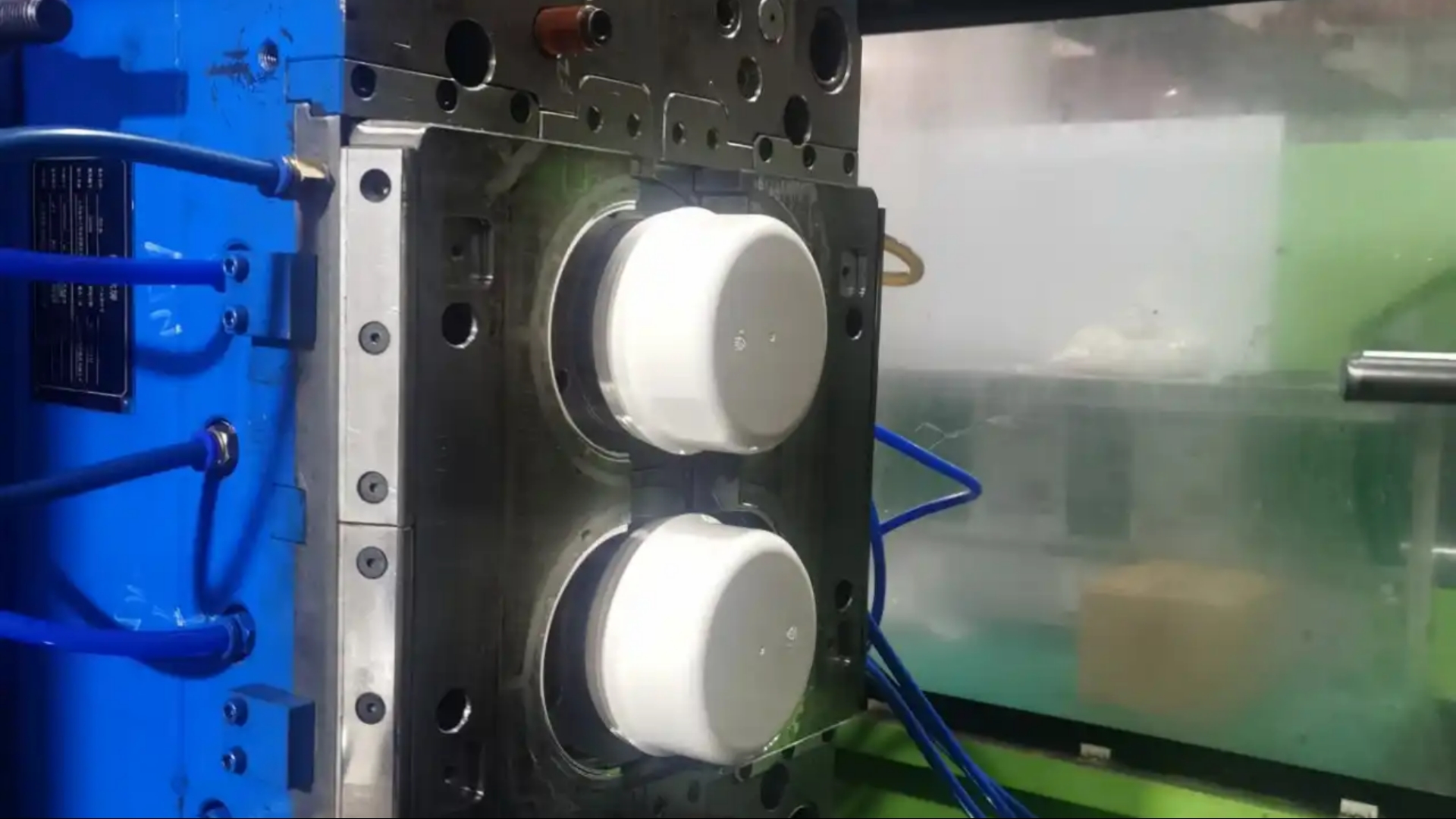
Send the part with the quantity, the expected annual volume and the records you need, and request a low volume production quote with the pricing structure split.
FAQ
What is a small production run?
A quantity too large to treat as a prototype and too small to justify hard tooling, defined by the ratio of tooling cost to expected demand rather than by a fixed number. It may be a few hundred machined parts or a few thousand moulded ones.
What does production run mean?
A batch manufactured to a defined process with defined material, where the expectation is that the batch is representative of the next one. That expectation is what makes traceability, recorded inspection and a frozen revision necessary rather than optional.
When does low volume production stop being economical?
When the per-part cost of the tooling-free route exceeds the amortised tooling cost plus the lower per-part price it enables. Tolerance requirements push that point earlier and an unstable design pushes it later.