

A high-temperature alloy name does not make a quotation complete. Two offers for Inconel CNC milling can cover different heat-treatment states, surface requirements, and evidence packages even when both refer to the same model. Buyers need to resolve those differences before comparing cycle time or approving a part for a demanding assembly.
What Inconel programs need on the RFQ
Specify Inconel CNC milling with the exact alloy, material condition, product specification, geometry, functional surfaces, required treatments, and acceptance records. Ask the supplier to separate machining assumptions from material and service-performance requirements. A quotation should identify its delivered condition and inspection scope rather than relying on the alloy family’s high-temperature reputation.
What does the shop need first? Provide the alloy designation and controlled drawing. Inconel is a trademark covering several alloys; it is not a complete procurement specification. For an alloy 718 design, identify the required product form and condition instead of assuming every 718 blank arrives ready for the same machining route.
Special Metals’ alloy 718 bulletin discusses properties and processing under identified conditions. Use the governing engineering specification for acceptance. Published material data cannot by itself qualify a finished component for a particular temperature, load history, or environment.
Tooling and cycle-time expectations
Why can the quoted time change? The stock condition, removed volume, feature access, cutter engagement, tool changes, and final surface requirements all affect the planned route. A more demanding condition or a deep feature may alter several of those factors at once.
Sandvik Coromant’s HRSA application guide addresses machining strategy, material condition, and milling operations. Apply current tool guidance to the specific setup. The existence of a high-productivity technique does not establish that it suits every thin wall, slot, or finish requirement.
For a purely hypothetical calculation, removing 60 cm³ at an assumed effective rate of 3 cm³/min takes 20 minutes of material-removal time. At 2 cm³/min it takes 30 minutes. Neither assumed rate is a 6CProto capability claim, and neither result includes setups, tool changes, finishing, or inspection. The example shows why an unsupported cycle-time comparison can mislead.
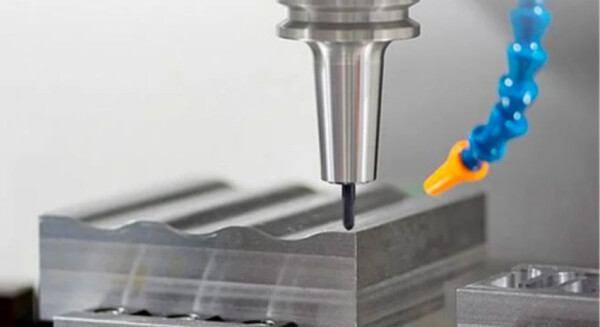
Surface integrity concerns
Is the specified roughness enough? It establishes only the texture requirement expressed by that callout. Surface damage, edge condition, work hardening, and other integrity requirements need their own definition and suitable evidence where the design demands them. A smooth-looking face does not establish the service condition of the underlying material.
The Nickel Institute’s machining guide groups nickel alloys by machining characteristics and distinguishes material conditions. Use that distinction to ask how the selected state affects roughing, finishing, and tool management. Do not transfer one nickel alloy’s process assumptions to every Inconel grade.
Mark critical edges, contact surfaces, and any restrictions on grinding, polishing, blending, or rework. If the application requires metallurgical or surface-integrity assessment, state the method, acceptance criteria, sampling, and responsible party. Confirm that the quotation includes those activities rather than inferring them from ordinary dimensional inspection.
Table: inspection and documentation asks
Which records should accompany the component? Request evidence that closes a specific requirement. A large document bundle is not automatically useful; each record should identify the part, revision, relevant condition, and result. Align the scope before manufacturing begins.
| Requirement | RFQ definition | Evidence to agree |
|---|---|---|
| Material identity | Alloy, product specification, condition, traceability | Required material documentation linked to supplied stock |
| Treatment | Approved sequence and final condition | Applicable treatment record and required property checks |
| Geometry | Functional dimensions, datums, inspection state | Feature-level report with agreed methods |
| Surface integrity | Design-specific method and acceptance criteria | Specified examination or test results |
| Deviations | Approval authority and disposition | Written approval associated with the affected parts |
ASME Y14.5 provides the framework for geometric communication. Use the selected drawing convention consistently and define the references that matter to assembly. A report of unrelated exterior dimensions cannot replace the specified datum relationships.
When EDM complements milling
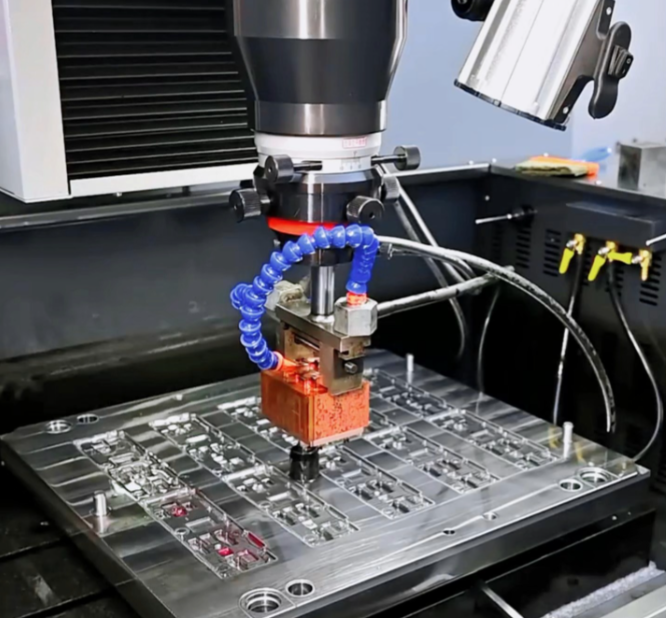
When should EDM be considered? Review it for conductive-material features where cutting-tool access or geometry makes conventional milling difficult. The decision must include electrode or wire access as applicable, process allowances, the resulting surface, and any required subsequent work.
Makino’s discussion of EDM technology and surface integrity addresses surface-layer considerations. EDM should not be treated as automatically interchangeable with a milled finish in a fatigue-sensitive or otherwise critical region. Agree the surface acceptance and any qualified finishing sequence.
The milling review can identify features needing another route, but confirm the actual offered operations in the quotation. Approve changes affecting critical surfaces or geometry with the responsible designer before using a complementary process.
FAQ
These questions address specification details that should be settled before sample approval.
Does the alloy name establish a safe operating temperature?
No. Service suitability depends on the specified material condition, product form, geometry, loads, exposure, life requirement, and applicable design basis. A supplier bulletin provides condition-dependent material information; it does not qualify every finished component for that service.
Can a surface-roughness report prove surface integrity?
No. Texture measurement addresses the specified surface-texture characteristic. Other concerns, such as damage or metallurgical condition, require their own defined examination and acceptance criteria where relevant. State those requirements before quotation and agree which evidence will be supplied.
Is an EDM feature automatically equivalent to a milled feature?
No. Review the resulting geometry, surface condition, process restrictions, and any required subsequent finishing. For a critical feature, the responsible designer must approve the route and its acceptance evidence. Conductivity and geometric accessibility alone do not establish functional equivalence.
Related process selection notes
Should roughing occur before or after heat treatment? Resolve that question against the specified material condition, treatment response, geometry, and final requirements. The selected sequence can change machining effort and the amount of finishing needed afterward. A procurement preference cannot override the engineering requirement.
Use the Inconel material discussion to confirm stock assumptions, then align the CNC machining scope with the approved treatment and inspection sequence. Identify which operations are performed before final dimensional acceptance.
Keep comparisons on a common basis. Separate one-time route development from repeat manufacturing where the supplier provides that distinction. Changes to quantity, stock, inspection, or treatment can make an old quotation unsuitable for a new order even if the CAD appears unchanged.
Internal links and next steps
Complete the RFQ with the model, drawing, exact material requirement, quantity, finish, treatment scope, critical surfaces, and required records. Ask the response to list assumptions, exclusions, and proposed deviations. Resolve open items before approving the manufacturing instruction.
For an aerospace-related project, state the actual customer and program requirements that govern the order. Do not infer a supplier approval, certification, or special-process qualification from the existence of an industry page. Obtain the evidence required for this procurement.
Request a 6CProto Inconel milling quotation with the material condition and inspection package. Compare the delivered component and its evidence together, then approve the complete scope.