

Thirty percent glass content describes one ingredient proportion, not the complete behavior of a nylon part. The polymer, reinforcement form, stock history, fiber direction, and moisture condition still matter. A useful glass filled nylon machining review follows those inputs through tooling, molding alternatives, and the final acceptance state.
Tool wear when machining
Plan glass-filled nylon machining around the exact stock grade, reinforcement, material condition, geometry, tool wear, heat, support, and final inspection state. Compare machining and molding with their different material structures and process effects. Validate critical surfaces, dimensions, and function on representative parts rather than treating filler percentage or a successful unfilled-nylon setup as sufficient evidence.
First identify the supplied product precisely. Record PA family, grade, reinforcement content and form, additives, stock process, dimensions, and required documentation. A machining blank and injection-molding pellets with similar descriptive names are different supply routes requiring their own evidence.
Mitsubishi Chemical’s machining toolkit discusses cutting-tool selection for reinforced engineering plastics. Use its material-specific context to review the actual tooling proposal. Do not assume the same cutting edge, tool-change interval, or surface result as an unfilled polymer.
Agree what the trial must reveal: relevant tool condition, dimensional change across the run, edge quality, surface defects, and critical interfaces. Determine a supported wear-monitoring and change strategy instead of inventing a number of parts per cutter. Include suitable handling and debris control in the proposed process.
Review the fixture and operation sequence as the part loses stock and stiffness. A supported roughing condition does not necessarily represent the finishing condition. Preserve critical geometry through the complete route and inspect in the required released state.
Molding warpage and knit lines
Next assess molding on its own terms. The warpage section of BASF’s Ultramid brochure connects directional shrinkage with fiber orientation and also identifies geometry, wall distribution, and processing influences. These are grade-and-route considerations, not one shrinkage allowance for all reinforced nylon.
Review flow around holes, ribs, bosses and inserts, and where different fronts meet. Autodesk’s weld-line guidance identifies material, fillers and conditions at the meeting region as quality factors. Identify any critical local region and validate it rather than relying on a generic tensile value from an unrelated specimen.
If a machined prototype precedes molding, document what it represents. It may establish selected geometry or assembly relationships while leaving flow-induced orientation, weld regions, molding distortion and surface state open. Review the transfer before using prototype success to release a molded part.
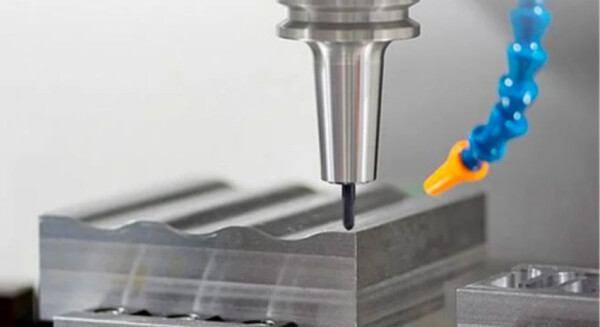
Table: design notes
Use a route-specific worksheet to keep material and process assumptions visible. The required output is an accepted part in its specified condition, not merely the same nominal shape from either process.
| Requirement | Machining review | Molding review | Evidence to agree |
|---|---|---|---|
| Material identity | Stock grade, reinforcement and supply history | Resin grade, formulation and allowed material changes | Controlled material specification |
| Directional behavior | Stock structure and machined feature orientation | Flow and fiber-orientation effects | Representative functional evaluation |
| Dimensions | Heat, support, wear and released shape | Shrinkage, warpage and final condition | Specified-state measurement |
| Local integrity | Cut surface, edges and relevant defects | Weld regions, fill and ejection effects | Feature-specific inspection or testing |
| Moisture state | Stock, processing and later conditioning | Resin processing and molded-part conditioning | Agreed delivered and test state |
| Route change | Limits of the machined prototype | New molding-dependent evidence | Documented transfer review |
Prioritize the dimensions and functional regions that control fit, loading, motion or contact. Avoid asking one generic tolerance to cover all possible effects. Agree the measurement method and the relevant part condition before comparing results from different routes.
When unfilled is better
Consider unfilled material when the actual function favors its supported behavior or when reinforcement introduces an unnecessary constraint. Compare the exact candidates for required load, deformation, repeated operation, wear pair, surface needs, processing and environment. Neither filled nor unfilled is a universal upgrade.
Ask which requirement created the reinforcement choice. If it was a stiffness target, assess that target in the actual geometry and service state. If the function permits a different section, material or assembly, compare the complete alternatives. Removing glass while retaining an unchanged drawing should trigger a design review.
Retain the relevant evidence for each candidate separately. A visually similar finish or an easier initial machining trial does not prove equivalence in long-term loading, moisture exposure or the installed assembly.
FAQ
These questions address specification details that should be settled before sample approval.
Does 30% glass-filled nylon identify one interchangeable material?
No. Specify the polymer grade, reinforcement, additives, supply form and required condition. Similar filler content does not establish identical orientation, processing history or performance.
Does a machined sample reproduce molded fiber orientation?
Not automatically. The starting stock and the molded geometry can produce different material structures. Limit the prototype conclusion to the questions it represents and obtain molded evidence for molding-dependent requirements.
Related process selection notes
Third define conditioning and inspection. The public scope of ASTM D618 addresses controlled conditioning of plastics for testing. Use the appropriate complete requirements and actual material specification rather than choosing a universal waiting time for every nylon component.
The public scope of ASTM D570 concerns water absorption under stated testing conditions. Absorption data are not automatically a size correction for a particular machined or molded part. Geometry, material and exposure need to match the question being evaluated.
BASF’s moisture discussion also relates absorption to grade, time, temperature and wall thickness. Keep dimensional and functional results linked to their documented state. Distinguish as-delivered inspection from a service-exposure trial where the specification requires both.
Finally approve a representative finished part with the material identity, route, revision, processing state and records needed for repeat work. Review affected evidence after changing stock, resin, reinforcement, geometry, tooling, conditioning or supplier route. A percentage label should never replace that release record.
Internal links and next steps
Send the model and drawing, exact grade or selection criteria, reinforcement requirements, quantities, stock or molding preference, critical interfaces, load/environment, and required inspection condition. Review the nylon specification alongside CNC machining and the proposed injection-molding route.
Request a reinforced-nylon review with material state and route-specific acceptance defined. Confirm the supported process and representative validation before release.
FAQ
These questions address specification details that should be settled before sample approval.
Can a dry measurement approve a humid-service fit?
Only when the specification and evidence support that conclusion. Define the delivered and service states, relevant conditioning and final acceptance rather than treating every moisture condition as equivalent.
Is unfilled nylon always a simpler replacement?
No. Removing reinforcement can change functional behavior and the manufacturing route. Review load, deformation, wear, environment, dimensions and affected validation before approving a substitution.