

A longer inspection report can still leave the most important feature unproven. For first article inspection CNC work, the useful question is whether the package connects the released requirement, identified part, suitable verification method, result, and approved disposition. Specify that chain before asking for a standard report template.
What FAI should include
Request first-article inspection by defining the released configuration, inspected parts, characteristics, material and process records, measurement methods, results, nonconformities, and approval scope. Distinguish a targeted prototype report from any contractually required formal FAI package. Agree ongoing controls and change review separately; a completed first-article report does not automatically establish every later part’s conformity.
Start with the decision the report supports. A fit prototype may need selected critical dimensions and a controlled assembly check. A production release may require broader characteristic accountability and process evidence. A specific customer contract may impose a formal standard and additional records that cannot be removed merely to simplify delivery.
The public record for SAE AS9102C identifies an aerospace first-article inspection standard. When it is required, specify the applicable complete requirements and customer additions. Do not label a generic dimensional report AS9102-compliant solely because it resembles a familiar form.
Identify the part number, revision, drawing and model revisions, applicable specifications, quantity inspected, and the relationship to the manufacturing configuration. State what supporting material, finish, special-process or functional records are required. Ask the supplier to identify exclusions and unresolved items before production.
Balloon drawings
Use characteristic identifiers to connect product definition with evidence. A ballooned drawing is a communication aid: it should let a reviewer find the requirement, locate the corresponding report entry, and understand the result. It does not perform the measurement.
Review drawing notes, geometric controls, finish requirements and other applicable characteristics as well as obvious linear dimensions. Decide how model-defined requirements are identified. Avoid assigning a numeric result to a characteristic that actually needs another form of verification.
The public overview of ASME Y14.45 addresses measurement data reporting. Use an agreed reporting method suited to the defined requirements. A generic spreadsheet column titled measured value does not decide how every geometric characteristic should be reported.
For digital product definition, NIST’s STEP analyzer overview describes checks involving file structure, geometry and product manufacturing information. Such tools can support file review, but a file check does not establish that the manufactured characteristic was inspected or conforms.
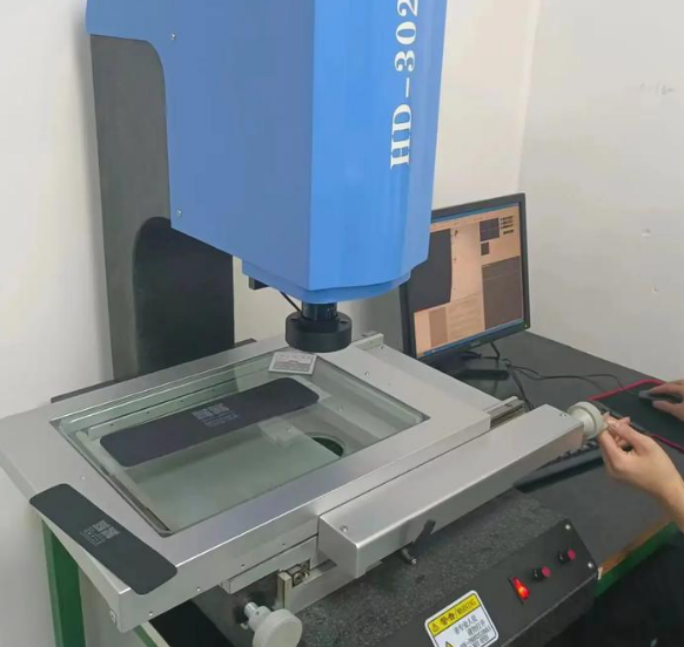
Table: request levels
Agree the request level explicitly. The categories below are purchasing scopes for discussion, not official levels assigned by a particular FAI standard. Contract requirements take precedence over a convenient category.
| Purpose | Scope to agree | Useful deliverables | Limit to preserve |
|---|---|---|---|
| Selected prototype question | Identified critical characteristics and configuration | Targeted measurements and relevant fit results | Unverified requirements remain open |
| Broader dimensional review | Specified drawing/model accountability | Linked characteristic report and methods | Dimensions do not establish all material/process properties |
| Production release review | Required material, process, dimensional and functional evidence | Traceable report and supporting records | Ongoing controls need a separate agreement |
| Contract-defined formal FAI | Applicable standard and customer additions | Required forms, accountability and supporting evidence | Do not replace with an informal package |
| Changed configuration | Affected and retained evidence under applicable rules | Documented change review and required new verification | No automatic carryover from an obsolete revision |
Confirm whether the quote includes report preparation, measurement programming, fixtures, external laboratory work, records review, customer approval and any repeat activity. Compare the same deliverables rather than treating all quotations for FAI as identical.
When full FAI is overkill
A full document package can exceed the useful scope of an early prototype when no contract or application requirement demands it. If the current decision concerns one mating interface, a defined targeted report may answer that question more clearly. Obtain agreement on what is included and what it does not establish.
Do not reduce scope by hiding requirements. Mark an unverified characteristic, deferred test or unresolved document explicitly and assign its next decision. A prototype waiver should be controlled by the responsible authority and should not silently become a production acceptance rule.
Likewise, an early representative part may differ from the final production configuration. Identify the material, tooling, secondary operations and inspection differences. The report should preserve those boundaries so later reviewers do not infer a release that never occurred.
FAQ
These questions address specification details that should be settled before sample approval.
Does a first-article report certify every later part?
No. It records the agreed evidence for an identified configuration and inspection scope. Define ongoing production controls, sampling and change review separately.
Must every prototype order use a formal aerospace FAI package?
No universal requirement follows from the word prototype. Follow the contract and application requirements. Where those permit a narrower report, define its exact scope and limitations.
Related process selection notes
Measurement suitability belongs in the request. NIST’s traceability policy and FAQ explain that traceability alone does not guarantee fitness for a particular purpose. Review the method and uncertainty in relation to the actual tolerance or test requirement, rather than relying on a calibration label alone.
The public description of ISO/IEC 17025 concerns laboratory competence. Where accredited work is required, verify the actual laboratory and relevant scope. The standard’s existence does not establish that an on-demand supplier or every subcontracted test holds that accreditation.
Agree how nonconforming or uncertain results are reported and dispositioned. Retain actual results and link any approved deviation to the relevant characteristic and configuration. A blanket pass should not conceal missing evidence or an unresolved failure.
For repeat orders and changes, apply the agreed review rules to material, geometry, manufacturing route, tooling, location or other relevant factors. Determine what evidence remains valid and what must be repeated. Keep first-article approval and subsequent production acceptance distinguishable in the record.
Internal links and next steps
Send the controlled model and drawing, specifications, quantity, intended release decision, critical characteristics, material/process traceability needs, required report format, and any customer-mandated FAI requirements. Review the machining route, applicable standards and tolerance discussion, and required precision inspection scope.
Request a quote with the exact first-article evidence package attached. Confirm the supported methods, records, exclusions and approval points before release.
FAQ
These questions address specification details that should be settled before sample approval.
Is a ballooned drawing enough to prove inspection?
No. It links requirements to identifiers but needs corresponding results, methods and applicable records. An unmeasured characteristic should not appear as an unexplained pass.
Can a supplier claim AS9102 certification from completing forms?
Do not treat forms as evidence of an organizational certification. Establish the required FAI standard, actual implementation and contract deliverables separately from any independently verified supplier credential.