

Two identical tools mold the same part; one runs a 28-second cycle and the other runs 34 seconds, because the first tool cools the thick sections evenly and the second does not. Cooling time is the largest part of most molding cycles, and cooling-channel layout decides both the cycle and the part quality: uneven cooling means warpage, sink marks, and longer times to let the whole part set. Straight drilled channels are the standard answer, and conformal cooling — channels that follow the part geometry — is the upgrade that pays off where hot spots control the cycle. Choosing between them is an engineering decision with a clear payback math.
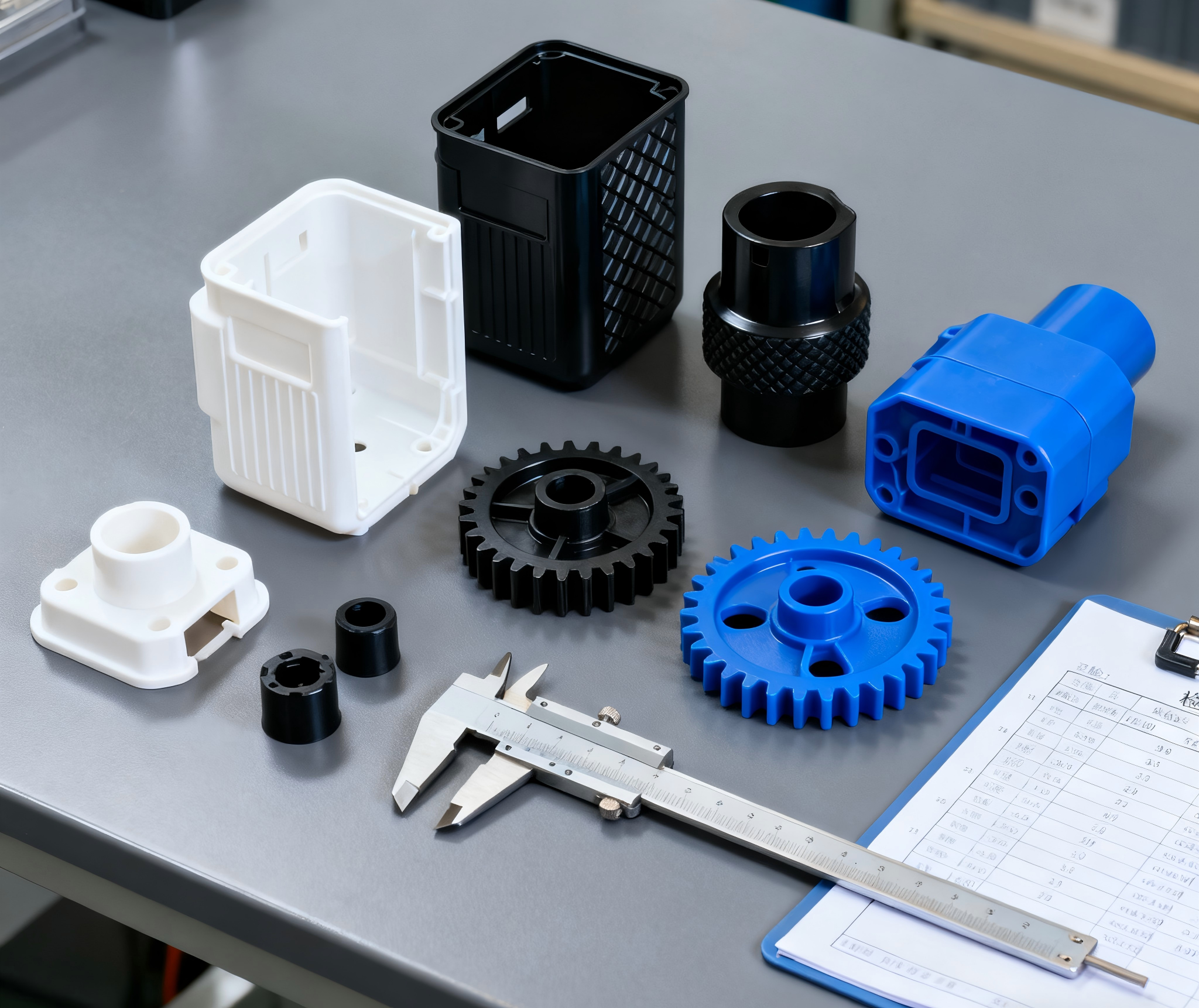
Why cooling layout controls cycle time and part quality
Injection molding is a heat-transfer process: the plastic arrives hot and must leave cool enough to hold its shape. The mold is a heat exchanger, and its channels remove heat from the cavity. If the cooling is even, the part sets uniformly and comes out flat; if some regions cool slower, they shrink later, and the part warps or sinks while the cycle waits for the slowest region. Cooling layout therefore sets the cycle time — which follows the slowest point — and the part quality, which follows the temperature gradient across the part.
Hot spots are usually geometry-driven: thick walls, bosses, and ribs hold heat longer than thin walls, and a straight channel passing nearby may not reach the mass that needs cooling. The cooling design starts by mapping where the heat is, not by drawing parallel lines.
Straight channels: design limits and predictable results
Straight drilled channels are the workhorse of mold cooling because they are inexpensive, predictable, and easy to clean and inspect. They work well when the cavity geometry is relatively uniform and the channels can be placed close enough to the surface. Their limits appear with complex or deep geometry: a straight channel cannot follow a curved cavity surface, and the distance between the channel and the cavity varies, creating uneven cooling. Multiple straight channels at different depths and angles can approximate a conformal layout, but each added channel raises drilling cost and the risk of breaking into the cavity.
Channel spacing and distance to the surface follow practical rules of thumb — a common starting point is channel diameter of roughly 8–12 mm with spacing several diameters apart and the channel kept a safe distance from the cavity surface — but the exact layout depends on the steel, the plastic, and the cycle target. Confirm the geometry with the mold designer rather than copying a generic spacing.
Conformal cooling: when printed or bent channels pay off
Conformal cooling routes the channels along the part surface, following curves and reaching hot spots that straight drilling cannot. It is produced by additive manufacturing of the insert or by bent-tube and other techniques, and it is most valuable where a hot spot controls the cycle or drives a quality problem. The payback case is specific: if reducing the cycle by seconds on a high-volume part, or removing a warp or sink problem on a quality-critical part, the conformal insert pays for itself. If the part is low-volume or the cooling is already even, conformal cooling adds cost without adding value.
Conformal inserts bring their own constraints: the printed material must match the mold steel’s thermal and wear behavior, the channels must be cleanable or sealed, and the insert must be designed so the printed channels do not compromise strength near the cavity. Vendor demonstrations of dramatic cycle reductions are usually built on the best-case part; evaluate the claim on your geometry with a quoted cycle and tooling cost.
| Decision factor | Straight channels | Conformal cooling |
|---|---|---|
| Tooling cost | Lower; conventional drilling | Higher; additive insert or special construction |
| Geometry fit | Best on uniform sections | Follows complex surfaces and hot spots |
| Cycle benefit | Baseline | Real where hot spots control the cycle |
| Quality benefit | Good with even layout | Better on warp or sink-driven parts |
| Maintenance | Easy to inspect and clean | Channels harder to access; plan for it |
Use the table to frame the quote comparison: the question is not which technology is better, but whether the cycle or quality improvement on this part pays for the tooling difference.
Designing cooling around hot spots: ribs, bosses, and thick walls
Hot spots follow mass: a boss, a rib junction, or a thick pad holds heat long after thin walls are cool. Cooling design should place channels closer to these masses, which is where conformal geometry earns its value. The alternative levers are lower mold temperature (which has limits), different gate or wall design (a design change), or a longer cycle (the cost you are trying to avoid). When a part has a hot spot that cannot be redesigned, the cooling channel that reaches it is the process answer.
Cooling should also be balanced across cavities in a multi-cavity tool. If one cavity runs hotter than its neighbor, the parts differ and the cycle follows the worst cavity. Balancing the cooling layout across cavities is part of the design, not an afterthought discovered on the floor.
Deciding whether conformal cooling earns its tooling cost
The decision is arithmetic with three inputs: the cycle-time or quality benefit on your part, the tooling cost difference, and the production volume. Estimate the cycle saving from mold-flow or from a comparable part, multiply by the machine-hour cost and the annual volume, and compare with the conformal tooling premium. If the payback is within the program life and the part quality needs it, conformal cooling is the right call; if not, a well-laid-out straight-channel tool is the economical answer. Quality benefits that avoid rejects or rework should be counted in the same math.
Ask the tooling supplier for the payback estimate in writing, with the assumptions stated: cycle baseline, machine rate, volume, and tooling premium. A supplier that cannot show the arithmetic is selling the technology; one that can is selling the decision.
A payback example shows the arithmetic. A high-volume molded part has a 30-second cycle set by a hot boss that cools slowly. Mold-flow estimates that a conformal insert near the boss saves 4 seconds per cycle, and the quoted premium for the insert is a fixed tooling cost. The decision compares the saving to the volume: at a given machine-hour cost and annual quantity, the cycle saving pays the premium within a defined production period, and the insert is approved; at low volume, the same saving never recovers the premium and the straight-channel tool is the right choice. The same comparison applies to a quality problem: if the hot boss drives a warp or sink defect that rejects a percentage of parts, the reject cost is added to the payback, and a conformal insert that removes the defect can pay for itself even when the cycle saving alone would not. The estimate is only as good as its assumptions, so the tooling supplier should state the baseline cycle, the machine rate, the volume, and the premium in the same calculation. What the example shows is that conformal cooling is not a technology preference; it is an investment decision with a payback period. Parts with isolated hot spots and high volume justify it, and parts with uniform cooling or low volume do not — and the arithmetic, not the vendor brochure, makes the call.
Frequently asked questions
Can conformal cooling be added to an existing mold?
Sometimes, by replacing a section of the tool with a conformal insert. The retrofit is practical when the hot spot is isolated and the insert can be designed without weakening the tool. If the cooling problem affects the whole cavity, a new core or cavity with conformal channels may be cheaper than a series of retrofit inserts.
Do conformal channels need special cleaning?
Yes, because printed channels can have surface roughness and geometry that traps scale and debris. Plan the cleaning method when the insert is designed — straight access where possible, or a cleaning and inspection procedure that matches the channel. A blocked conformal channel defeats the entire investment, so maintenance access is a design requirement, not an option.
What materials are used for printed conformal inserts?
Tool-steel powders such as maraging steel and other printable mold steels are common, chosen for hardness, thermal conductivity, and polishability. The printed material should be validated for the same wear, corrosion, and heat-transfer duties as the rest of the tool, and confirmed with the supplier’s data for your resin and coolant.
The cooling decision in one paragraph
Cooling layout sets the cycle and the part quality, straight channels handle uniform geometry economically, and conformal cooling earns its cost where hot spots control the cycle or drive defects. Map the heat, estimate the payback with stated assumptions, and choose the layout that fits the geometry and the volume — the fastest tool is not the one with the fanciest channels, but the one whose cooling matches the part.
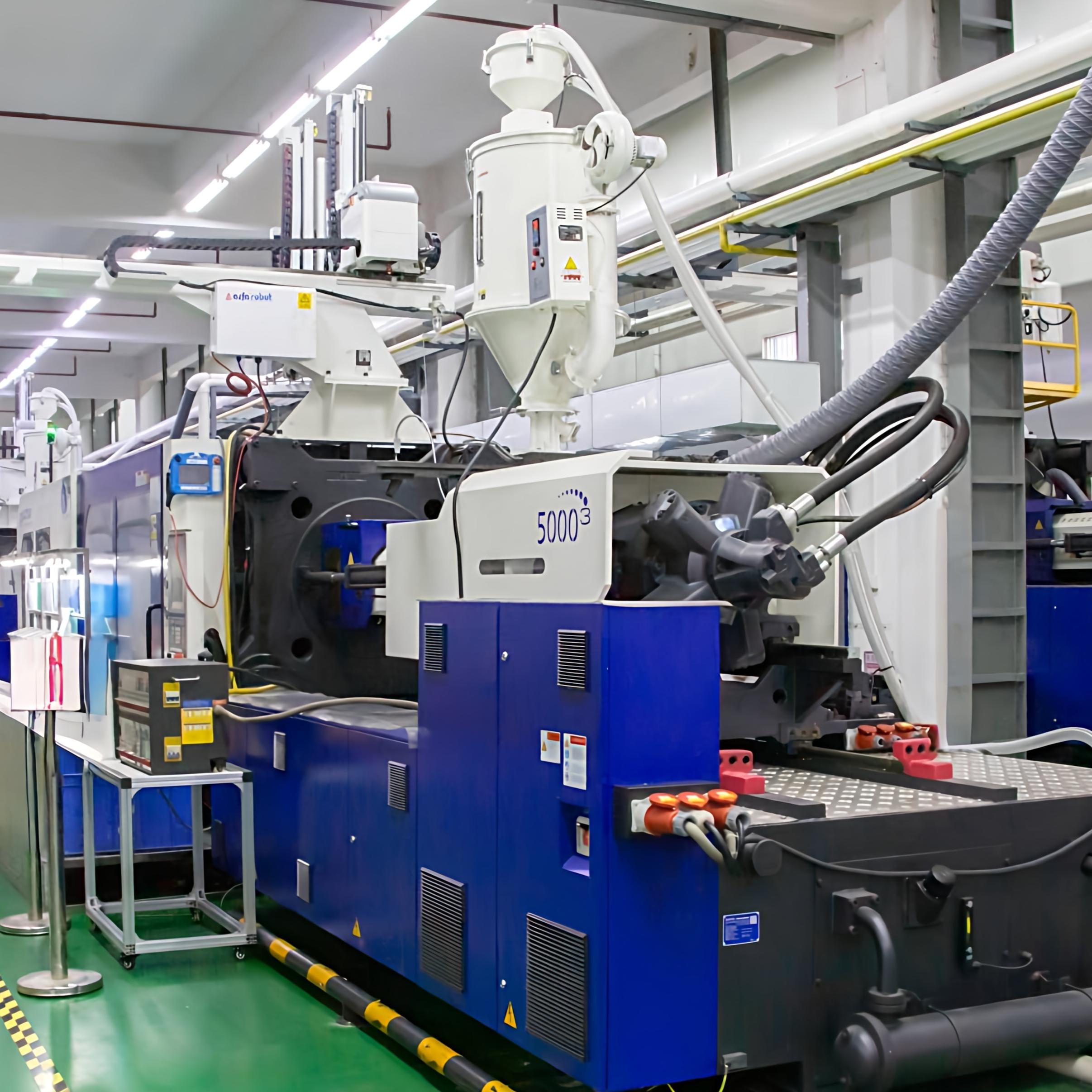
If you are quoting a tool with a hot spot or a warp problem, the rapid tooling team can review the part geometry and compare straight and conformal layouts with the cycle and cost assumptions before the tool is cut.