

Explore Manufacturing Materials Guides
Two bronze bushings with the same bore can have different operating limits because their material, construction and lubrication systems differ. A substitution based only on a generic PV number can miss the condition that controls wear or temperature. Bronze bushing PV limit evaluation starts with the actual bearing product and its operating duty.
Pressure multiplied by sliding speed is useful screening information. It does not replace separate pressure and speed checks, an assessment of heat removal or the effects of misalignment and edge loading. A favorable average value can coexist with a locally overloaded region or a lubrication condition outside the product data.
For a buyer, the task is to compare the proposed bearing with the same load, motion, shaft and environment. Record those inputs before choosing an alloy or machining a replacement. Calculate pressure and speed in the unit system used by the producer data, then check their individual limits alongside the PV requirement. A manufacturer limit belongs to its specified product, lubricant, temperature and duty conditions, and the complete assembly still needs the evidence required by its application.
Calculate projected bearing pressure
For a simple sleeve bearing carrying radial load W, the nominal projected area is dL, where d is the relevant journal diameter and L is the loaded bearing length. The average projected pressure is P = W/(dL). This is a nominal bearing calculation, not a statement that actual contact pressure is uniform.
Use consistent units. With W in N and d and L in mm, P is in N/mm2, equivalent to MPa. Identify the load allocated to this bearing rather than substituting the whole machine load when several supports share it. Include load variation or shock in the relevant design cases.
NTN’s sintered bearing selection guidance frames PV through contact pressure and circumferential speed for its bearing category. Keep that scope in mind. For a misaligned shaft or flexible housing, the effective load distribution can concentrate near an edge. The dL calculation remains useful as a nominal input, but it cannot prove that the assembly avoids local overload or has adequate support.
Use the actual loaded length in the selected model and identify any excluded groove or unsupported region rather than assuming the full purchased length carries load.
Define sliding speed and duty cycle
For continuous rotation, surface speed follows the journal circumference and rotational rate. With diameter d in mm and speed n in revolutions per minute, V = pi d n / 60000 gives m/s. PV then has units MPa m/s when pressure is expressed in MPa.
Define the actual motion before using the formula. An oscillating joint has reversals, limited travel and possibly different lubrication behavior from continuous rotation. Use the bearing manufacturer’s method for representing that duty. Do not replace the motion with an average rotational speed without identifying what the approximation omits.
Record run duration, starts, stops and dwell. The same nominal PV during motion can produce different thermal histories under intermittent and continuous operation. Keep peak cases and the service sequence visible rather than averaging away short events that affect the bearing. A cycle with frequent reversal can also make a continuous rotation rating an unsuitable comparison even when the arithmetic product happens to be lower.
For variable speed service, retain the relevant load and speed combinations together. Multiplying independent averages can miss the operating case that controls the assessment.
Lubrication temperature and counterface
Specify lubricant, delivery, operating temperature and counterface requirements together. A bronze alloy name does not establish that the bearing will receive adequate lubrication or dissipate heat in its housing. Shaft material, finish, hardness, clearance and alignment form part of the operating system.
Johnson Metall’s oil bronze bearing brochure describes product specific lubrication, temperature and counterface considerations for its self lubricating bearings. Those conditions belong to that construction. They should not be transferred automatically to a solid cast bronze replacement or another porous bearing with a different lubricant.
Inspect the shaft and housing when investigating overheating or wear. An acceptable nominal PV does not exclude an incorrect clearance, damaged counterface or local edge load. If a surface finishing operation is proposed, evaluate whether it changes dimensions, texture or the behavior of a porous sliding surface. A visually improved bore may not preserve the lubrication mechanism intended by the bearing producer.
Check whether the temperature in the producer data refers to ambient, lubricant or bearing operation, and avoid comparing unlike temperature definitions in the selection.
Use grade specific design data and validation
Obtain current design data for the proposed product, not only its base alloy. Identify separate pressure, speed and PV limits and all applicable conditions. If the manufacturer provides a selection envelope or correction method, use the stated method rather than combining favorable numbers from unrelated tables.
National Bronze’s plain cast bronze bushing information identifies a specific product category and its material and fit data. That source should not be treated as a universal rating for oil impregnated or graphite plugged alternatives. The construction and lubrication route are part of the substitution.
Ask the producer to review the actual duty when a limit’s conditions do not match the assembly. A room temperature screening value is not an unrestricted high temperature allowance. Where heat removal or hydrodynamic behavior controls, a more complete bearing analysis may be needed. Keep calculations, manufacturer review and representative assembly testing as distinct evidence so a numerical PV pass does not silently become a guarantee of service life.
If the proposed limit lacks a stated lubricant or duty condition, obtain clarification from the bearing producer before using the value to approve the substitution.
Compare bronze bearing constructions before copying limits
Compare the actual bearing systems and their documented conditions. Material names alone can conceal differences in porosity, lubricant storage, solid lubricant features and installation requirements. The comparison should establish which producer data apply before any allowable value is copied into a design calculation.
| Bearing category | Data to obtain | Substitution question |
|---|---|---|
| Plain cast bronze sleeve | Alloy, fit, lubrication and duty guidance | How is lubricant supplied and retained? |
| Oil impregnated sintered bearing | Exact product and lubricant condition | Does machining preserve the intended surface? |
| Solid lubricant bearing | Specific construction and operating envelope | Does the motion suit its lubrication behavior? |
The Johnson Metall brochure warns that its porous sliding surface requires appropriate handling and finishing. Use that product specific restriction to check a proposed replacement route. A solid machined sleeve with the same dimensions is not automatically equivalent merely because both materials are described as bronze.
Calculate a hypothetical sleeve bearing operating PV
Consider a hypothetical radial bearing with W = 1000 N, d = 20 mm and L = 25 mm at 120 revolutions per minute. Its nominal projected area is 500 mm2, so P = 2 MPa. The surface speed is pi times 20 times 120 divided by 60000, approximately 0.126 m/s. The resulting PV is approximately 0.251 MPa m/s.
These are assumed inputs and a calculated operating value, not a product limit or approval. Compare P, V and PV separately with the proposed bearing data under matching lubricant, temperature and duty conditions. Then assess shaft support and edge loading, which the average pressure does not describe.
If the bearing runs hot, do not conclude that the calculation is wrong or that a higher rated alloy alone solves the problem. Check clearance, lubricant supply, alignment and heat removal. For a machined replacement review, identify the actual failed surface and assembly condition before selecting a new material or changing the bore.
The arithmetic uses uniform nominal projected loading only. A housing that supports the sleeve unevenly requires a separate assessment rather than a revised average pressure alone.
Verify the installed bore, counterface and operating result
Verify installed dimensions, alignment and the relevant functional behavior. A bearing bore measured before installation can change when fitted into its housing, so the acceptance plan should identify which condition controls running clearance. Keep the shaft and housing dimensions traceable to the same assembly.
Specify the counterface texture through a named parameter and measurement conditions. Mitutoyo’s surface texture guide distinguishes profile evaluation and roughness parameters; a generic smooth shaft note cannot substitute for the required surface definition. Also inspect local scoring or other defects separately where they affect operation.
Record temperature, wear, motion and lubricant condition in representative testing. A short successful run demonstrates that interval, not every long term duty. Link inspection to the agreed acceptance requirements. Where the proposed measurement or test cannot establish an internal condition, state the additional process or trial evidence needed. Material identity and a calculated PV result do not close every assembly verification question.
Document the bushing system and duty for a substitution
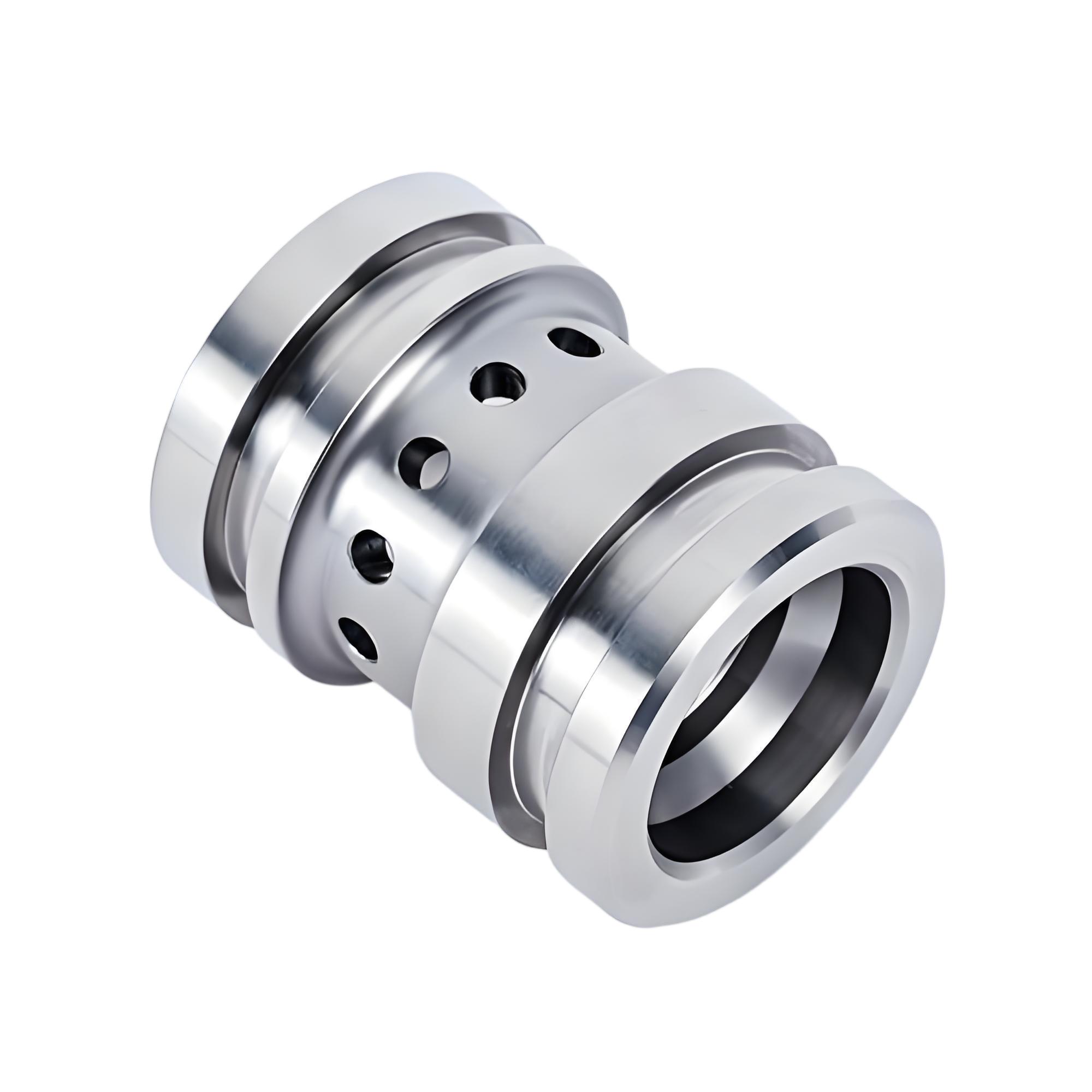
The drawing and purchase specification should name the bearing material or approved product, supplied construction, dimensions and fit requirements. Identify the mating shaft, housing and installed clearance basis. Keep any lubricant, porous surface or finishing restrictions attached to the component route.
Provide the radial load cases, motion, speed, duty and temperature conditions in the application data used for selection. State whether a substitute must be an equivalent bearing system or whether a redesigned lubrication arrangement is permitted. A request for stronger bronze does not define the required improvement.
The public scope of ASME Y14.5 supports geometric communication; bearing selection also needs the operating requirements and producer data. Resolve those inputs before approving a machining substitution. If the candidate changes the construction or lubrication mechanism, review the full assembly evidence. The finished component should be accepted for its documented duty rather than an isolated PV number copied from a material chart.
Keep the installed bore inspection connected to the housing revision and fit, because a sleeve qualified in one mounting condition may behave differently in another assembly.
FAQ
Can a lower PV prove that a bushing will run cooler?
It is useful operating information, but temperature also depends on lubrication, friction, heat removal, fit and duty. A lower calculated average PV does not exclude local edge loading or inadequate lubricant delivery. Compare matching product conditions and inspect the actual shaft and housing arrangement. Use representative operating evidence where required, rather than treating one favorable arithmetic product as proof of acceptable temperature or service life.
Can a longer bronze bushing always reduce the problem?
Increasing nominal loaded length reduces average projected pressure for a fixed radial load, but the actual assembly must distribute load across that length. Misalignment, shaft deflection or housing error can leave edge loading that the average calculation does not capture. A length change also affects fit, lubrication and packaging. Evaluate the complete bearing arrangement and verify the relevant duty instead of assuming additional length automatically creates the expected benefit.
Can a solid bronze sleeve replace an oil impregnated bearing?
It may be considered as a redesigned bearing system, but matching dimensions and a bronze label do not establish equivalence. The lubricant storage and delivery mechanism, fit, surface requirements and operating envelope can differ. Obtain product specific data and assess the shaft, housing and duty. If the replacement needs an external lubrication route or different finishing, include those changes in the approval and verification rather than treating the sleeve as a direct material substitution.
Conclusion
Use PV as part of a bearing decision with explicit inputs and product conditions. Projected pressure, sliding speed and their product need separate review, while lubrication, temperature, counterface and load distribution determine whether the comparison is relevant. Keep a calculated operating value distinct from a manufacturer’s allowable value.
For a substitution, compare the entire bearing system and the installed geometry. A stronger alloy or lower nominal PV cannot correct every alignment or lubrication problem. For a review with 6CProto, submit the bearing construction, shaft and housing details and operating duty for quotation. Include the acceptance and producer data so the proposed component can be assessed against the real application rather than a universal bronze limit.
{“@context”: “https://schema.org”, “@type”: “FAQPage”, “mainEntity”: [{“@type”: “Question”, “name”: “Can a lower PV prove that a bushing will run cooler?”, “acceptedAnswer”: {“@type”: “Answer”, “text”: “It is useful operating information, but temperature also depends on lubrication, friction, heat removal, fit and duty. A lower calculated average PV does not exclude local edge loading or inadequate lubricant delivery. Compare matching product conditions and inspect the actual shaft and housing arrangement. Use representative operating evidence where required, rather than treating one favorable arithmetic product as proof of acceptable temperature or service life.”}}, {“@type”: “Question”, “name”: “Can a longer bronze bushing always reduce the problem?”, “acceptedAnswer”: {“@type”: “Answer”, “text”: “Increasing nominal loaded length reduces average projected pressure for a fixed radial load, but the actual assembly must distribute load across that length. Misalignment, shaft deflection or housing error can leave edge loading that the average calculation does not capture. A length change also affects fit, lubrication and packaging. Evaluate the complete bearing arrangement and verify the relevant duty instead of assuming additional length automatically creates the expected benefit.”}}, {“@type”: “Question”, “name”: “Can a solid bronze sleeve replace an oil impregnated bearing?”, “acceptedAnswer”: {“@type”: “Answer”, “text”: “It may be considered as a redesigned bearing system, but matching dimensions and a bronze label do not establish equivalence. The lubricant storage and delivery mechanism, fit, surface requirements and operating envelope can differ. Obtain product specific data and assess the shaft, housing and duty. If the replacement needs an external lubrication route or different finishing, include those changes in the approval and verification rather than treating the sleeve as a direct material substitution.”}}]}