

A deep, uniform black finish can be the least useful evidence of whether a steel component will survive its environment. Black oxide is often selected for appearance and limited dimensional impact, but corrosion expectations depend on the complete route. Compare the conversion treatment, supplementary protection, maintenance, and alternative systems before treating a dark surface as a protective specification.
What black oxide does and does not do
Specify black oxide coating on steel through material, process, supplementary protection, exposure, appearance, final dimensions, and inspection. The conversion layer alone provides limited corrosion protection. Evaluate approved after-treatment and maintenance as part of the system, and compare alternatives when the actual environment requires more protection than the proposed route demonstrates.
DLA’s public MIL-DTL-13924 record explicitly describes limited protection under mildly corrosive conditions. Use that scope to challenge an unsupported “rustproof” description. If the contract invokes the specification, resolve the applicable revision and requirements through the controlled document.
Separate the functions you need: appearance, reduced reflection, close fit, lubrication, corrosion protection, or a combination. A process suitable for a maintained indoor mechanism may not suit a repeatedly washed or exposed assembly. Specify the actual duty instead of choosing from photographs alone.
EPi’s blackening portfolio distinguishes hot, intermediate-temperature, and room-temperature routes. Similar color does not make every chemistry or process interchangeable. Confirm which proposed treatment meets the drawing and substrate requirements before accepting a substitution.
Oil and after-treatment
Review the after-treatment as a named and controlled requirement. Ask what preservative is supplied, the delivered residue or film condition, and whether it suits handling, packaging, assembly, cleaning, and service. An oil selected for storage protection may create a conflict with an adhesive, friction requirement, or cleanliness limit.
Birchwood Technologies’ guidance pairs blackening with appropriate oil for corrosion protection. Treat that as a reason to specify the complete system. Do not infer an indefinite corrosion guarantee from the manufacturer’s general benefits description.
State whether the component will be wiped, solvent-cleaned, washed, handled frequently, or stored before installation. If an operation removes the supplementary protection, determine how the required condition is restored or whether a different finish is preferable. Assign maintenance responsibility where the selected system depends on continued protection.
Confirm packaging and storage assumptions. Use representative parts to evaluate relevant exposure and contact requirements. Avoid introducing an unapproved preservative at shipment simply to improve appearance; it may change the delivered condition and the customer’s assembly process.
Dimensional impact
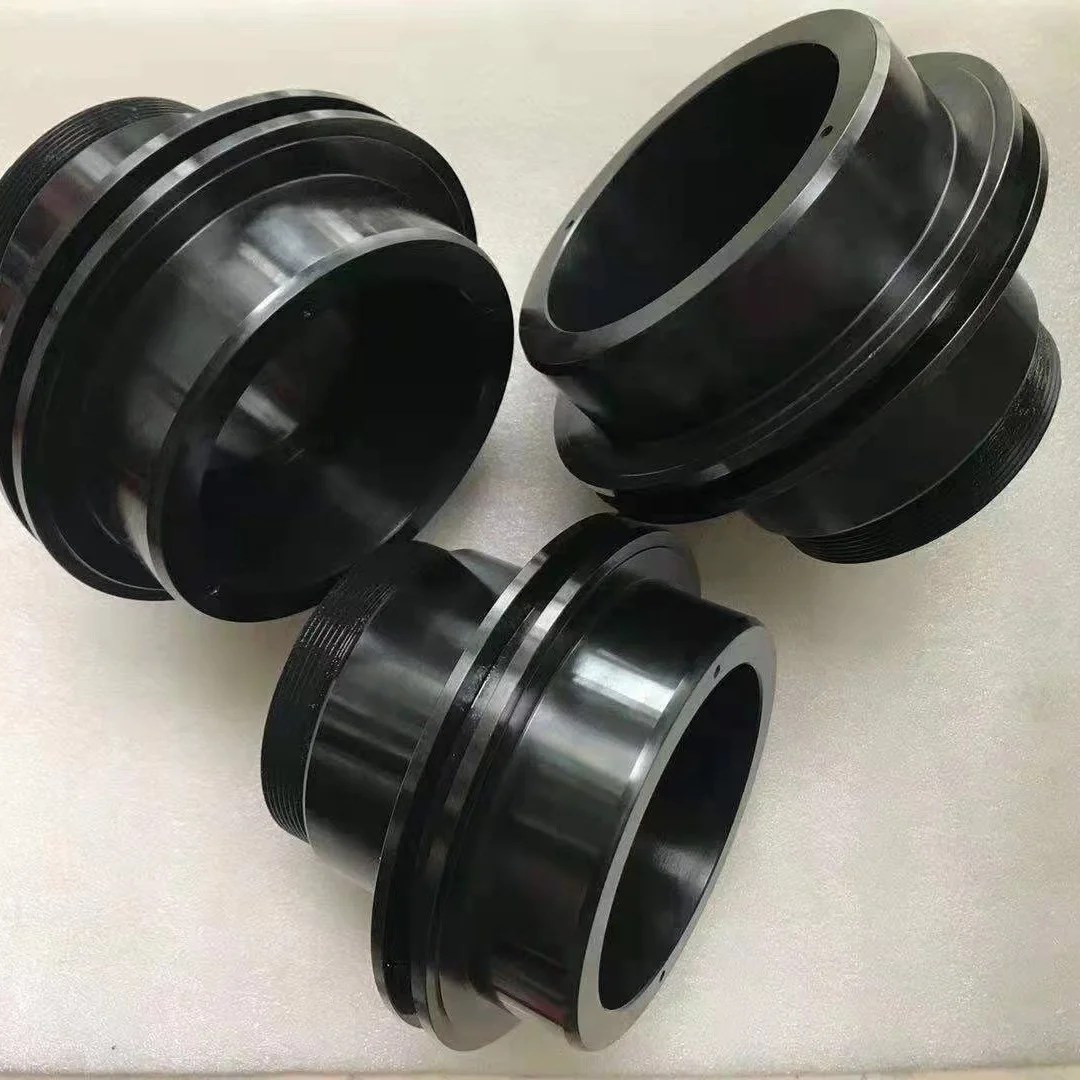
A thin conversion layer can be useful when buildup is a concern, but the finished component still needs defined acceptance. Identify bearing seats, shafts, bores, threads, sealing surfaces, and datum contacts before selecting preparation and treatment. Inspect the dimensions that matter after the agreed route.
Coating Technologies describes its black-oxide route as a thin conversion treatment with little measurable dimensional change. That process description supports investigating it for close-fitting parts; it is not a universal zero-change guarantee for every material, pretreatment, residue, and measurement.
Review cleaning, oxide or scale removal where relevant, surface preparation, and any masking. A finish cannot correct an out-of-tolerance machined feature. Likewise, a passing fit cannot prove corrosion performance. Keep dimensional, appearance, and protective requirements separately identifiable in the acceptance plan.
Table: alternatives
Compare complete systems against the requirement that black oxide cannot yet demonstrate. The alternatives below are candidates for engineering review, not substitutes that can be exchanged without updating the drawing.
| Candidate system | Reason to investigate | Tradeoff to resolve | Evidence needed |
|---|---|---|---|
| Black oxide with specified preservative | Dark appearance with limited buildup | Environment, cleanliness and maintenance | Actual route and relevant exposure results |
| Suitable zinc-based plating system | Sacrificial corrosion-protection approach | Thickness, interfaces and substrate-specific processing | Specified coating system and required verification |
| Suitable organic coating system | Barrier protection and selected appearance | Film allowance, adhesion, masking and damage | Preparation, coating and cure evidence |
| Appropriate electroless nickel system | Specified deposited coating properties | Thickness, composition, fit and cost scope | Defined coating and applicable tests |
Consider high-strength material requirements, subsequent operations, and other restrictions when evaluating any chemical finishing route. Have the responsible engineer select the applicable controls; a comparison table cannot determine those from the word steel alone.
FAQ
These questions address specification details that should be settled before sample approval.
Does a uniform black color prove corrosion resistance?
No. Appearance does not establish protection under a particular exposure. Specify the substrate, process, after-treatment, handling, maintenance, and relevant acceptance evidence. A visually satisfactory part can still be unsuitable for sustained moisture, salt, or chemical contact.
Can the supplier omit oil because the drawing only says black oxide?
Resolve that ambiguity before processing. State the required supplementary treatment or explicitly approved condition, including compatibility with assembly, cleaning, packaging, and service. The finish description should communicate the complete delivered system rather than leaving a performance-critical step implicit.
Related process selection notes
Agree the test and what it is intended to show. Record the material, preparation, treatment, preservative, geometry, exposure, inspection, and acceptance criteria. A result from a differently protected flat panel may not represent a recessed, handled component in service.
ASTM B117’s public guidance cautions against treating stand-alone salt-spray results as direct predictions of natural-environment performance. Do not convert a reported test duration into years outdoors or transfer a supplier example to an untested component.
For procurement, compare preparation, conversion treatment, supplementary protection, inspection, packaging, and records in the same scope. Confirm the actual route and any exceptions before ordering. If a part will be frequently cleaned or difficult to maintain, include those facts in the comparison rather than focusing only on the finish line item.
Internal links and next steps
Send the model, drawing, quantity, steel grade and condition, functional surfaces, exposure, appearance reference, required preservative, and inspection needs. Review the steel selection and machining requirements alongside the proposed black-oxide route. Compare alternatives through surface finishing.
Request a quote with the exposure, after-treatment, and final acceptance defined. Select the complete delivered system on evidence that matches its intended duty.
FAQ
These questions address specification details that should be settled before sample approval.
Does non-dimensional mean I can skip final fit checks?
No. A thin conversion treatment can be attractive for close-fitting components, but the complete route includes preparation, handling, residues, and geometry. Identify critical finished dimensions and inspect as specified. A marketing description does not replace the drawing or inspection plan.
Can a salt-spray duration be converted directly into years outdoors?
Do not make that conversion from a stand-alone salt-spray result. State the test conditions and acceptance and evaluate their relevance to the actual service. Long-term performance depends on the system and environment, including supplementary treatment and maintenance.