
Drawing-led stainless steel machining
Stainless Steel CNC Machining Services
Custom CNC milled and turned stainless steel parts in 303, 304/304L, 316/316L, 17-4PH, 15-5PH, 410, 420, 440C and 2205. Send the exact grade, condition, critical features, finish and inspection scope for an engineering review before quotation.
- 3-, 4- and 5-axis milling
- CNC turning and mill-turn support
- Prototype and repeat orders
- Material and inspection documents by RFQ
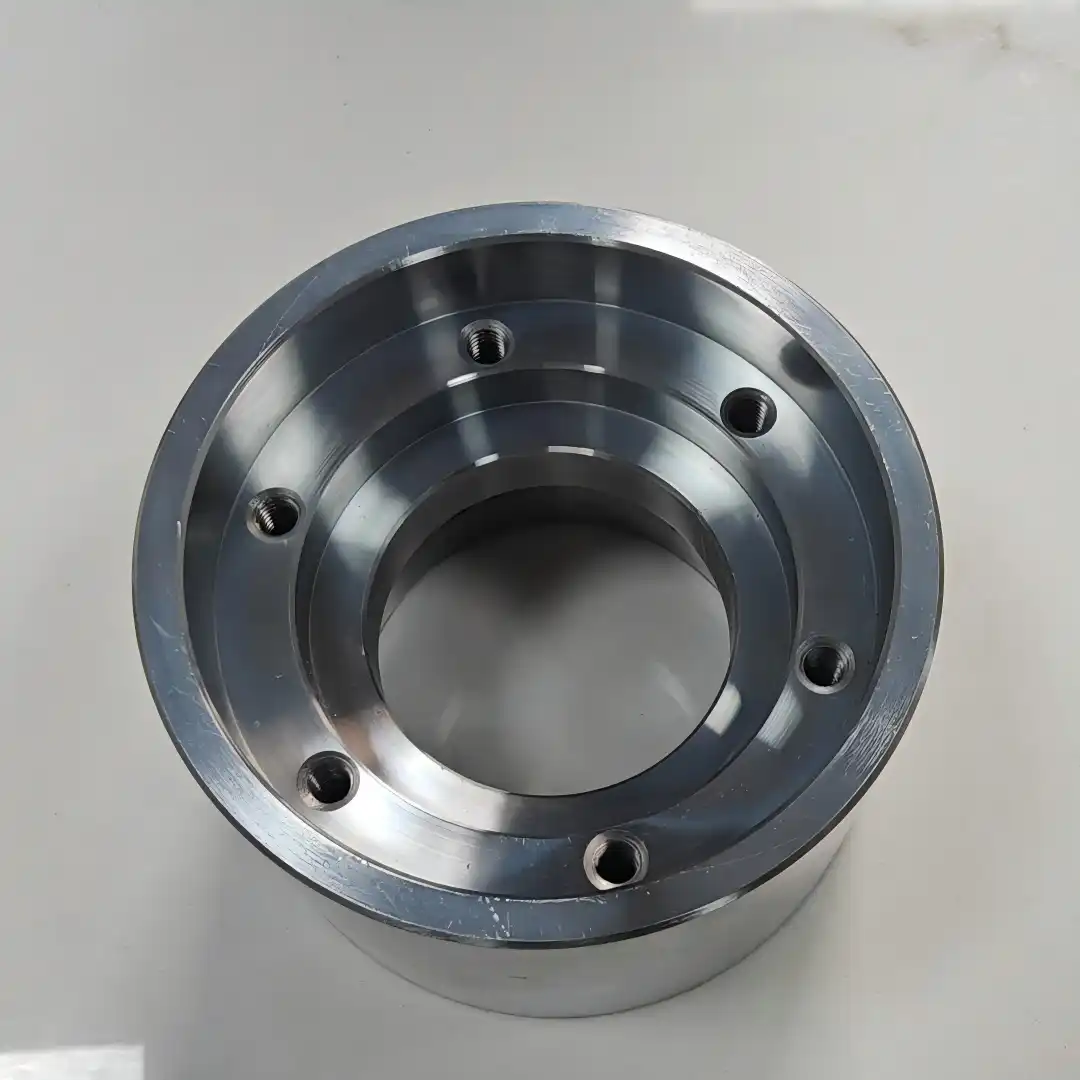
Precision-machined 304 stainless steel flange manufactured by 6CProto.
The short answer
Stainless Steel CNC Machining at a Glance
Austenitic
303, 304/304L, 316/316L/316Ti
Widely used for corrosion-resistant hardware. These grades work harden, retain heat at the cutting edge and need stable tooling and controlled engagement.
PH + martensitic
17-4PH, 15-5PH, 410, 420, 440C
Selected when strength, hardness or wear matters. Heat treatment, finish stock and the inspection condition must be planned together.
Duplex
2205
Combines higher strength with useful chloride resistance, but the product specification and fabrication history require tighter control.
*This is not a blanket tolerance. Achievability depends on size, geometry, material condition, heat treatment, finish, datum strategy and inspection method.
Start with the service environment
Which Stainless Steel Fits Your Part?
Use these as starting points, then verify the exact grade against the operating environment, standard and design calculations.
Fast, predictable machining
Start with 303 when corrosion exposure and welding demands are limited.
- Turned shafts and fittings
- Threads and repeated features
- Confirm sulfur-related trade-offs
General corrosion resistance
Start with 304/304L for broadly available, general-purpose stainless parts.
- Equipment and enclosures
- Food and cleanable hardware
- Use L grades where welding requires it
Chlorides or chemical exposure
Evaluate 316/316L or 2205 with actual temperature, concentration and crevice conditions.
- Fluid and process hardware
- Marine-adjacent applications
High strength
Evaluate 17-4PH or 15-5PH and specify the required aging condition.
- Shafts, valves and aerospace fittings
- Strength tailored by heat treatment
- Plan dimensions before or after aging
Hardness and wear
Evaluate 410, 420 or 440C with the target hardness and grinding plan.
- Seats, instruments and wear parts
- Heat treat after rough machining
- Finish machining or grinding may follow
Do not omit the condition
“17-4 stainless” or “420 stainless” alone may be incomplete. Put the solution, annealed, aged, hardened or tempered condition on the controlled drawing.
Material selection guide
Common Stainless Steel Grades for CNC Machining
This comparison helps structure an RFQ. Certified properties come from the ordered specification, product form, condition, section size and material certificate.
| Grade | Family | Main reason to choose it | Corrosion direction | Typical parts | What to confirm |
|---|---|---|---|---|---|
| 303 | Free-machining austenitic | Machining speed | Good | Shafts, fittings, fasteners | Sulfur improves chip breaking but reduces corrosion resistance and weldability versus 304. |
| 304 / 304L | General-purpose austenitic | Balanced availability and corrosion resistance | Very good | Housings, brackets, food equipment | Use the exact grade and product specification; 304L is often preferred when welding or sensitization is a concern. |
| 316 / 316L | Mo-bearing austenitic | Improved pitting resistance in many chloride services | Very good | Chemical, marine-adjacent, medical hardware | Not universally seawater-proof. Confirm chloride level, temperature, crevices and cleaning chemistry. |
| 17-4PH | Precipitation-hardening | High strength with useful corrosion resistance | Good | Aerospace, valves, shafts, tooling | Specify condition such as Condition A, H900, H1025 or H1150; strength and dimensions depend on heat treatment. |
| 15-5PH | Precipitation-hardening | Strength, toughness and transverse uniformity | Good | Aerospace fittings and high-load parts | Specify the required heat-treatment condition and acceptance properties on the drawing. |
| 410 | Martensitic | Moderate corrosion resistance with heat-treatable strength | Moderate | Valve parts, shafts, wear components | Final hardness, temper and corrosion behavior depend on the heat-treatment route. |
| 420 | Martensitic | Higher hardness and wear resistance | Moderate | Instruments, tooling, wear parts | State required hardness and condition; heat treatment and finish machining must be planned together. |
| 440C | High-carbon martensitic | Very high hardness and rolling-contact wear | Limited to moderate | Bearings, seats, precision wear parts | Often machined before hardening and ground afterward. Identify final hardness and grinding allowance. |
| 2205 | Duplex | Higher strength and chloride SCC resistance | Very good | Process equipment, pumps and selected marine service | Use qualified material and fabrication controls; heat input and exact product form matter. |
Selection guide only. Do not substitute grades based on this table without design and materials approval.
Free-machining austenitic
RFQ note: Sulfur improves chip breaking but reduces corrosion resistance and weldability versus 304.
General-purpose austenitic
RFQ note: Use the exact grade and product specification; 304L is often preferred when welding or sensitization is a concern.
Mo-bearing austenitic
RFQ note: Not universally seawater-proof. Confirm chloride level, temperature, crevices and cleaning chemistry.
Precipitation-hardening
RFQ note: Specify condition such as Condition A, H900, H1025 or H1150; strength and dimensions depend on heat treatment.
Precipitation-hardening
RFQ note: Specify the required heat-treatment condition and acceptance properties on the drawing.
Martensitic
RFQ note: Final hardness, temper and corrosion behavior depend on the heat-treatment route.
Martensitic
RFQ note: State required hardness and condition; heat treatment and finish machining must be planned together.
High-carbon martensitic
RFQ note: Often machined before hardening and ground afterward. Identify final hardness and grinding allowance.
Duplex
RFQ note: Use qualified material and fabrication controls; heat input and exact product form matter.
Design for stable cutting
What Makes Stainless Steel Machining Different?
Austenitic grades work harden and conduct heat poorly compared with many carbon steels. PH and martensitic grades can become costly when hardness, distortion and finish stock are addressed late. The manufacturing plan should keep the tool cutting, control heat and preserve a stable datum structure.
01
Avoid rubbing cuts
Stable engagement, sharp tooling and adequate chip load help reduce work hardening.
02
Control heat and chips
Coolant access, chip evacuation and toolpath continuity protect finish and tool life.
03
Support thin walls
Keep critical walls accessible to workholding and identify distortion-sensitive features.
04
Plan heat treatment
State which dimensions and hardness requirements apply after aging, hardening or tempering.
From billet to inspected part
Stainless Steel CNC Machining Capabilities
CNC milling
3-, 4- and 5-axis machining for housings, manifolds, brackets, pockets, angled ports and multi-face components.
CNC turning
Shafts, sleeves, fittings, valve parts, threaded components and concentric features with controlled workholding.
Heat-treatment planning
Rough machining, aging or hardening, finish stock and final grinding can be quoted as one controlled route.
Threads and sealing features
Identify thread standards, gage requirements, sealing surfaces and burr limits on the 2D drawing.
Inspection planning
Critical dimensions, datum scheme, sampling, material certificates and report formats are confirmed with the quotation.
Prototype to repeat order
Manufacturing and inspection plans are matched to the quoted quantity and revision-controlled files.
Connect the grade to the part’s job
Typical Stainless Steel Parts and Applications
Application examples help start the material review. The drawing, service environment and governing standard still determine the final grade and condition.
Fluid control
Valve, pump and manifold parts
Bodies, seats, fittings and ported blocks where pressure, media, sealing surfaces and crevices influence grade selection.
Cleanable hardware
Food and processing equipment
304/304L and 316/316L are common starting points, with welds, surface roughness, cleaning chemistry and passivation defined separately.
Precision hardware
Medical, laboratory and instrument parts
Housings, fixtures and mechanisms that may require controlled burrs, traceability, cleaning, passivation or electropolishing.
High strength
Aerospace and energy components
17-4PH and 15-5PH are often reviewed for shafts, fittings and loaded hardware when condition, toughness and dimensional change are controlled.
Chloride exposure
Marine-adjacent and process equipment
316/316L or 2205 may be considered using actual chloride level, temperature, concentration, crevice geometry and fabrication requirements.
Wear and hardness
Seats, shafts and wear components
410, 420 and 440C can support hardness or wear goals when heat treatment, finish stock and final grinding are planned together.
Functional surfaces first
Finishes for CNC Machined Stainless Steel
State the required appearance, roughness, corrosion process, masked areas and acceptance standard. A finish name alone may not define the result.
01
As machined
Tool marks remain within the agreed surface requirement; suitable for concealed or functional components.
02
Deburring
Edges are broken to the drawing requirement while protecting threads, sealing faces and precision fits.
03
Brushed or satin
Directional texture for visible components; specify grain direction and appearance sample when critical.
04
Bead blasting
Creates a uniform matte surface; media, masking and post-cleaning must suit the application.
05
Passivation
Specify the required standard and method. Cleaning and removal of scale or heat tint may be separate steps.
06
Electropolishing
Used to improve cleanability and surface appearance; final dimensions and edge change require review.
07
Mechanical polishing
From functional smoothing to mirror appearance, defined by roughness, visual standard or approved sample.
08
Black oxide / coating
Available for selected applications; corrosion performance depends on process, sealing and service conditions.
09
Laser marking
Part numbers, logos and traceability marks with location, contrast and depth defined on the drawing.
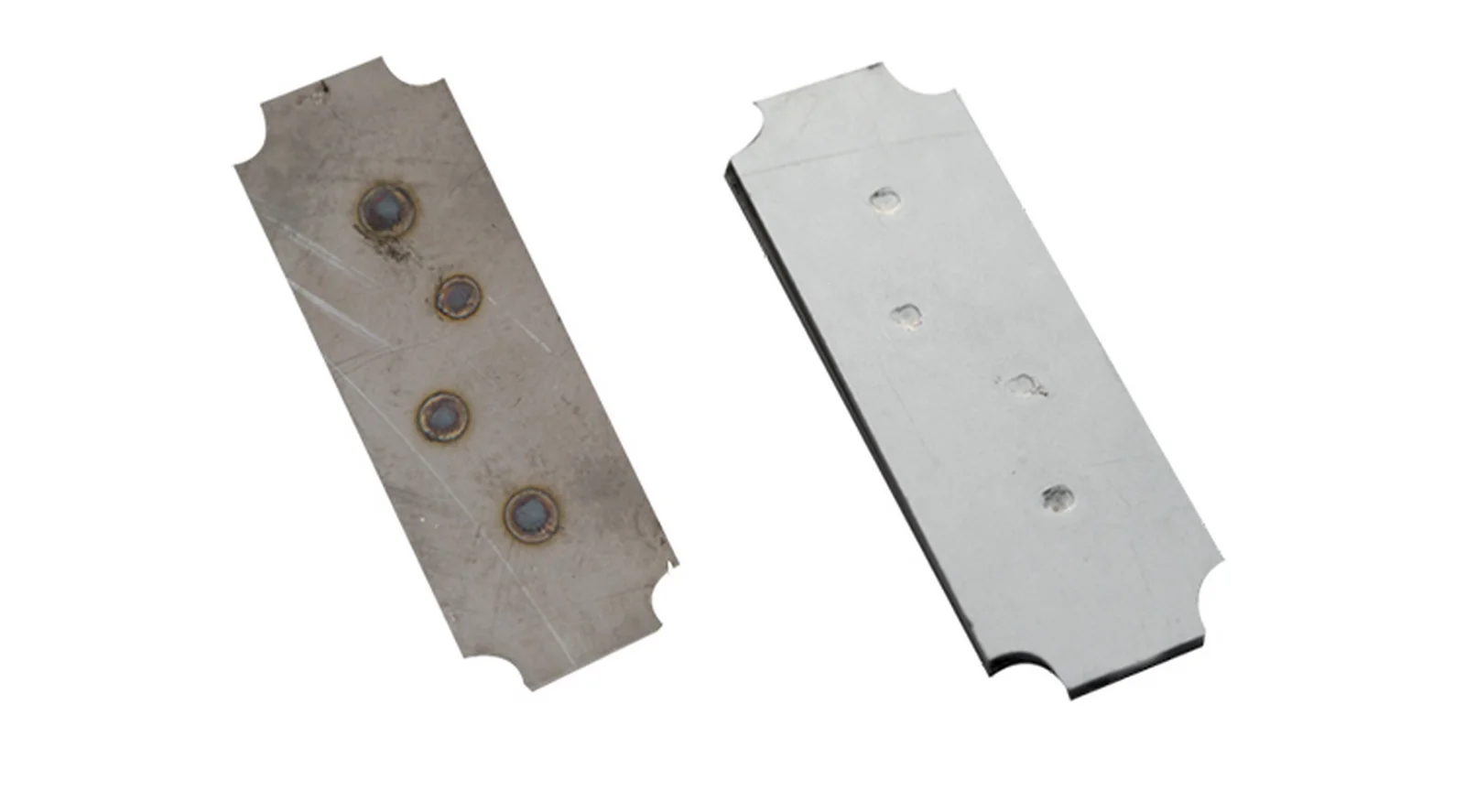
Passivation is a controlled process, not a cosmetic label
For parts used in medical, food, vacuum, chemical or clean environments, define the cleaning sequence, passivation standard, verification method and packaging. If heat tint, embedded iron or abrasive residue is present, pretreatment may be required.
Make acceptance measurable
Quality Information to Put on the RFQ
Part and material definition
- 3D CAD model and revision-controlled 2D drawing
- Exact UNS/AISI/EN grade and governing material specification
- Product form and heat-treatment condition
- Critical datums, fits, threads and surface roughness
- Quantity and expected repeat-order volume
Inspection and finishing definition
- Material certificate and traceability requirements
- Hardness, heat-treatment and test report requirements
- Dimensional report, FAI or sampling plan
- Passivation, electropolish, cleaning and packaging standard
- Cosmetic zones, grain direction and approved samples
A clearer RFQ, a faster review
How to Order Stainless Steel Parts
STEP 01
Upload CAD and drawing
Send the model, controlled drawing, material, condition, quantity and finish.
STEP 02
Engineering review
6CProto reviews stock, tool access, heat treatment, critical features and reports.
STEP 03
Approve quote and notes
Confirm the manufacturing scope, revision, schedule and acceptance requirements.
STEP 04
Machine, inspect and ship
Parts follow the quoted process, finishing, inspection and export packing plan.
Practical answers for engineering and purchasing
Stainless Steel CNC Machining FAQs
Stainless Steel(17-4 PH) — CNC machining
Stainless Steel 17-4PH is a high-performance martensitic precipitation hardening stainless steel, featuring excellent corrosion resistance and high strength, making it suitable for a wide range of industrial applications. Its chemical composition and physical properties enable its extensive use in fields such as aerospace, chemical engineering, marine engineering, food processing, and nuclear industry. Through appropriate heat treatment processes, its mechanical properties and corrosion resistance can be further optimized.
Stainless Steel 316 — CNC machining
Stainless steel 316 combines exceptional corrosion resistance with excellent machinability. This unique balance of “high corrosion resistance + ease of processing” makes it a material of choice for applications demanding the highest levels of reliability. It is widely employed in fields such as chemical processing, food production, and marine engineering, where it consistently meets stringent performance requirements across diverse operating conditions.
Stainless Steel 304 — CNC machining
stainless steel 304 is also known as 18/8 stainless steel, which contains approximately 18% chromium (Cr) and 8% nickel (Ni). It not only possesses excellent oxidation resistance and corrosion resistance, but also has good workability and surface quality. Currently, it is the most widely used stainless steel grade in industrial manufacturing and civil applications.