
Copper CNC Machining Services
Custom copper prototypes and production parts for electrical and thermal applications, machined to your drawing.
6CProto offers CNC milling and turning for copper parts, with deburring, surface finishing, and dimensional inspection planned around the features that matter. Compare C11000, C10100, and C10200 below, then send your CAD model, drawing, quantity, and material requirements for an engineering review.
Copper conducts heat and electricity well, but its ductility calls for careful tool selection, workholding, edge control, and inspection. We review the route against your part geometry.
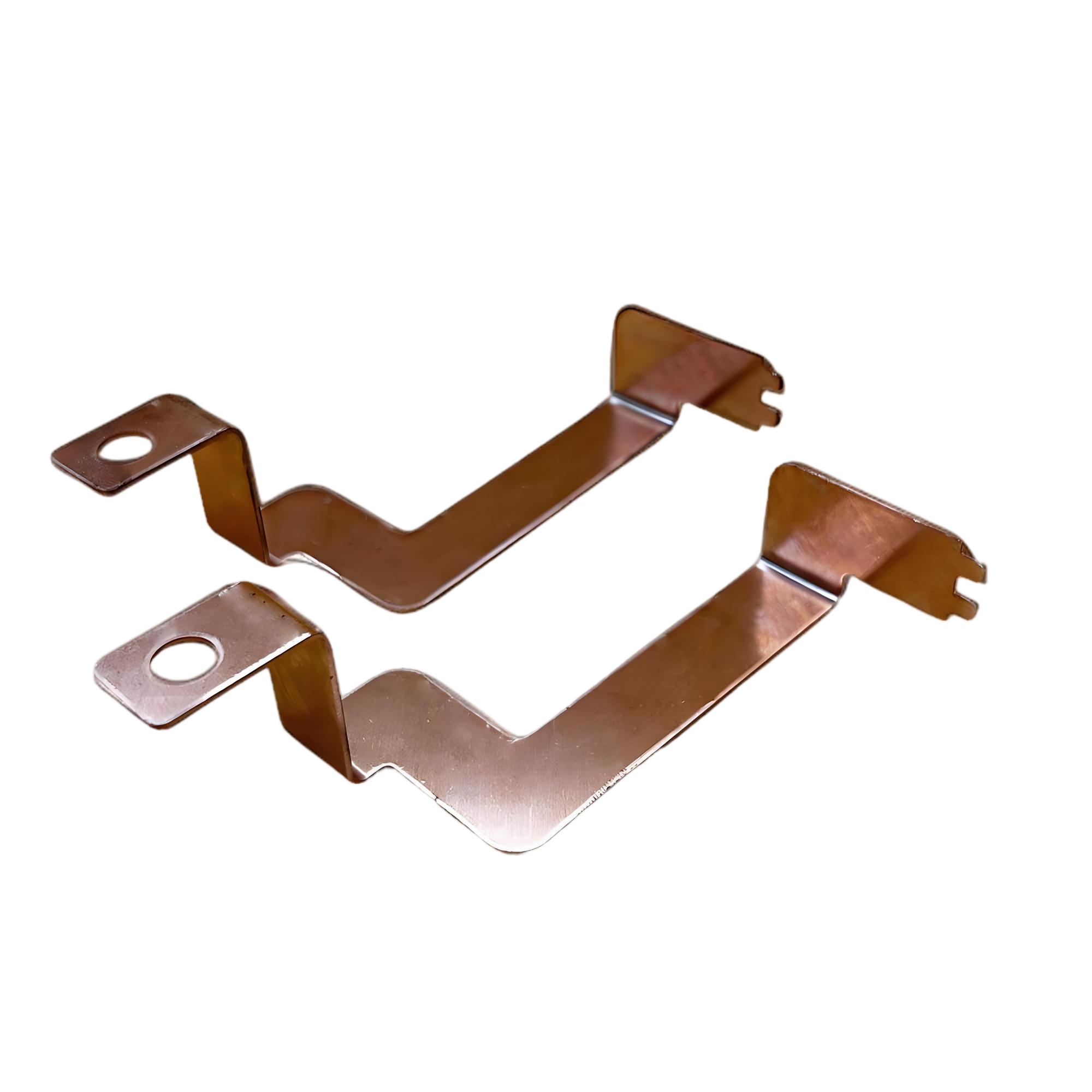
*Selected features may reach ±0.01 mm after drawing review. Achievability depends on geometry, copper grade and temper, stock form, finish, and inspection method.
Choose the exact copper grade
C11000, C10100 and C10200 Copper for Your RFQ
6CProto lists these three unalloyed copper grades in its CNC material range. Their key difference is the specified oxygen and purity level, not a promise that one grade will suit every electrical, vacuum, or joining requirement. State the exact UNS grade, stock form, temper, governing standard, and certificate needs.
| Copper grade | Common reason to consider it | Specify or verify |
|---|---|---|
| C11000 ETP | Conductive busbars, terminals, heat spreaders, and general copper hardware. | Electrolytic tough pitch copper; confirm form, temper, joining process, and the required certificate. |
| C10100 OFE | High-purity, low-oxygen electronic or vacuum-related designs when the specification calls for OFE. | Oxygen-free electronic grade; confirm purity, oxygen limit, approved standard, and certified stock. |
| C10200 OF | Oxygen-free conductive components when C10100’s tighter impurity limits are not required. | Oxygen-free grade; confirm the drawing’s conductivity, form, temper, and joining requirements. |
Unsure which grade to choose? Send the drawing and explain the current, heat load, environment, joining process, and any purity or vacuum requirement. We can review the material callout and machining route before quotation.
These descriptions are selection guides, not certified design values. Conductivity figures above refer to the annealed condition in Copper Development Association data for C11000, C10100, and C10200. Final acceptance follows the ordered standard, form, temper, thickness, and mill certificate; material substitutions need design approval.
Match the grade to the requirement
Which Copper Grade Should You Specify?
Start with the requirement that drives the design. The grade names are not interchangeable purchase descriptions, and their conductivity alone does not decide how a finished assembly performs.
| Primary requirement | Starting point | Why it fits | What to confirm |
|---|---|---|---|
| General high-conductivity hardware | C11000 ETP | Widely specified conductive copper grade. | Temper, geometry, contact finish, current and temperature rise. |
| Oxygen-free copper requirement | C10200 OF | Controlled oxygen level without assuming the tighter OFE impurity limits. | Approved specification, joining or vacuum conditions, certificate. |
| Electronic-grade purity | C10100 OFE | Tighter copper purity and oxygen limits when required by the design. | Exact impurity limits, traceability, stock form, and cost. |
| Fast free-cutting hardware | Review a brass or other copper alloy | Unalloyed copper is ductile and needs more burr and chip-control planning. | Whether the lower conductivity of an alternative is acceptable. |
A busbar also depends on cross-section, joint design, contact resistance, and cooling. Specify electrical performance and how the completed part will be tested where those factors matter.
Make the drawing machinable
Copper CNC Milling and Turning Capabilities
Copper can smear, form built-up edges, and leave burrs when the cutting plan is wrong. We review the material condition, tool access, fixturing, edge quality, and inspection plan before confirming the process.
What we review before quoting
Grade and temper, available stock form, flatness, thin sections, deep holes, thread engagement, contact faces, burr limits, coating thickness, cleaning, and how each critical feature will be measured.
Protect the function of each surface
Finishing Options for Machined Copper Parts
6CProto lists as-machined, nickel-plated, brushed, and mirror-polished copper finishes. Choose by the part’s electrical contact, appearance, joining, and dimensional requirements.
Avoid an unspecified “protective finish” on an electrical contact. Coatings and oxidation can affect contact resistance, solderability, appearance, and measurement. Confirm the finish stack in the RFQ.
Drawing-led quality control
How We Review Copper Parts for Manufacture
6CProto is ISO 9001:2015 certified. Your drawing sets the acceptance criteria: grade, temper, critical features, surface condition, and any requested certificate or report.
During quoting, we review what needs machining and what needs preserving: electrical contact areas, flatness, threads, small holes, edges, and cosmetic faces. Inspection can be planned around datums and the part’s functional surfaces. Material certificates and dimensional reports should be requested when they are part of acceptance.
Our typical CNC tolerance statement is ±0.02 mm; selected features may reach ±0.01 mm after review. Copper grade, temper, size, geometry, clamping, finishing, and measurement method determine what can be quoted for your specific part.
Include in your RFQ
- STEP or other 3D CAD file and controlled 2D drawing
- UNS grade, standard, stock form, and temper
- Current, heat load, purity, vacuum, or joining requirements
- Critical dimensions, flatness, threads, datums, and burr limits
- Coating standard, thickness, masking, and contact faces
- Quantity, target schedule, certificate, and report needs
Electrical and thermal applications
Design the Copper Part Around Its Connection
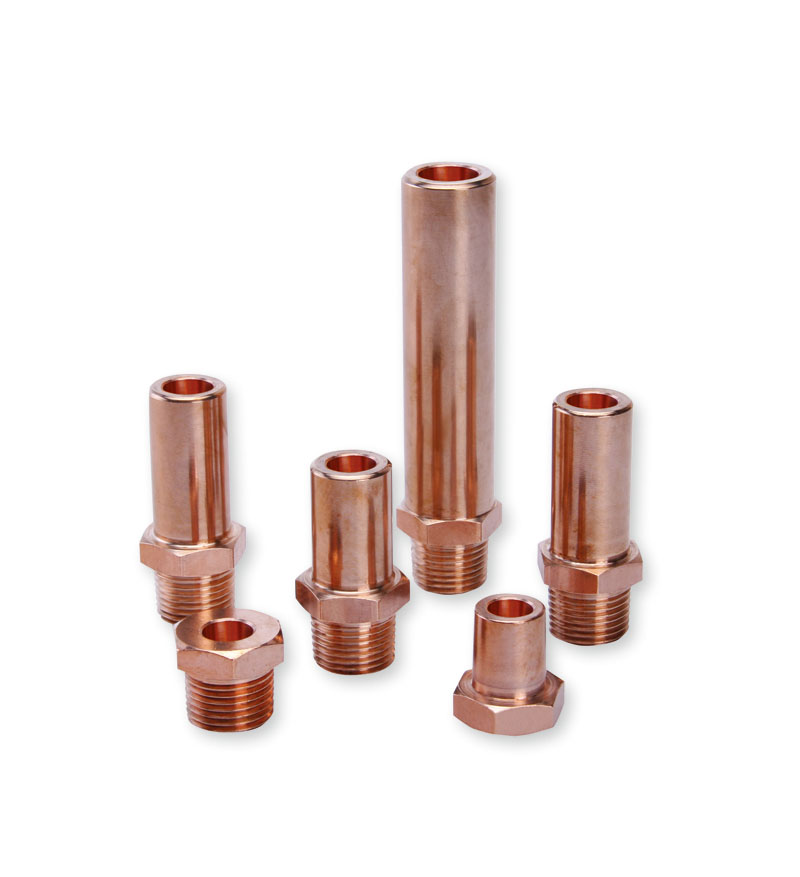
A conductive part’s performance depends on the whole path through the assembly. 6CProto’s published engineering guide discusses material choice, cross-section, contact surfaces, plating, and joint design for copper and brass electrical parts.
Before the drawing is released
Three Design Tips for Copper CNC Parts
FAQs
Ready to discuss your copper part?
Send Your Copper Drawing for an Engineering Review
Tell us what the part must carry, dissipate, connect, or fit. We will review the grade, machining route, finish, burr requirements, and inspection scope before quoting.
Include a STEP file and 2D drawing when available. You can request an NDA for confidential project files.
Copper C101 — Material overview
C101 copper, also known as HC copper (High Conductivity Copper) or more precisely, high-conductivity copper, has a nominal electrical conductivity of 100% IACS (International Annealed Copper Standard)—a benchmark level for conductive performance. It also features excellent high thermal conductivity, making it the preferred material for various electrical components (such as terminals) and conductors (such as power transmission busbars).
Furthermore, this material possesses high ductility (enabling easy complex forming processes like stretching and bending) and reliable impact resistance. While meeting the requirements for electrical performance, it can also accommodate the structural stability demands of mechanical processing and practical operating conditions, making it truly a high-quality copper material that combines multi-functional properties with practical value.