
← Manufacturing Materials Guides
Engineering decisions, organised
3D Printing Materials
Compare printing materials within their supported processes and verify the required performance after post-processing.
Updated October 11, 2026 · 19 material resources
Pick the process, then the grade
The process narrows the material list before the application does. FDM prints a filament from a limited set of thermoplastics; SLA and DLP print a photopolymer that is cured in the machine and finished afterwards; SLS and MJF sinter a powder; metal printing uses a powder bed and a laser. A grade that exists for one process usually does not exist for another, so the question is not which material is best but which material is available in the process that can hold the geometry.
That is why the same part can be a tough resin print, a glass-filled nylon print or a machined aluminium part, and why comparing the three on strength alone misleads. Compare them on what each process can hold: wall thickness, hole size, surface, tolerance and the direction the load arrives from.
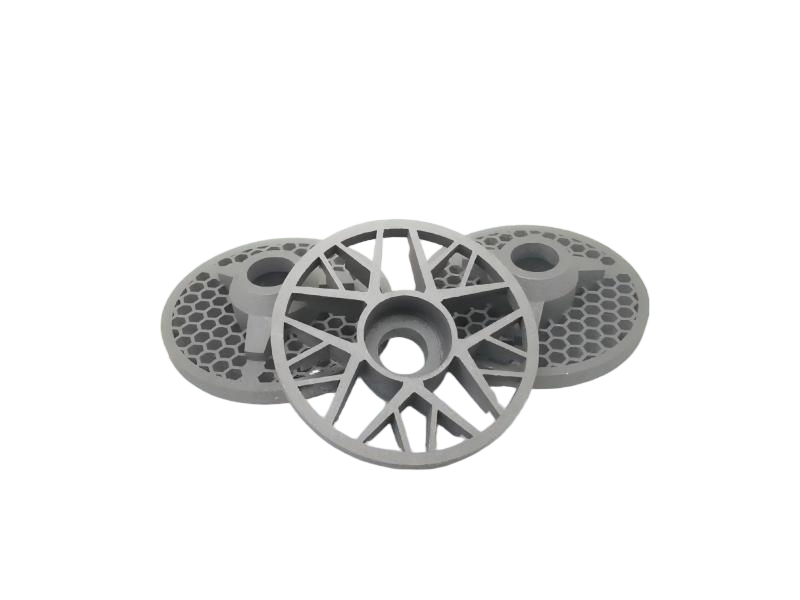
What the grade actually changes
Beyond strength, three things. Anisotropy: FDM parts are weaker across layers, and even sintered parts show direction-dependent behaviour, so a grade that performs in a test bar may not perform in a part loaded in the weak direction. Post-processing: some resins accept dyeing, polishing, plating or machining, and some do not; a translucent grade that has to stay clear cannot be sanded back. Certification: flame rating, biocompatibility, food contact and electrostatic discharge are grade properties with documents attached, not adjectives.
Temperature is the fourth and the one most often discovered late. A resin that holds its shape at 60 °C in a datasheet may creep at 45 °C under load, and the part that passed a bench test in winter sags in a vehicle in summer.
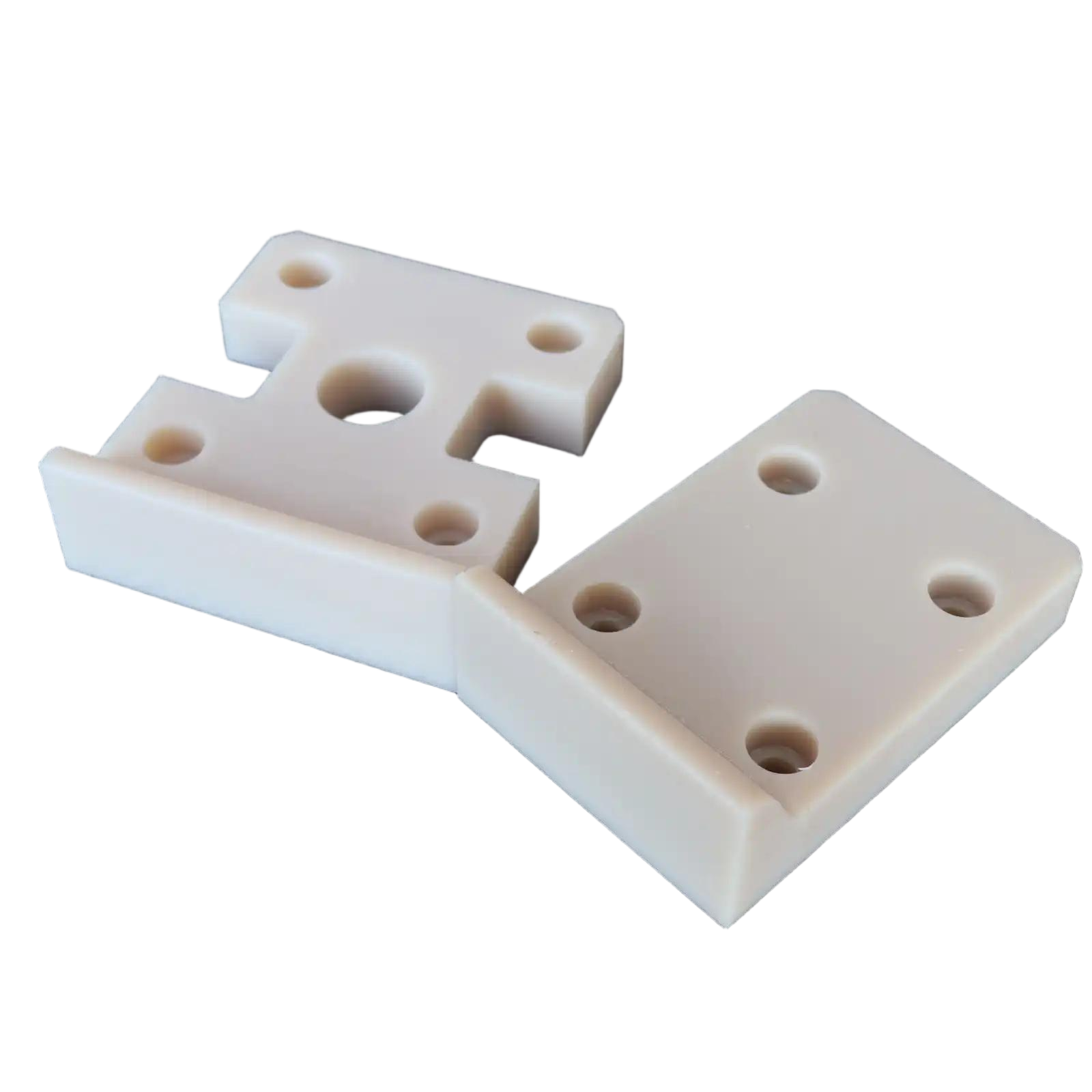
When the material becomes a certification question
For prototypes, the material only has to be close enough to test the idea. For end-use parts, it has to be defensible: a flame rating for an enclosure, USP Class VI or ISO 10993 for a medical contact part, a documented powder lot for an aerospace bracket. That changes the route more than the resin — the part may have to be printed on a qualified machine by a supplier who can trace the lot.
The practical sequence is to print the geometry in the cheapest grade that holds the shape, test the fit, then specify the production grade once the design stops moving. Printing the final grade before the design is stable spends money on the wrong decision.
Cost tiers, and when they stop mattering
Printed material cost spans an order of magnitude. Standard resin and PLA are the cheap end; engineering resins and glass-filled nylons sit in the middle; PEEK, PEI and metal powders are the expensive end, and the machine time that goes with them is often the larger cost. The tier matters most when the part is a bracket or a housing that could be made in three materials. It stops mattering when the material is the reason the part works at all — a chemical seal, a high-temperature duct, a lattice that has to be both light and stiff.
Find the guide for your next decision
Follow the guide that matches the feature, failure mode or project decision you are working on.
Aluminum
Metal powder-bed aluminium: light and machinable, with supports and heat treatment in the route.
TPU
Flexible filament for gaskets and grips; prints slowly and needs a direct-drive extruder.
Stainless Steel 316L
Corrosion-resistant metal printing for functional prototypes and small production parts.
Titanium
Ti-6Al-4V for lightweight, biocompatible parts; reactive powder and stress relief are part of the process.
Stainless Steel 17-4PH
Precipitation-hardening steel that gains strength after ageing; tooling and aerospace hardware.
Inconel 718
Nickel superalloy for high-temperature, corrosive service; slow to print and slow to finish.
ABS-Like
Tough resin with ABS-like impact behaviour for clips and housings that have to survive handling.
PA-Like
Nylon-like resin with some flex and wear resistance, printed on SLA or DLP machines.
PA+GF
Glass-filled nylon for SLS and MJF: stiffer and more stable, with a rougher and more abrasive surface.
Ceramic-Like
Rigid, heat-resistant filled resin for tooling, manifolds and parts that see moderate heat.
Flame Retardant Resin
Rated resin for enclosures and electronics fixtures where flammability is specified.
PC-Like Advanced Temp
High-temperature resin for under-hood and tooling parts that see sustained heat.
PC-Like Translucent
Clear, tough resin for light guides, lenses and ducts that need transparency plus impact strength.
Tough Resin
Impact-modified resin for snap fits and functional prototypes that would crack in standard resin.
Antistatic resin
ESD-safe resin for fixtures handling electronics; surface resistivity is a specification, not a hope.
PLA
The cheapest, easiest filament for visual prototypes; low heat resistance and brittle in thin sections.
PETG
Tough, slightly flexible filament with good chemical resistance and easier printing than ABS.
PEEK
High-temperature, chemically resistant filament requiring a heated chamber and annealing.
Red wax
Castable wax pattern resin for investment casting; it burns out cleanly and is not a functional part.
Before you release the project
- Define the function, environment and the question this batch must answer.
- Specify material grade, geometry, quantity, finish and the dimensions that control fit.
- Agree the inspection method and the evidence required to accept the parts.
- Record the drawing revision and approval before production begins.
Common planning questions
Can I choose a material by name alone?
Specify the grade, condition, process and required properties. A shared polymer or alloy family name does not establish identical performance.
Which material records should I request?
Request the records relevant to the project, such as grade identification, material certificates, property data or compliance declarations, and confirm how each relates to the supplied parts.
Move from guidance to a reviewed project
Send the CAD model and drawing with material, quantity, finish and inspection requirements. Use the relevant service page to review the available manufacturing route.