
← Manufacturing Materials Guides
Engineering decisions, organised
Sheet Metal Materials
Match sheet alloy, temper and thickness to bending, welding, corrosion resistance and cosmetic finish.
Updated October 11, 2026 · 4 material resources
Formability before strength
Sheet metal is chosen by what it will do at the press brake, not by what it does in a tensile test. A grade that is stronger in the data sheet may crack at the bend radius the design needs, and the fix — a larger radius, an annealed temper, or a different alloy — is cheaper to find before the flat pattern is released.
5052 aluminium is the default for formed parts: it bends to roughly one times thickness without cracking, resists marine atmosphere and takes an anodised finish well. 6061 is stronger but in the T6 temper it cracks at tight radii, so it needs two to three times thickness, a T4 temper, or a design that does not bend. Mild steel bends further than either, work-hardens less than stainless, and rusts unless it is finished.
What the coating has to survive
Corrosion is the usual reason to change grade, and the coating is usually cheaper than the alloy. Galvanized steel gives outdoor enclosures a zinc barrier at a low cost, with the caveat that cut edges and tight bends expose bare steel that needs touch-up. Powder coating covers the whole part but adds 60 to 100 micrometres and cannot protect an edge that flexes. Stainless 304 removes the coating question at roughly three times the material cost and needs more bend force.
The right question is not which finish is best but which finish survives the environment the part actually sees: indoor office, washdown, salt spray, or repeated flexing. Each answer points at a different combination of alloy and coating.
Thickness, tolerance and the flat pattern
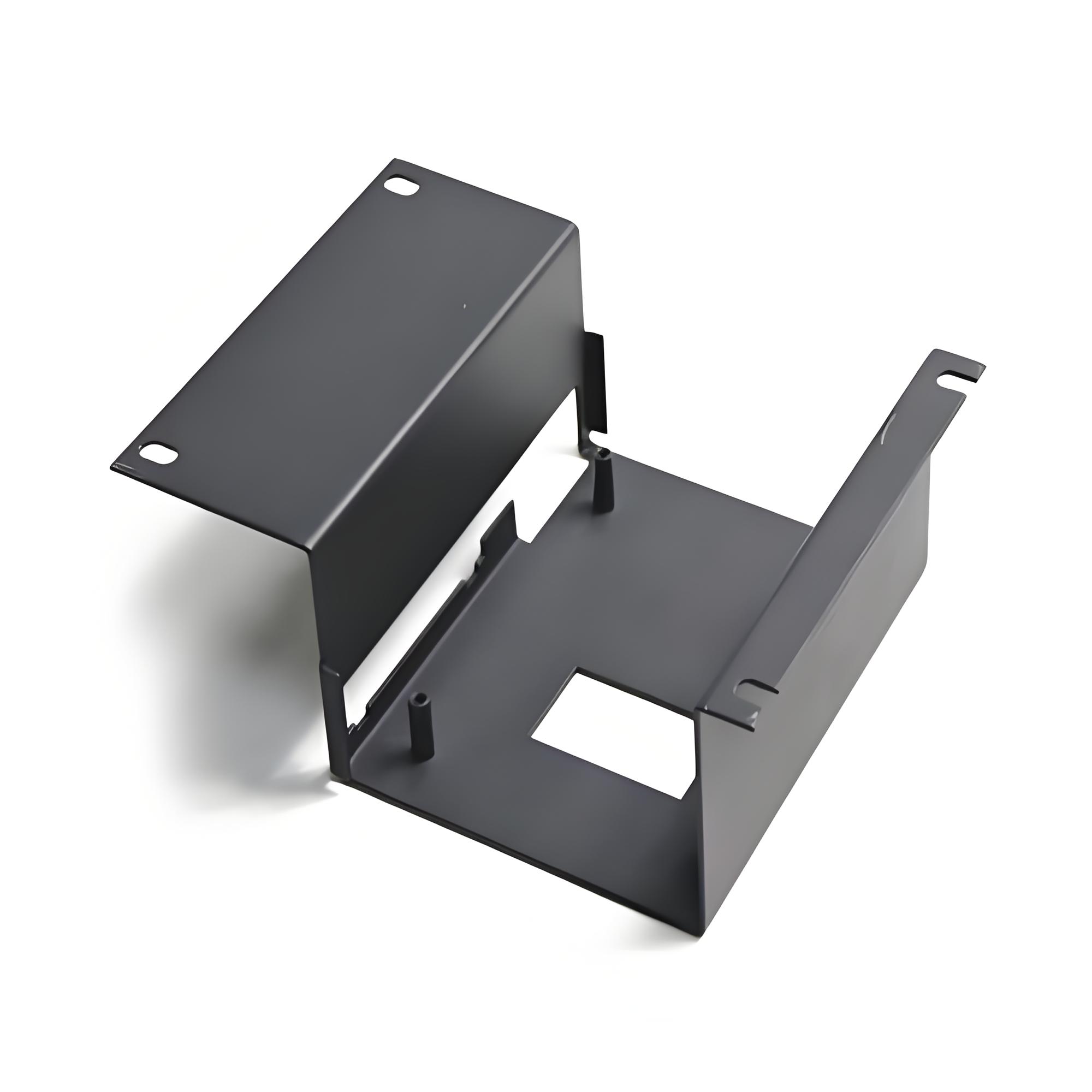
Thickness drives three things at once: the bend radius the material will take, the hole size the process can cut, and the weight of the finished part. A hole smaller than the sheet thickness is difficult to laser or punch cleanly, and hardware needs an edge distance of at least 1.5 to 2 times thickness to hold.
The flat pattern depends on the K-factor, which depends on the alloy, the radius-to-thickness ratio and the forming method. Two suppliers with different K-factors will cut different blanks for the same drawing. Agree the flat pattern with the shop that forms it, especially for a part with several bends.
Choosing between the five
Start with the environment, then the forming requirement, then the finish. Outdoors and cheap points at galvanized steel; outdoors and visible points at 5052 with an anodised or powder-coated finish; structural and welded points at mild steel or 304; flat panels with no forming can take 6061 because the bend radius no longer matters.
If two grades are close, choose the one the fabricator holds in stock in the thickness required. Availability beats a marginal property advantage on almost every project with a deadline.
Hardware and welding change the grade question
The moment a sheet metal part carries hardware or a weld, the material decision widens. Mild steel welds easily and takes weld nuts and studs without drama. 304 welds well but distorts more and needs pickling or passivation afterwards, or the weld seam rusts before the part does. 5052 welds acceptably with the right filler; 6061 is the grade most likely to crack next to a weld in the T6 condition.
Clinched hardware is more forgiving than welding, but it needs a flat land, a hole to a specific size and access to both faces. On thin sheet the hardware often dictates the thickness rather than the load — a clinch nut in 1 mm steel will pull through long before the sheet yields.
Where the part is both welded and coated, the sequence matters. Weld, clean, then coat; a powder coat applied before welding burns back at the seam and leaves an edge that corrodes first. That sequence belongs in the drawing notes, not in the purchase order.
One more consideration applies to every grade on this page: the fabricator has to be able to buy it. A stock item in the thickness the part needs removes a lead time that no property advantage can recover, and on repeat orders it is the difference between a two-week and a six-week turnaround.
Find the guide for your next decision
Follow the guide that matches the feature, failure mode or project decision you are working on.
AL5052
The default formed aluminium: good bend ductility, marine corrosion resistance and a clean anodised finish.
AL6061
Stronger than 5052 but cracks at tight radii in T6; specify T4, or a radius of two to three times thickness.
Low Carbon Steel
Cheap and highly formable with predictable bending; needs plating or paint to resist rust.
Stainless Steel 304
Corrosion resistant and strong, but it work-hardens quickly, so bends need more radius and more force.
Galvanized Steel
Zinc-coated mild steel for outdoor enclosures; cut edges and bends expose steel that needs touch-up.
Before you release the project
- Define the function, environment and the question this batch must answer.
- Specify material grade, geometry, quantity, finish and the dimensions that control fit.
- Agree the inspection method and the evidence required to accept the parts.
- Record the drawing revision and approval before production begins.
Common planning questions
Can I choose a material by name alone?
Specify the grade, condition, process and required properties. A shared polymer or alloy family name does not establish identical performance.
Which material records should I request?
Request the records relevant to the project, such as grade identification, material certificates, property data or compliance declarations, and confirm how each relates to the supplied parts.
Move from guidance to a reviewed project
Send the CAD model and drawing with material, quantity, finish and inspection requirements. Use the relevant service page to review the available manufacturing route.