

Large CNC parts are a different discipline from small ones. A part that is a meter long or half a meter wide forces the design to respect the machine travel, the residual stress in the raw stock, and the physics of machining a big, thin, or flexible piece. The problems are not exotic; they are the geometry: bending under its own weight, stress released by cutting, thermal growth, and the reach of the machine envelope. This article explains what changes when parts get large, how to manage residual stress, and how a split design decision can turn an unmachinable part into a producible one.
What Changes When Parts Get Large
At small scale, a part is rigid relative to the tool and the setup; at large scale, the part becomes flexible and the setup becomes the weak link. A long part sags under its own weight, so the fixture has to support it along its length. Thin sections flex during the cut, so the tool load and the support have to match. Thermal growth matters: a long part expands enough across its length to throw off a tolerance measured at the ends. The big-part rules start with supporting the part the way it will be machined, not the way it looks on the bench.
Machine Travel and the Working Envelope
Every machine has a travel envelope, and a large part can exceed it. The decision is either to fit the part within the envelope by orientation and staging, or to split the part so each segment machines within travel and is joined afterward. The machine travel sets the maximum part size in one setup, and the design has to fit that constraint honestly. A part that is “just over” the envelope costs staging and re-fixturing; one that is deliberately within it machines cleanly. Know the envelope before the design is frozen.
Residual Stress Is the Silent Surprise
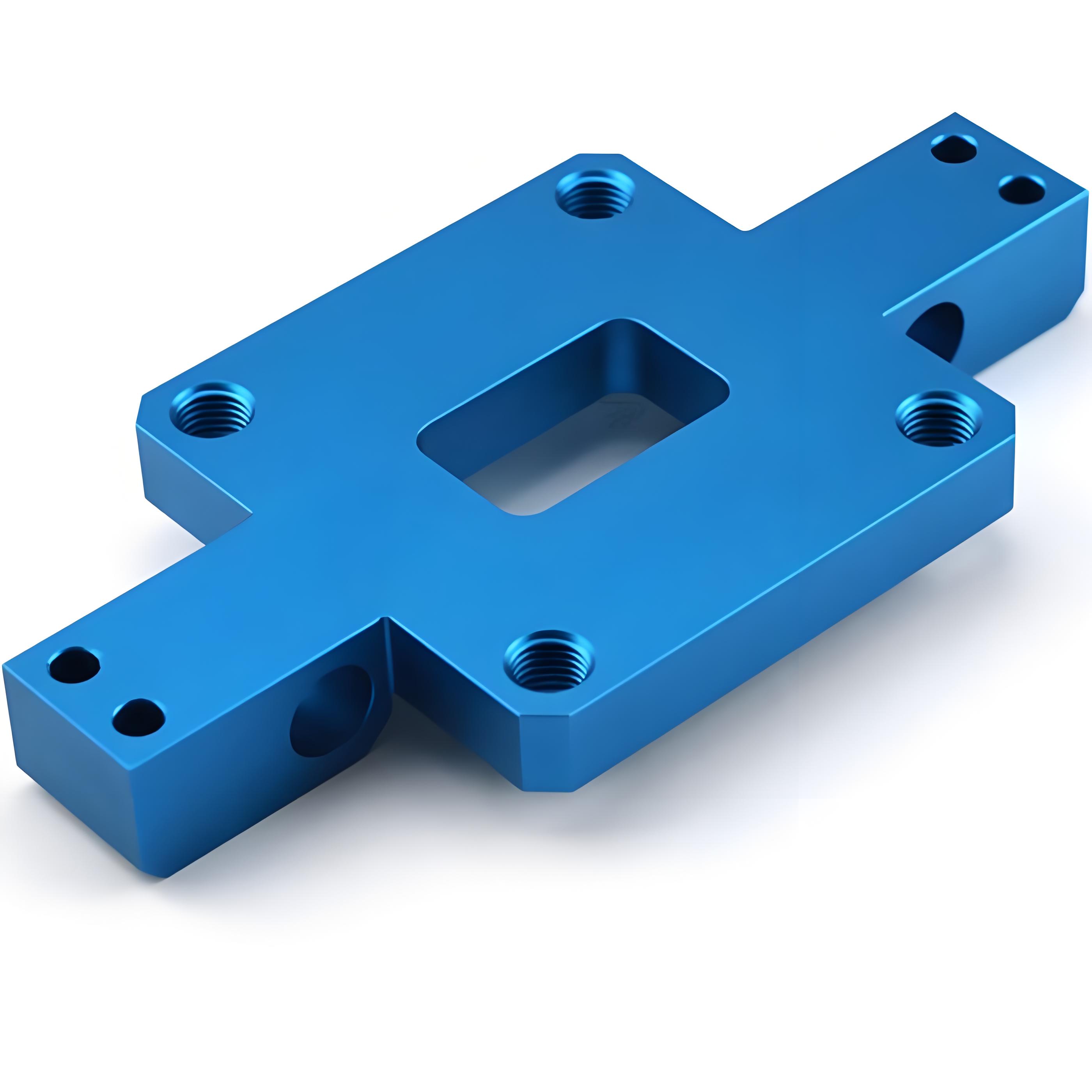
Large stock carries residual stress from its own forming and rolling, and machining releases it: cut a large plate and it can relax, warp, or bow as the stress redistributes. The release is worst on large, thin, mostly-machined parts, where a lot of material is removed and a lot of stress is freed. The management is to use relieved or properly tempered stock, machine in a way that balances the removal, and check flatness at the stage where the stress shows. A large part that was flat as a blank and bowed after cutting is usually a stress story, not a machine failure.
Support, Fixturing, and the Sag Problem
A large part must be supported where the cut is happening, along its length, not just at a corner. A sagging or vibrating part machines thin on one side and not on the other, and the error is invisible until assembly. Fixturing for large parts means multiple support points, a stable reference, and a way to hold the part without distortion. The fixture design is part of the quote, and a large-part supplier that plans the support is one that will hold the tolerance. The sag is preventable, but only if it is planned.
The Split Design Decision
When a part is too large for travel or too distorted to machine in one piece, the engineering answer can be to split it: machine segments within the envelope, then join them with mechanical fasteners or welding. The split turns an unmachinable part into producible segments, but it moves the risk to the joint: the seam must be aligned, the mating faces flat, and the strength maintained. The split is a design decision made deliberately, not a fallback discovered on the floor. When the part is large, the join decision is one of the first the design makes.
Thermal Behavior Over Length
Large parts respond to temperature over their length: a meter-long part grows and shrinks with heat, and the tolerance band has to account for the thermal state during machining and in service. The drawing states the measurement basis and the temperature; the machine is run and the part is measured in a controlled, stable condition. A long part that is dimensionally right at cutting temperature and wrong at ambient is a thermal control problem, and the fix is measuring at the defined basis.
What the RFQ Needs for Large Parts
- The machine envelope and how the part fits in travel.
- The stock condition and stress-relief state.
- The support and fixturing plan for the large geometry.
- The measurement basis and temperature for tolerances.
- Whether a split design is acceptable and where the seam goes.
Bottom Line
Large CNC parts change the discipline: the part must be supported along its length, the residual stress managed, the machine envelope respected, and the thermal basis defined, or a split design chosen deliberately to keep segments producible. The failures come from treating a large part like a small one: unplanned sag, stress warp, an over-travel part, or thermal drift. Support the part, relieve the stock, and decide the split early. A large part machines predictably when its size is planned for, and a supplier that plans for it is the one that holds it.
Related Capabilities and Turning the Advice Into an Order
The discipline in this article holds best inside a wider capability set, where the drawing, the datum, and the inspection travel with the part across the program. The CNC machining materials pages cover the service scope and the tolerances that apply, and the first article ties the design to the measured result. The concrete next step is to send a drawing with the critical features and the datum stated, ask for the DFM review, and request the first-article report with values, so the advice becomes a controlled order instead of a good idea.
Handling the Split Decided Rather Than Discovered
When a part is too large for the envelope, the split is a design decision made early, not a discovery on the floor. The seam location, the joining method, and the tolerances are designed and planned, so the machined segments assemble into the intended part. A split discovered mid-program is a stop and a redesign; one decided in the design is a plan. The large part program starts with the envelope question, because the split decision shapes the whole route. The part is machined in segments and joined by design, and the seam is an engineered feature, not a compromise.
The Fixture That Holds the Large Part
The fixture is the unglamorous enabler of large-part machining. Multiple support points, a stable reference, and a clamp that does not distort the part keep the long geometry within tolerance while it is cut. The fixture design is part of the quote, and a supplier that plans the support is one that will hold the part. A large part machined without the support sags, vibrates, and exports its error to assembly. The fixture is the quiet half of the large-part story, and it is where precision is either held or lost.
Splitting the Large Part by Design
The split-a-large-part decision is a design opportunity, not a defeat. The seam is placed where the load is manageable and the joint can be made strong, and the segments are machined within the envelope and joined by design. The seam, the fasteners, and the alignment are engineered, and the assembled part is the intended product. A program that plans the split from the beginning machines larger than its envelope and joins with confidence. The large part is made in pieces and assembled into one, on purpose.
The Stress Story of the Large Part
The residual stress of the large stock is a story the part inherits. Machining releases the stress in a large, thin, mostly-machined part, and the part can relax, warp, or bow as a result. The management is in the stock and the sequence: relieved or properly tempered material, balanced material removal, and a flatness check at the stage where the stress shows. A large part that was flat as a blank and bowed after cutting is a stress story, not a machine failure. The stress is designed out whenever the stock and the sequence plan for it.
Verifying the Large Part Where It Matters
The large part is verified at the features and the conditions that matter: the flatness at the service datum, the critical dimensional relationships, the thermal basis, and the joints where it was split. The inspection follows the part's risk, and the first article proves the design and the process together. A large part that is verified where it matters is one whose numbers carry into the field; one checked only at the easy points is one whose risk travels to assembly. The verification plan is the large part's contract, and it is written at RFQ.
The Batch Story of the Large Part
The first large part is not the last: the batch has to repeat the measure, the fixture, and the stress behavior. The second and third parts confirm the process, and the sampling keeps the large part honest across the run. A large part whose first article is good and whose third drifts is a process story, and the sampling catches it. The batch discipline is the same as any precision program, applied to a part that is harder to hold. The first article sets the number, and the batch proves it holds.
Related Capabilities and Guides
For the service scope and the material and tolerance details behind this article, see the CNC machining, the material guides, and the standards and tolerances. The first article of your order ties the design to the measured result, and the same drawing, datum, and inspection discipline carry across the program.