

Powder coating is one of the few finishes that is simultaneously durable, protective, and good-looking, which is why it shows up in half the product drawings in a job shop. It is also a finish that is chosen for the wrong reasons as often as the right ones: a team picks it for color, ignores the thickness change, and then wonders why a close-tolerance part no longer fits. Powder coating is the right choice when the part’s function and environment reward a thick, tough, colored layer and can tolerate the dimensional change it brings. This article works through the decision: what powder coating actually does, where it wins, where it loses, and what to specify so it does not surprise you at assembly.
What Powder Coating Actually Is
Powder coating is a dry paint process. Powder particles are electrostatically charged and sprayed onto a grounded part, then the part is baked, melting the powder into a continuous film. The result is a thick, tough, uniform coating bonded to the metal, with no solvent needed and little waste. Because the film is applied and cured as a solid layer, it is typically thicker and more durable than wet paint, and it is consistent along edges and corners rather than thinning, as liquid paint tends to.
Where Powder Coating Wins
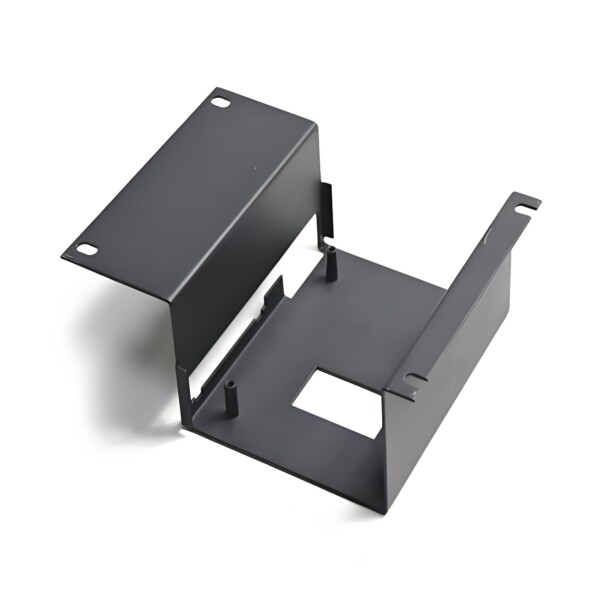
Powder coating is the right choice for four common situations. The first is corrosion protection on a metal part that will live in a demanding environment, where the thick film shields the substrate from moisture and chemicals. The second is a consistent, durable appearance on a product that is handled or seen, where the coating resists scratches and keeps its color. The third is coating complex shapes, because the powder reaches everywhere the electrostatic field reaches, covering edges and interiors more evenly than spray paint. The fourth is production efficiency: at any volume, a powder line coats parts quickly with less waste than wet systems.
Where Powder Coating Loses
The same properties that make it durable create the limits. The film is thick, so close-tolerance features, threads, and press fits change dimension. Stripe details and fine logos are difficult, because the process is about uniform coverage, not detail painting. High-temperature service, extreme flex, and parts that must stay conductive all fight the coating. And powder coating hides the surface below: if the part’s surface finish is rough, the coating can amplify it, and if it is smooth, the coating gives the finish a textured look. It is a finish for surfaces that should look coated, not for a bare-metal look.
The Dimensional Question Comes First
Before comparing colors or gloss, resolve the dimensional question. A standard powder coat adds a film that can change a bore or a thread by a meaningful fraction. Decide whether the critical dimensions are machined before coating, then coated, and whether they can tolerate the layer, or whether masking of the mating faces is needed. State on the drawing whether tolerances apply before or after finishing. This single decision is where powder-coated parts go wrong more than anywhere else.
Matching the Coating to the Environment
The coating chemistry should follow the environment. A standard polyester powder coats a normal indoor product; an epoxy or a corrosion-resistant system serves a part exposed to chemicals or salt; a textured or dry-film option gives grip. Confirm the environment: outdoor UV, salt air, chemical washdown, or high humidity changes the requirement. The supplier’s coating and the environmental claim should be verified, not assumed from the word ‘powder.’
What to Specify on the Drawing
- Color with a defined standard or physical sample, and a gloss level.
- Film thickness range and how it is measured.
- Whether tolerances apply before or after coating on critical features.
- Any masked surfaces: threads, bores, conductive contacts, mounting faces.
- Pre-treatment: the part should be clean and prepared before powder to bond properly.
- Environmental requirement if corrosion or UV resistance matters.
Substrate and Pre-Treatment
Powder coating bonds to a prepared surface. Oiled, contaminated, or roughly machined surfaces need cleaning and often blasting or an abrasive pre-treatment to get a consistent anchor profile. A clean part with a consistent surface finishes evenly; a dirty or variable part shows it in the coating. Confirm the pre-treatment as part of the finish line, because the coating quality is set before the powder touches the part.
The Right Question to Ask Before Choosing
The decision is not ‘is powder coating a good finish’ but ‘does this part, in this environment, at this tolerance, want a thick durable layer.’ If the answer is yes, powder coating is the efficient route. If the part needs thin dimensional control, conductive surfaces, fine detail, or a bare-metal appearance, another finish serves better. Define the requirement first, then pick the coating that meets it.
Bottom Line
Powder coating is the right choice when the part rewards a thick, tough, colored layer and can tolerate the dimensional change it brings. It wins on durability, consistency, edge coverage, and production efficiency; it loses on tight tolerances, conductive and fine-detail surfaces, and high-heat or flexing parts. Spec the thickness, the masking, and the dimensional basis on the drawing, prepare the substrate, and match the chemistry to the environment. A powder-coated part chosen for its fit with these factors is a part that finishes well and lasts.
Coating Thickness: The Number That Decides Fit and Durability
Film thickness is the specification that most purchasing conversations skip, and it is the one that decides both how the part fits and how long the coating lasts. A standard decorative powder coat commonly lands in a range around 1.5 to 3 thousandths of an inch (about 40 to 75 microns), and heavy industrial systems go higher. On a close-fit bore or a threaded part, that thickness is not noise; it changes the fit class. On a cosmetic panel, the same thickness range is the difference between a smooth finish and an orange-peel look. State the target film thickness and how it is measured, because the same powder coat can mean very different layers depending on the line and the parts.
The measurement is usually done with a coating thickness gauge on the conductive substrate, with readings across the part to catch thin edges and heavy recesses. Confirm whether the target is a range, and accept that the film will vary a little across complex geometry. A spec that demands a single thickness on every face of a threaded part will fail on the edges no matter how good the line is.
Masking Before Coating Saves the Fit
Masking is the process of protecting faces that must stay uncoated: bearing seats, threads that assemble into tapped holes, conductive contacts, grounding points, and mounting faces that need a bare-metal fit. The mask is applied before the powder, the part is coated, and the mask is removed, leaving the face clean. Skipping the mask is how a coated thread stops fitting or a grounding surface stops conducting. Decide which surfaces must stay bare at the design stage, mark them on the drawing, and confirm the masking plan at quoting, because masking changes the coating line and the cost.
Gloss, Texture, and the Product Reading
The coating appearance has three levers: the gloss, the texture, and the color. Gloss is set by the resin system and the cure, and it changes how the part reads under light. Texture comes from the powder formulation and the application, from smooth to hammered to textured grip finishes. Color is the pigment, but it reads through the gloss and texture, so the same color over two textures looks like two colors. When the appearance matters, specify all three and judge them against a physical sample under defined lighting.
Common Coating Failures and Their Causes
Knowing the common failures helps you ask the right questions. Adhesion failure, where the coating flakes from the part, usually comes from an unprepared surface: oil, dust, or an inconsistent blasting profile. Curing failure, soft or cheesy coating, comes from under-curing or an incorrect oven. Coverage failure, thin or bare spots, comes from a grounded part that loses electrostatic attraction in recesses and inside corners. Orange peel comes from a film that is too thick or a cure that is too fast. Each is prevented in pre-treatment and process control, which is why the preparation step is part of the finish specification, not an extra.
Color Matching and Batch Consistency
If color consistency matters across batches, the control is the formula and the process, not the sample book. Powder batches vary slightly by lot, and cure temperature and time shift the final color and gloss. Run a standard sample with each batch, measure the color against the master under defined lighting, and keep the cure parameters recorded so a later batch can be re-run to the same point. When parts must match across orders, hold a physical master and re-verify against it.
Environmental and Regulatory Considerations
Powder coatings are solvent-free at application, one reason they are favored over liquid systems, but the chemistry still carries considerations for disposal, cure emissions, and sometimes heavy-metal additives in pigments. For a product with compliance requirements, confirm the coating system meets the relevant standard or customer specification. For food contact or a health environment, confirm the coating is certified for that use, and for a salt-spray or corrosion requirement, confirm the system and the test it passes rather than assuming powder coating resists corrosion.