

Low-volume production looks like it needs less quality control than high volume, but the opposite is true per part. When a batch is small, every part matters more, and the evidence that a supplier can provide – sampling plan, first article inspection, traceability – is what makes the small run usable. This article explains how quality control works in low-volume production: what FAI proves, how sampling works, and what traceability to expect with a short run.
Why Low Volume Still Needs Full QC
In a small run, a defective part is a large fraction of the batch, and there is no large-stream statistical cushion. The QC task is to prove the process is controlled and consistent, with inspection evidence on the parts themselves. A low-volume order without documentation is a risk concentrated in a few pieces.
First Article Inspection (FAI)
First article inspection verifies that the first part(s) manufactured against the approved drawing and process meet the critical dimensions, material, finish, and function. FAI is the gate: once it passes, the rest of the run is produced against the same confirmed process. For low volume, the first article is often a high proportion of the run, which actually strengthens the evidence.
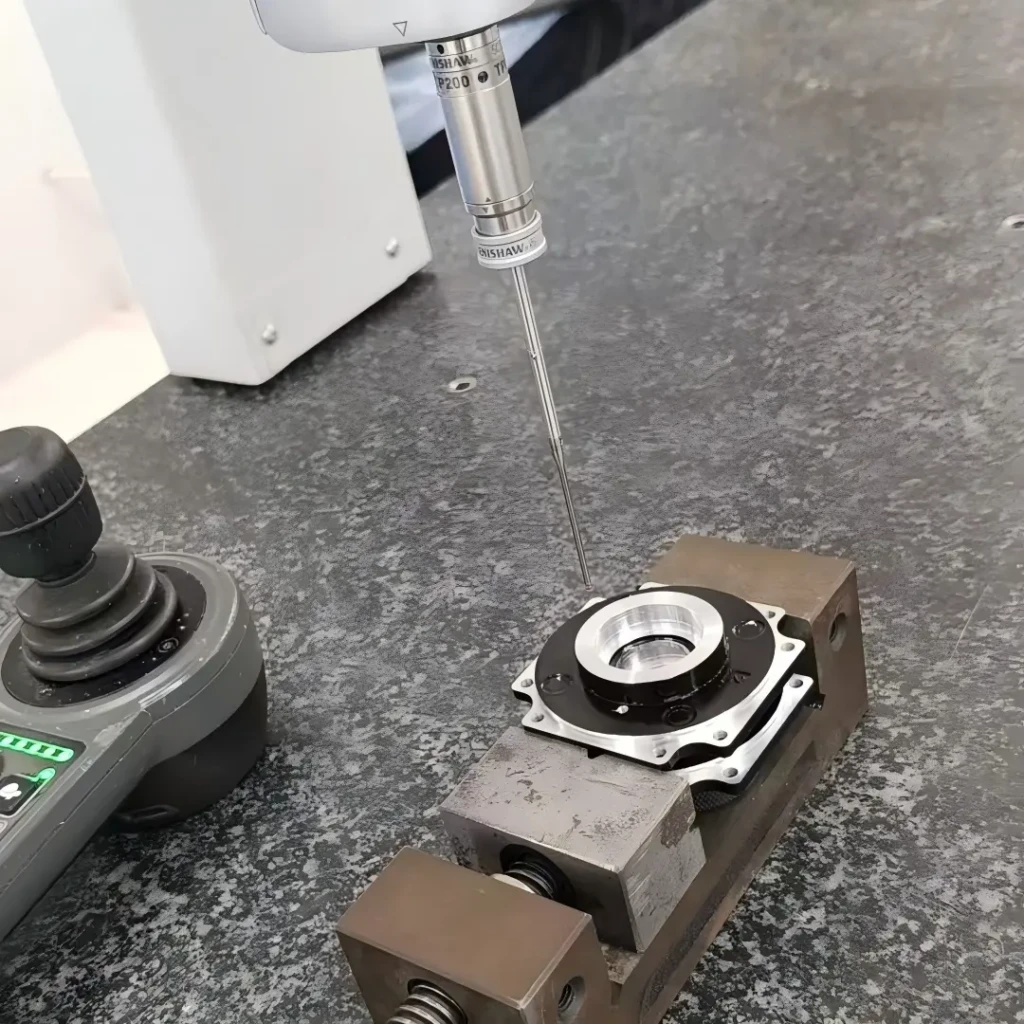
Sampling vs. Full Inspection
For a small batch, a sampling plan states how many parts are inspected and from where. In many low-volume cases the practical choice is to inspect all critical parts or a defined sample. The plan should state what is measured, the acceptance rule, and what happens on a failure. Sampling is only as good as the plan and the measurement; a "sample" without criteria proves nothing.
Traceability for Short Runs
Traceability ties each part or lot to its material, process, and inspection record. In low volume it is affordable, since the volume is small, and valuable, because the records can cover the whole batch. Confirm what traceability the application needs: material certificate, heat treat record, inspection data, and revision of the drawing.
What to Specify in the Order
- FAI at the approved drawing revision, with a defined measurement plan.
- Sampling or full inspection, with acceptance rules.
- Documents to accompany the batch: inspection reports, material certificates, traceability.
- Handling of nonconformances and re-approval after a change.
Conclusion
Low-volume production earns its quality from FAI, a defined sampling plan, and per-part traceability, not from volume statistics. Gate the run with a first article, inspect against a plan, and ship the records with the parts. For a small batch, that discipline turns a few parts into dependable evidence. That is quality control that scales down without scaling away.
Note: QC scope depends on the application and customer requirements; confirm the FAI, sampling, and documentation with the supplier before ordering.