

Additive manufacturing found its footing in medical work because device development is full of small quantities, complex geometry and late changes. That does not make printing the right answer for every part; it makes it the right answer for parts where geometry or quantity rules out tooling.
Which medical device parts suit additive manufacturing
Four categories recur. Anatomical models are printed from scan data so a surgical team can plan and rehearse on a replica. Surgical guides are produced in small numbers, matched to a patient or a procedure, and often need internal geometry that would be difficult to machine. Device housings and instrument components are printed when quantities are too small for tooling and the geometry is complex. And functional prototypes of diagnostic or laboratory equipment are printed to validate assembly before any production tool exists.
| Part type | Why printing fits | What to watch |
|---|---|---|
| Anatomical model | Built from scan data, no tooling | Accuracy of the source data, not of the printer |
| Surgical guide | Patient-specific, complex internal geometry | Material choice, cleaning and traceability |
| Device housing or instrument part | Low volume with late design changes | Whether the material behaves like the production one |
| Laboratory or diagnostic fixture | Small batch, complex shape | Chemical compatibility with what it contacts |
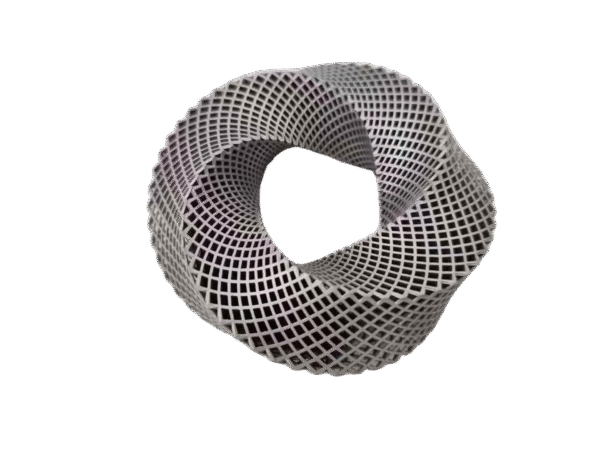
What medical devices can be 3D printed?
Models, guides, fixtures, housings and some implants.
The categories differ enormously in how much regulation applies. A planning model that never touches a patient is a visual aid; a surgical guide that contacts tissue during a procedure is closer to an instrument; an implant carries the heaviest requirements of all. The printing process is the same; the documentation, material control and traceability expectations are not.
That distinction should be settled before the first print, because it changes what materials are acceptable, how the parts are cleaned and packed, and which records must accompany them. Where a development team is prototyping rather than producing, printing a functional model in a representative polymer is often enough, provided everyone understands that the result is a development aid rather than a validated device.
How documentation works on printed medical parts
Traceability on an additive part starts with the material: which resin or powder batch, and what evidence of its condition. It continues with the build record, since orientation, supports and post-processing all affect the result, and finishes with the inspection of the features the drawing controls. On conventional machined parts much of this is implicit in the process; on printed parts it has to be written down because the process variables are larger.
Two habits make this manageable. Freeze the build parameters once a design is validated, so a later batch is comparable with the one that was tested, and keep the inspection focused on the features that matter functionally rather than on everything the printer can measure. Regulatory expectations for devices that contact patients are set out by the US Food and Drug Administration, additive process terminology is standardised through ASTM Committee F42, and qualification guidance for additive production is published by UL Solutions.
Where printing gives way to machining or molding
Printing loses its advantage when the part needs production material properties, when the quantity justifies tooling, or when a surface has to be smooth and non-porous. Powder-bed nylon is inherently textured and slightly porous, which suits fixtures and housings but not a sealing face. Resin prints hold fine detail but behave like the photopolymer they are, which limits what they can carry.
The practical split is by test rather than by preference. If the prototype has to survive repeated assembly, the part belongs in a machined metal or molded plastic. If it has to prove an assembly sequence or a user interface, printing is faster and cheaper. Where the part is a low-volume instrument component that must survive use, machining from the production material is usually the better answer, and the process comparison is documented on the metal 3D printing and CNC machining pages.
Cleaning, packaging and handling
Printed parts for medical use go through cleaning that is more demanding than for general industrial work: uncured resin or loose powder has to be removed, and the surfaces that will contact anything have to be free of process residue. Packaging then has to preserve that condition through transport, which usually means individually bagged parts rather than a bulk box.
These requirements belong in the order rather than in a follow-up message, because they affect how the build is scheduled and how parts are handled after it. It also helps to say explicitly which surfaces will contact the patient, the operator or a sample, so cleaning effort can be concentrated where it matters rather than applied uniformly. Cleaning and waste handling obligations are set out by the US EPA, measurement practice for printed features by the NIST Manufacturing Extension Partnership, and material references by ASM International, with general application guidance from ASME.
Where a printed part is intended for training or demonstration rather than for a patient, saying so changes how it is produced: the material can be chosen for cost and appearance rather than for compatibility, and the inspection record can be limited to the features that affect the demonstration.
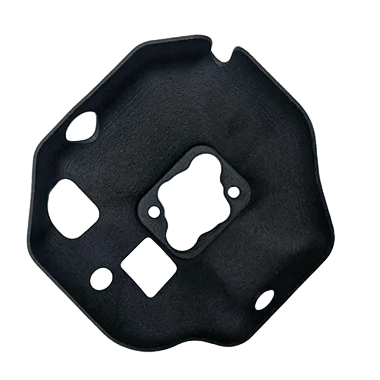
Send the model with the surfaces that contact a patient or sample marked, and request a quote with the material and post-processing route confirmed.
FAQ
How is 3D printing used for surgical guides and anatomical models?
Anatomical models are printed from patient scan data so a team can plan or rehearse against a physical replica, while guides are produced as single units matched to a procedure and typically need internal geometry that would be difficult to machine.
What documentation should accompany printed medical parts?
Material batch and condition, the build record covering orientation and post-processing, and inspection results for the features the drawing controls. Regulatory expectations increase with patient contact, so the intended use should be stated before production.
When should a medical device part be machined instead of printed?
When it needs production material properties, a smooth non-porous surface, or enough quantity to justify tooling. Powder-bed parts are textured and slightly porous, and resin parts behave like the photopolymer rather than like the final material.