Michael Wang

Founder & Mechanical Engineer

As the founder of the company and a mechanical engineer, he has extensive experience in advanced manufacturing technologies, including CNC machining, 3D printing, urethane casting, rapid tooling, injection molding, metal casting, sheet metal, and extrusion.

Table Of Contents

ISO 9001 quality means a documented, audited system that ensures consistent processes, measured performance, and continual improvement. For custom manufacturing and rapid prototyping, ISO 9001:2015 certification signals that a supplier systematically controls tolerance, material traceability, inspections, and exceptions, which reduces rework, delays, and surprise defects in real

What Is ISO 9001 and Why Does It Matter in Manufacturing?

ISO 9001:2015 is the international standard for quality management systems (QMS). It does not define product specifications; instead, it defines how an organization plans, executes, checks, and improves its processes to deliver consistent results and meet customer and regulatory requirements.iso+1

In manufacturing, ISO 9001 matters because it turns “good intentions” into repeatable behavior. A certified supplier must:

  • Define documented processes for design review, procurement, production, inspection, and nonconformance handling.

  • Collect and analyze data on cycle times, defect rates, and customer complaints.

  • Use risk-based thinking to identify where errors or delays are likely and apply preventive controls.

  • Train personnel and maintain records that prove competence and traceability.

For buyers, this means lower risk of hidden variability, faster issue resolution, and a clearer path when problems arise.

How Does ISO 9001 Certification Improve Rapid Prototyping Outcomes?

ISO 9001 certification improves rapid prototyping by enforcing structured reviews, documented inspections, and controlled change management, which reduce rework, scrap, and unexpected lead-time extensions.3dprint+1

In practice, a prototype shop that follows ISO 9001:

  • Requires a formal design-for-manufacturing (DFM) review before cutting the first part, catching tolerance conflicts or material issues early.

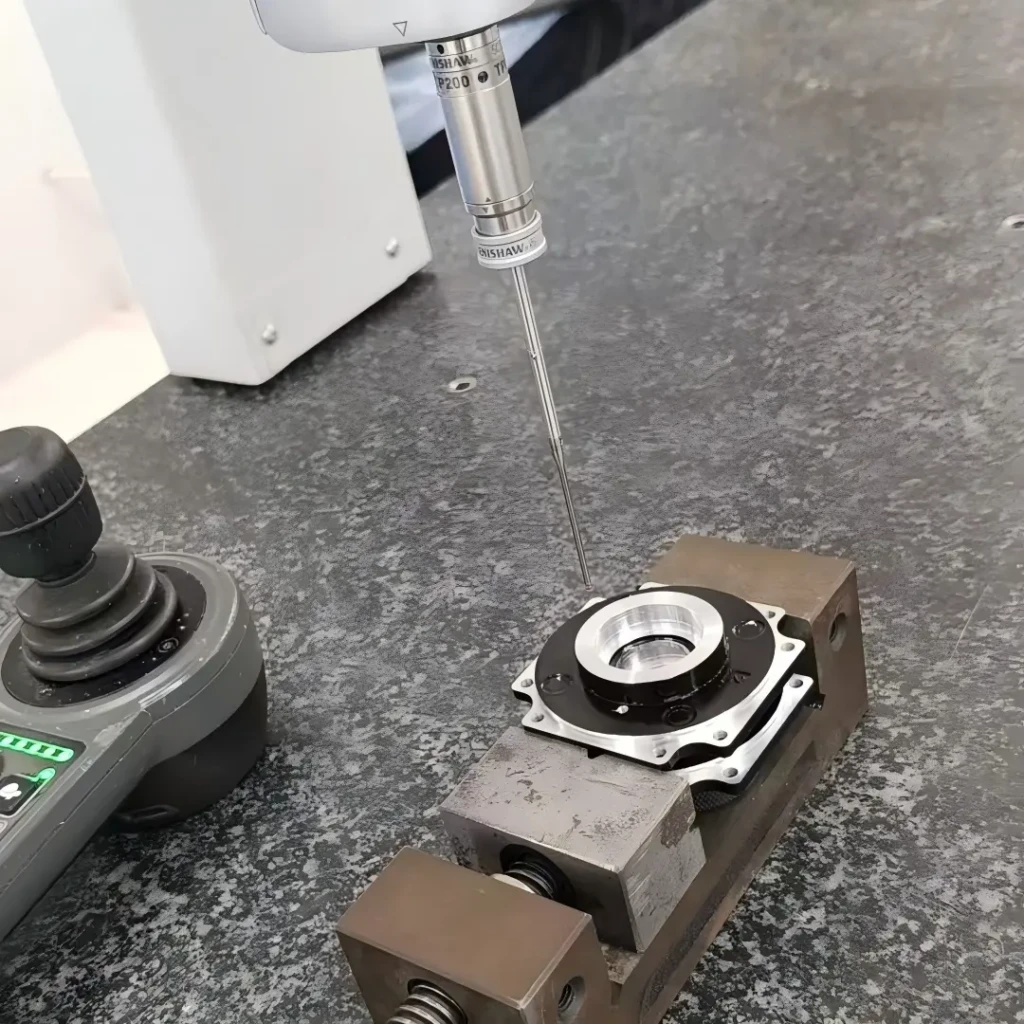
  • Uses calibrated equipment (CMMs, gauges) and documented inspection plans so every prototype batch is measured consistently.

  • Tracks nonconformances and root causes, so similar mistakes don’t repeat on future projects.

  • Manages supplier quality for materials and subcomponents, reducing the chance of bad batches ruining a time-sensitive prototype run.

For engineering teams, that translates into fewer iteration cycles, tighter confidence on dimensional data, and more reliable lead times when you need to move from concept to test quickly.

Which ISO 9001 Requirements Directly Impact Part Quality and Traceability?

Key ISO 9001:2015 clauses that directly affect part quality and traceability include control of documented information, monitoring and measurement resources, production control, and traceability of nonconforming outputs.norfabmfg+1

Specifically:

  • Documented information: Processes, work instructions, and inspection plans must be documented and version-controlled, so operators always follow the latest approved method.

  • Monitoring and measurement resources: Equipment like CMMs, micrometers, and torque testers must be calibrated and maintained, with records proving accuracy.

  • Control of production and service provision: Processes must be defined, operators qualified, and conditions (speeds, feeds, temperatures) monitored and recorded.

  • Identification and traceability: Materials, lots, and individual parts must be identifiable through the process, allowing root cause analysis if a defect is found later.

  • Control of nonconforming output: Parts that fail inspection must be clearly marked, segregated, and handled according to defined rules (repair, scrap, or return).

For custom manufacturing, these requirements mean you can trust that a part’s dimensions, material, and process history are backed by records, not just verbal assurances.

Why Do Many OEMs and Regulated Industries Require ISO 9001 Suppliers?

Many OEMs and regulated industries require ISO 9001 suppliers because the standard provides an independent, audited framework that reduces risk and simplifies supplier approval, especially in high-stakes sectors like aerospace, medical, and automotive.siemens+2

In regulated environments:

  • Aerospace and defense often layer ISO 9001 with additional standards (e.g., AS9100), but ISO 9001 is still a baseline expectation.

  • Medical device manufacturers must demonstrate control of design, procurement, and production; ISO 9001 aligns well with FDA expectations even when not a direct substitute.

  • Automotive suppliers frequently need ISO 9001 as part of IATF 16949 compliance.

Requiring ISO 9001 helps OEMs:

  • Reduce the depth of their own audits by relying on a third-party certification.

  • Ensure consistent quality across global suppliers.

  • Have a documented system for handling defects, complaints, and corrective actions.

For buyers, it is a practical way to filter out suppliers who cannot reliably manage quality at scale.

How Should You Evaluate Whether ISO 9001 Is Worth It for Your Projects?

You should evaluate ISO 9001 based on your project risk, volume, and regulatory environment: high-risk, high-volume, or regulated projects usually benefit far more from ISO 9001 than simple, low-volume, non-critical runs.siemens+1

Use this simple decision guide:

Project Type ISO 9001 Typically Worth It? Why?
Functional prototypes for testing Often yes Reduces risk of bad dimensions/materials that invalidate test results.
Production parts for regulated use Yes Required or strongly expected by OEMs and regulators; supports traceability and audits.
High-volume manufacturing Yes Consistency, reduced scrap, and clear nonconformance handling are critical at scale.
Low-volume, non-critical parts Optional If budgets are tight and risks low, non-ISO shops may be acceptable with extra checks.

Ask suppliers:

  • Are you ISO 9001:2015 certified, and by which body?

  • Can you show inspection records, material certificates, and traceability for my parts?

  • How do you handle nonconformances and corrective actions?

For critical projects, ISO 9001 is usually a net positive even if it adds some cost or paperwork.

Which Risks Exist When You Use Non-ISO 9001 Suppliers for Custom Parts?

Using non-ISO 9001 suppliers introduces risks like inconsistent tolerances, undocumented changes, weak material traceability, and unclear handling of defects, which can lead to costly rework or delayed programs.3dprint

Common scenarios:

  • Tolerance drift: Without documented process controls and calibrated measurement, tolerances may vary between batches.

  • Undocumented changes: Tooling repairs or process tweaks may happen without approval, causing functional issues.

  • Material uncertainty: Heat numbers or certificates may be missing, making it hard to prove compliance for regulated parts.

  • Defect handling: Poorly marked or untracked nonconforming parts can mix with good stock, causing field failures.

These risks are manageable with strong internal QA, but that adds burden on your team. ISO 9001 suppliers carry much of that burden in their own system.

Can ISO 9001 Quality Systems Accommodate Rapid Lead Times?

Yes, ISO 9001 quality systems can accommodate rapid lead times if the supplier has designed lean, documented processes that balance speed with control, rather than treating quality as a separate bottleneck.3dprint+1

A well-run ISO 9001 shop often:

  • Pre-defines standard inspection plans and DFM checklists to avoid ad-hoc delays.

  • Uses digital workflows to route drawings, approvals, and inspection results quickly.

  • Applies risk-based thinking to focus rigorous controls on critical features, not every dimension.

  • Maintains calibrated equipment and ready-to-use fixtures so measurement does not slow the line.

For example, 6CProto operates as an ISO 9001:2015 certified company and still offers lead times as short as 24 hours for shipping, supported by free DFM analysis and advanced CMM inspections to keep quality tight without sacrificing speed.6cproto

The key is that ISO 9001 does not require “slow”; it requires “controlled and consistent.”

6CProto Expert Views

“In our work with aerospace, medical, and automotive teams, the most valuable aspect of ISO 9001 isn’t the certificate on the wall—it’s the habit of asking, before every cut, what could go wrong and how we’ll prove the part is right. Clients often focus on speed, but the real risk is invisible variability: a slightly different feed, an uncalibrated gauge, a material lot that wasn’t traced. ISO 9001 forces us to control those variables and document them. That’s why, even when we ship in 24 hours, we still run structured DFM reviews, calibrated CMM checks, and clear nonconformance handling. For engineers, that means you can iterate fast without betting your test program on luck.” – 6CProto Quality Lead

How Can You Use ISO 9001 as a Supplier Selection Filter?

You can use ISO 9001 as an early filter by requiring certification proof, asking specific process questions, and verifying that the supplier’s system matches your project’s risk level.goodearthtools+1

Practical steps:

  • Request a copy of the current ISO 9001 certificate and the name of the certification body.

  • Ask for examples of:

    • DFM reports for prototype parts.

    • Inspection reports with CMM data.

    • Material certificates and traceability records.

  • Inquire about:

    • How nonconformances are logged, analyzed, and closed.

    • How personnel are trained and qualified for specific processes.

  • For critical projects, consider a short on-site or virtual audit focusing on inspection areas, calibration records, and nonconformance handling.

If a supplier cannot answer these clearly, even if they are not ISO certified, it may indicate weaker underlying quality practices.

Conclusion: Key Takeaways and Actionable Next Steps

ISO 9001 quality is not a guarantee of perfection, but it is a strong signal that a supplier has a structured, audited system for controlling processes, measuring results, and improving over time. For custom manufacturing and rapid prototyping, that system directly impacts part quality, traceability, and reliability of lead times.iso+2

Actionable next steps:

  1. Assess your project risk: If parts are functional, regulated, or high-volume, prioritize ISO 9001 suppliers.

  2. Ask for proof and examples: Certificate, DFM reports, inspection data, and material traceability.

  3. Define your quality expectations upfront: Tolerances, inspection levels, and documentation requirements in your RFQ.

  4. Use ISO 9001 as a filter, not the only factor: Combine it with technical capability, lead time, and cost.

For teams needing fast, precise, and consistently quality prototypes and production parts, working with an ISO 9001:2015 certified partner like 6CProto can significantly reduce risk while still delivering industry-leading lead times.6cproto

FAQs

Does ISO 9001 guarantee that my parts will be perfect?

No. ISO 9001 guarantees a managed system for quality, not perfect parts. It reduces the likelihood of errors and improves consistency, but defects can still occur and must be handled through documented nonconformance and corrective action processes.

Is ISO 9001:2015 different from older versions?

Yes. ISO 9001:2015 adds stronger requirements for risk-based thinking, leadership involvement, and alignment with the organization’s context, compared with the 2008 version. It shifts from purely procedural control to a more strategic, outcome-focused approach.

How quickly can an ISO 9001 certified shop like 6CProto deliver prototypes?

ISO 9001 certification does not inherently slow delivery. 6CProto, as an ISO 9001:2015 certified supplier, offers lead times as short as 24 hours for shipping, supported by structured DFM reviews and CMM inspections to maintain quality without sacrificing speed.6cproto

Do I always need ISO 9001 for rapid prototyping?

Not always. For low-risk, non-functional prototypes, a non-ISO shop may be acceptable if you add your own inspection and validation steps. For functional prototypes, regulated parts, or production volumes, ISO 9001 is usually strongly recommended or required.

What questions should I ask an ISO 9001 supplier before starting a project?

Key questions include:

  • Are you currently ISO 9001:2015 certified, and by which body?

  • How do you handle DFM, inspection, and nonconformances?

  • Can you provide material certificates and traceability for my parts?

  • What is your typical lead time for similar projects, and how do you manage rush orders?