

Set the Validation Question Before the Process
Aerospace prototyping carries a double requirement: the prototype must be fast enough to keep the program moving, and the data it produces must survive into qualification. Each stage answers a different question. Form and fit asks whether the part fits the assembly, and a 3D-printed model answers it cheaply. Functional asks whether the part carries the load, which demands machining or printing in the production material so the strength and stiffness data are real. Performance asks whether the part survives the environment, so temperature, corrosion, and vibration testing needs representative test parts. Qualification asks whether the production process repeats, which requires the production process itself with full traceability.
The gate structure follows from those questions. A fit check is not a load test: data from a printed resin model does not transfer to a machined metal part, and treating it as transferable is the classic program error. Each gate advances only when the evidence it needs exists, which makes the stage table the actual program plan rather than a marketing description.
Match the Material to the Functional Stage
The material choice at the functional stage should match the production material, because the data must transfer. Aluminum 6061 and 7075 serve brackets, housings, and structural parts, and the grade and temper must match production. Titanium 6Al-4V serves high-strength, high-temperature parts, where material state and surface integrity matter more than geometry. Stainless 15-5 and 17-4 appear in fittings and structural parts, and the heat-treatment condition must mirror the production spec. Inconel covers hot-section parts, where alloy grade and machining behavior set the limits. Plastics and composites in ducts, covers, and interiors carry fire and smoke requirements that a prototype must respect from the first build.
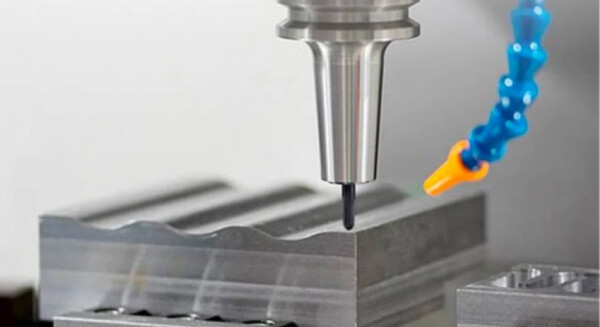
Four process families cover most aerospace prototype work, and they differ in what the data may be used for. Conventional machining on a manual or CNC mill runs the full range from quick-turn aluminum to difficult high-temperature alloys, which makes it the default for functional and load-bearing test parts. Additive printing earns its place where geometry drives the requirement, such as conformal ducts, brackets with internal features, or repaired tooling shapes, provided the process family can later be qualified. Sheet metal fabrication covers housings, shields, and brackets where formed sheet behavior matters, which uses laser cutting, punching, and forming in the same process sequence as production. Each family produces a different data package, so naming the intended test in the request is what lets the supplier pick the process and the documentation level together.
Material state is a data trap that shows up late in the program. The same aluminum grade in an annealed versus a heat-treated temper produces different yield strength, ductility, and fatigue behavior, so a functional prototype that does not specify the temper produces numbers that look real and transfer nowhere. Surface integrity carries the same risk: a machined surface with burned edges, layering, or residual stress from abusive parameters can fail a fatigue test for reasons that will not exist in the qualified production process, or pass one that production cannot repeat. The solution is to state the material state and the surface requirement on the same line as the tolerance, and to ask the supplier to record the actual condition on the inspection report.
The prototype drawing should carry the same material, tolerance, and finish callouts on critical features that production will use. A prototype with looser callouts passes a test that the production part fails, and the program discovers the discrepancy at first article, which is the most expensive place to find it.
Walk the Qualification Path
The qualification path is what makes aerospace prototypes different from prototypes in other industries. The production part must be produced by a qualified process under an aerospace quality system such as AS9100, with material traceability, process records, and inspection evidence. The prototype stage feeds that qualification by identifying the critical features, the failure modes, and the inspection points, so the production specification is written from evidence rather than guesses.
The handoff from prototype to production is a formal gate. The prototype data, the tolerances actually held, the surfaces actually achieved, and the failure modes found transfer into the production specification, and the first article of the production process is inspected against that specification. The prototype is not the production part, but the data it produced is part of the qualification story.
Qualify the Additive Process Family, Not Just the Geometry
For additively manufactured parts, qualification adds process validation: the machine, the parameters, and the material lot are qualified together, and the printed part’s properties belong to the process, not the geometry file. The prototype stage should use the same process family that production will use, so the data transfers and the process records start at the prototype rather than at first article.
Documentation and Traceability Start at the RFQ
Aerospace prototypes carry documentation requirements from the functional stage forward. A fit-check model needs no certificate; a load-test part needs material certificates and inspection data; a qualification part needs the full traceability chain. The requirement grows with the part’s role, and the documentation plan belongs in the RFQ, not after the build, because adding documentation after machining means re-verifying and the schedule pays for it.
Supplier qualification is part of the documentation story. Confirm the supplier operates under an aerospace quality system and can produce the certificates, first-article reports, and process records the part’s role requires. The part and the paperwork should arrive together, and the RFQ should state which records are required in the same way it states the tolerance.
Connect Prototype Data to the Test
The prototype-to-test connection is where the stage table proves itself. A load test only means something if the test article is machined in the production alloy, the gauge sections reflect the drawing, and the inspection data accompanies the part. Environmental tests add the same discipline: a thermal test on the wrong material state produces numbers that cannot be used in the qualification file.
The data transfer between gates is itself a deliverable. When a part moves from form and fit into functional testing, the geometry file, the material certificate, and the tolerance report travel with it, and the next stage starts from that record rather than from a fresh interpretation of the drawing. Programs that lose the transfer record end up re-verifying features that were already proven, which is how prototype schedules double. Keep the records structured by feature and by material lot, because the qualification file that is assembled at the end is only as complete as the records kept along the way.
Plan the test article count and the inspection points when the order is placed, because a functional test needs enough parts for the planned cycles and enough inspection data to explain the result. The prototype order that states the test plan gets a part designed for testing; the one that does not gets a part that was only machined.
A Checklist for an Aerospace Prototype Order
A complete aerospace prototype RFQ covers the stage and its question, the material grade and heat-treatment condition matched to production, the tolerance and finish callouts on critical features, the documentation required, and the qualification plan that the prototype data will feed. State the environment the part must survive, the test it will run, and the records the quality system requires. The rapid prototyping approach carries the speed, and the precision machining service carries the tolerance and documentation discipline.
When the program needs the full transition, the CNC machining services cover the move from prototype to production quantities. The standards and tolerances framework defines what the inspection evidence must show, and the CMM inspection article explains how dimensional evidence is built and reported.
Conclusion
Aerospace rapid prototyping is the discipline of matching the process to the validation question while keeping the material and the documentation honest enough to transfer. Print for fit, machine or print in production material for function, and start the qualification records at the functional stage. A rapid prototyping program feeding an aerospace qualification is a chain of evidence, and each prototype is a link. The ASME codes and standards referenced by the program define the envelope the evidence must fit.
FAQs
What are aerospace prototypes used for?
They validate form and fit, functional performance, and the qualification path: whether the part fits the assembly, carries the load, and can be produced repeatedly by a qualified process. Each stage uses a different process and produces different evidence.
Can 3D printing be used for aerospace prototypes?
Yes, especially for form and fit and for geometry that machining cannot reach. For functional data, the printed part must be in the production material and produced by a process family that can be qualified, because the strength, fatigue, and surface behavior belong to the process, not the geometry.
What documentation comes with an aerospace prototype?
The requirement grows with the stage: fit models need none, functional parts need material certificates and inspection data, and qualification parts need the full traceability chain under the aerospace quality system. The documentation plan should be in the RFQ, not added after the build.