
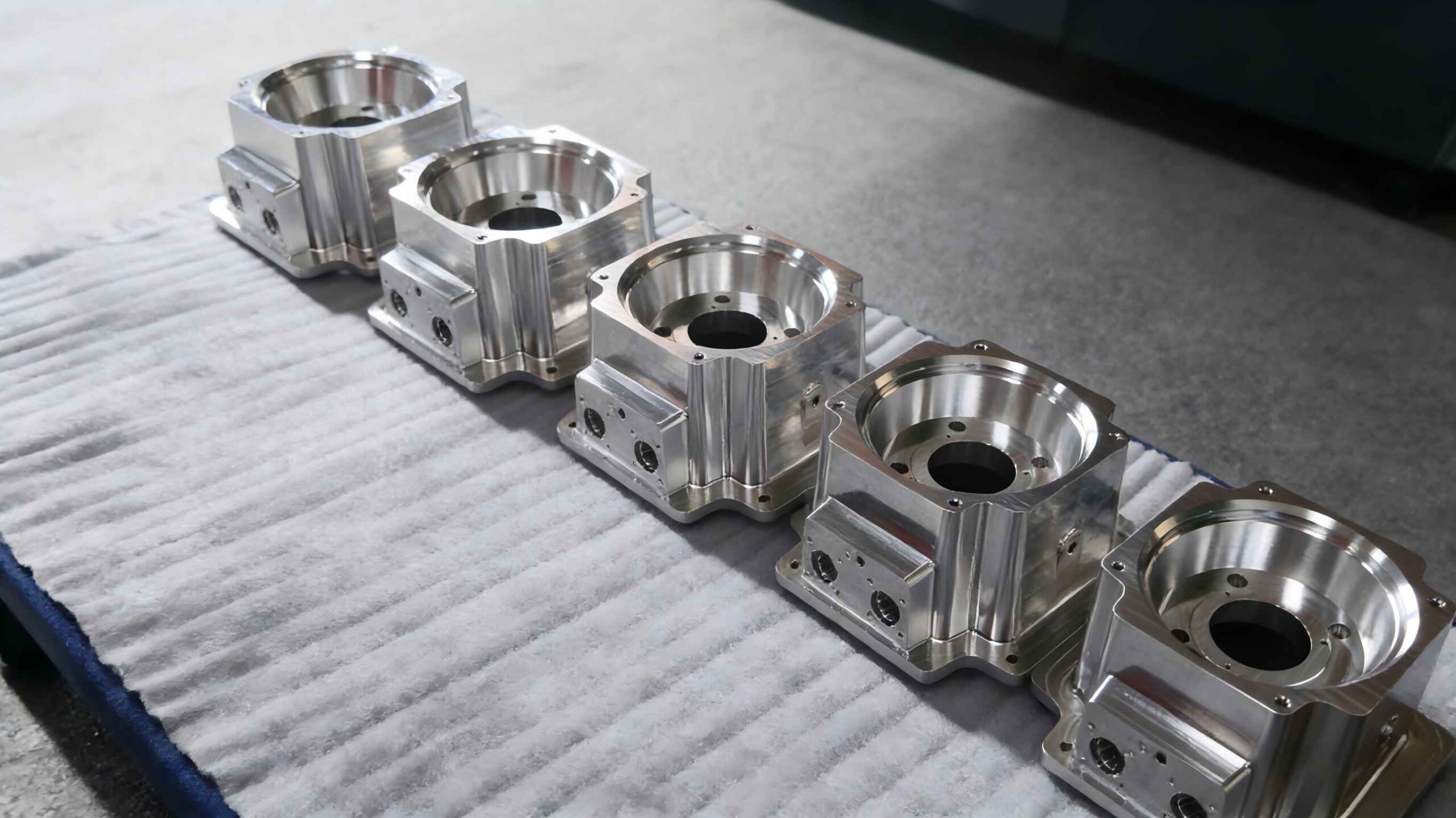
In modern manufacturing systems, companies no longer pursue merely large-scale production; instead, they seek faster iteration, more flexible process options, and more reliable development workflows. While traditional manufacturing methods still dominate high-volume production, rapid manufacturing and prototyping have become a key bridge for turning products from concept into finished goods.
Rapid manufacturing primarily relies on processes such as additive manufacturing (3D printing), CNC machining, vacuum casting, and rapid tooling. Its core value lies in:
Quickly obtaining physical components that can be tested, demonstrated, or even put into production through digital design.
As material performance, equipment precision, and processing efficiency continue to improve, rapid manufacturing has long surpassed being merely a prototyping tool and has become a practical production solution across numerous industries.
With over 10 years of practical experience, HorizRP provides rapid manufacturing services and integrates a wide range of rapid manufacturing and prototyping processes to help customers bring products to market faster, reduce trial-and-error costs, and significantly enhance overall competitiveness.
Why is rapid manufacturing becoming increasingly important?
Traditional manufacturing excels in large-scale, low-cost, and highly stable production. However, with intensifying market competition, shorter product life cycles, and faster iteration speeds, companies now require in the development phase:
- Low-risk experimentation capabilities
- Reliable product validation processes
- Flexible small-batch supply
- Shorter delivery cycles
Rapid manufacturing has emerged precisely to meet these needs.
Below, we will explain various types of rapid manufacturing technologies, helping you understand their value in corporate decision-making.
Unique Value of Additive Manufacturing (3D Printing)
3D printing is the most typical rapid manufacturing technology. It builds parts by stacking materials layer by layer, without the need for molds or complex tooling. As a result, it is widely used for:
- Concept models
- Functional test pieces
- Small-batch customized products
- Prototypes with complex structures
HorizRP Rapid Manufacturing offers various additive manufacturing methods, including FDM, SLA, SLS, and SLM, covering materials from resins and plastics to metals.

Rapid Design Feasibility Verification
In the past, design validation relied heavily on simulations. Today, 3D printing enables designers to:
- Obtain functional prototypes immediately
- Verify structures in real working environments
- Quickly identify weaknesses and design flaws
- Communicate design modifications more effectively with the team
This is crucial for shortening development time.
Extremely fast prototype delivery speed
No matter how complex the structure, parts can be produced simply by uploading CAD files. This allows companies to:
- Rapidly advance the review process
- Accelerate trial production
- Finalize the design earlier and prepare for mass production
Time savings often translate into cost savings.
Freedom to Manufacture Highly Complex Shapes
3D printing is almost unrestricted by traditional manufacturing processes, enabling:
- Internal channels
- Hollow structures
- Lightweight topology
- Asymmetric geometries
These designs are difficult to achieve with injection molding or machining but can be easily realized through additive manufacturing.
Minimal Material Waste
Since additive manufacturing only uses the material required to build the model, it reduces:
- Cutting waste
- Machining allowances
- Material costs
For metal printing, the budget savings are particularly significant.
Supports Small-Batch Customization
For companies aiming to launch personalized products—such as in medical devices, consumer electronics, or jewelry—3D printing offers:
- Mold-free production
- On-demand manufacturing
- Modifications possible for each individual piece
This makes it highly advantageous during the market validation stage.
Rapid Manufacturing Advantages of CNC Machining
Although CNC machining is a subtractive manufacturing method, it remains a key technology in the rapid manufacturing system, particularly suitable for:
- Engineering plastic and metal prototypes
- High-strength functional parts
- High-precision component testing
- Small-batch engineering parts
- Validation of complex structures
Meets Strict Tolerance Requirements
CNC machining offers precision that additive manufacturing can hardly match:
- Achievable tolerances up to ±0.005 mm (depending onmaterial and equipment)
- Superior surface finish
- More uniform mechanical properties
For scenarios with high structural strength requirements, CNC is the most reliable choice.
Easily Supports Medium-Batch Production
For production scales of hundreds to thousands of units:
- CNC requires no molds
- Programs are stable and reusable
- Continuous operation is possible
Many companies use CNC as a “transitional process” to supply parts before full-scale mold production.
Digital Simulation Reduces Trial and Error
With CAM software, engineers can:
- Simulate tool paths
- Check for interference
- Verify machinability
- Optimize structural design
This allows many steps that previously required physical trial molds or test cuts to be completed virtually.
High Automation and Low Labor Costs
CNC enables long periods of unattended operation, significantly reducing:
- Cycle time
- Labor input
- Manufacturing costs
It is especially valuable for companies needing urgent prototypes or small-batch production.
Advantages of Vacuum Casting and Rapid Tooling
When companies need small-batch products “close to injection molding quality,” these are the best solutions.
Vacuum Casting Features:
- Uses silicone molds
- Low cost and fast production
- Can replicate 10–25 high-quality samples
- Surface finish, color, and texture close to final injection-molded parts
Suitable for:
- Display models
- Sample validation
- Ergonomic testing
Rapid Tooling Features:
- Uses aluminum or rapid steel molds
- Production cycles 40–60% shorter than traditional steel molds
- Cost savings of 15–25%
- Can support production of 1,000–100,000+ units
Suitable for:
- Small-batch production
- Market testing samples
- Early trial production
For projects preparing for large-scale production, rapid tooling is a highly cost-effective transitional method.
How to Choose the Right Rapid Manufacturing Process for You
Different project goals determine the choice of manufacturing process:
| Goal | Recommended Process |
|---|---|
| Rapid concept models | SLA / FDM |
| Functional test pieces | SLS / CNC |
| Low-volume on-demand manufacturing | 3D Printing / Vacuum Casting |
| Medium-batch production | CNC / Rapid Tooling |
| Trial production before mass production | Rapid Tooling |
| High-precision mechanical parts | CNC |
HorizRP can recommend the most suitable process combination based on product characteristics, enhancing product value for clients in terms of both cost and quality.
How Rapid Manufacturing and Traditional Manufacturing Work Together
They are not opposing approaches but complementary.
Traditional manufacturing is suitable for:
- Ultra-large-scale production
- Extremely low costs
- Products with high mold durability requirements
Rapid manufacturing is suitable for:
- Early design validation
- Small- to medium-batch production
- Customized products
- Urgent supply needs
Many companies adopt a hybrid strategy:
- Early development → Use 3D printing
- Functional verification → Use CNC machining
- Low-volume market testing → Use vacuum casting
- Trial production → Use rapid tooling
- Mass production → Switch to traditional processes such as injection molding or die casting
This approach shortens the overall development cycle, reduces risk, and keeps costs more controllable.
Conclusion
The emergence of rapid manufacturing provides companies with unprecedented flexibility: it accelerates design validation, speeds up time-to-market, and lowers decision-making costs for development teams. As equipment performance and material systems continue to mature, rapid manufacturing is evolving from a “prototyping tool” into a full-fledged “manufacturing method.”
Whether you are developing new products, optimizing structures, or preparing for low-volume trial production, HorizRP can provide the right manufacturing solutions through multi-process combinations. We help you validate your product in the market with small batches, support cost and quality considerations, and enable a smooth transition to large-scale production—offering more flexible solutions for inventory and cash flow management.
If you want to learn more about whether to choose rapid manufacturing over traditional manufacturing, you can click here to contact Horizon’s team of experts.
Latest Post
Liquid Silicone Rubber Molding: Process, Benefits, Applications, and Design Considerations
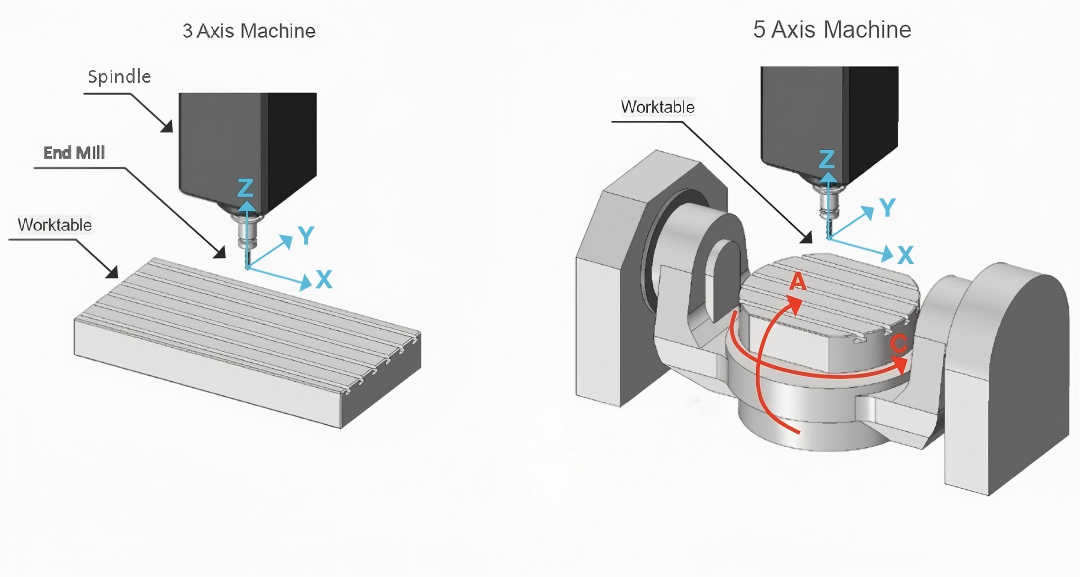
What is a 5-axis machine? The differences from 3-axis machines and their applications.
What Is a Tack Weld? Definition, Purpose, and Applications
How to Remove Burrs from CNC Machined Parts: Common Deburring Methods Explained