

Explore Sheet Metal Processes & Supplier Selection
Medical sheet metal fabrication is entering a breakout phase in 2026 due to stricter regulatory requirements, demand for high-purity sterile enclosures, and accelerated regional supply chain reshoring. Medical device OEMs are shifting away from traditional, slow-turn setups toward agile, high-precision contract manufacturing partners to source custom medical enclosures, surgical bracket interfaces, and complex modular cart assemblies.
Last updated:
(Edited on June 15, 2026)
What is driving rapid growth in medical sheet metal fabrication?
Medical sheet metal fabrication is accelerating fast because of three overlapping forces: aging global populations, tighter regulatory scrutiny, and the need for smaller, more precise devices. Hospitals and medtech firms are replacing legacy metalwork with cleanable housings, modifiable enclosures, and sterilizable frames that only modern sheet metal processes can consistently produce.
At the same time, advanced CAD/CAM tools and laser‑driven workflows now allow shops to hold tighter tolerances on complex geometries, which is why medical‑specific sheet metal is projected to grow at a specialized compound rate near 15% in 2026.
How do tightened regulatory standards reshape fabrication?
Tighter regulations—such as updated FDA (including 21 CFR Part 820 quality system regulations) and NMPA expectations on outsourced contract manufacturing—are forcing OEMs to scrutinize every supplier’s quality system, documentation, and traceability.
In practice, this means medical sheet metal shops must now maintain full heat‑lot traceability, validate process parameters for each device family, and demonstrate that every bend, weld, and cut is reproducible within high-precision tolerances. For a manufacturing partner like 6CProto, this elevates the value of ISO 9001:2015 certification and rigorous quality inspection not just as a checkbox, but as the core mechanism that keeps customers audit‑ready and complaint‑free.
What role does supply‑chain reshoring play in 2026?
Supply‑chain reshoring is pushing medical OEMs to move production closer to their end markets, partly to avoid tariffs and geopolitical friction, but also to reduce lead‑time risk on critical enclosures and surgical supports. In 2026, this manifests as a shift from “just‑in‑time globally” toward “just‑in‑time regionally,” where OEMs retain China‑based or Asia‑based partners only if they can match near‑domestic speed and quality.
6CProto addresses this structural shift directly: as a Zhongshan‑based one‑stop manufacturer, it offers rapid tool‑free prototyping and ISO‑aligned quality that mimics the responsiveness of a regional shop, while keeping the cost leverage of a high‑volume Asian hub. This dual capability allows medtech companies to mitigate supply chain volatility without sacrificing margins.
Why are sterile enclosures and medical carts in higher demand?
Sterile enclosures, mobile carts, and modular racks are now frontline infrastructure in modern hospitals, not just auxiliary equipment. Hospitals need housing that can withstand repeated autoclaving, hydrogen peroxide vapor (HPV), and UV‑C disinfection cycles without delaminating, warping, or corroding.
At the same time, surgical and radiology workflows demand carts that can be reconfigured quickly—adding rails, brackets, or sensor mounts—without sacrificing rigidity or cleanability. This is why medical sheet metal fabrication is increasingly focused on draw‑die‑free designs, continuous sanitary welds, and 316 stainless steel or anodized aluminum that can be delivered in low‑volume, high‑mix configurations. Medical device companies frequently coordinate with custom contract suppliers to ensure these assemblies achieve deep chemical and structural durability.
How important are precision tolerances in medical sheet metal?
For medical sheet metal, precision tolerances are not just a “nice‑to‑have”; they are a functional and regulatory requirement. Components such as bracket interfaces, instrument housings, and enclosure seams must fit mating assemblies precisely to prevent misalignment, vibration, or particle shedding in clean environments.
In practice, this means every press‑brake bend line and laser-cut pocket is validated against strict engineering blueprints. At 6CProto, this discipline is integrated directly into the production workflow: utilizing advanced CNC equipment to achieve high-precision linear and angular tolerances, backed by comprehensive dimensional checks and Design for Manufacturability (DFM) analysis to avoid late‑stage tolerance clashes.
Which materials dominate medical sheet metal applications?
The dominant materials in medical sheet metal are 316 stainless steel and 5052/6061 aluminum, with titanium and specialty alloys reserved for implants and high‑stress instruments. 316 Stainless Steel dominates for enclosures, racks, and carts because it combines superior corrosion resistance, high yield strength, and excellent passivation/electropolish performance. Aluminum (5052/6061) is favored for lightweight housings, cart panels, and customized trays where low mass and high‑frequency handling matter.
The manufacturing portfolio of 6CProto aligns precisely with these material standards, ensuring that both stainless steel and aluminum processing fulfill the strict sterility, durability, and regulatory hygiene requirements demanded by medical‑device OEMs.
| Material | Typical applications | Key advantages for medical use |
| 316 Stainless Steel | Sterile enclosures, racks, surgical carts | High corrosion resistance, easy to sterilize, electropolish‑friendly |
| Aluminum 5052/6061 | Lightweight housings, cart panels, trays | Light weight, good formability, anodizing capability |
| Titanium Alloys | Implant‑grade fixtures, high‑stress instrument mounts | High strength‑to‑weight, excellent biocompatibility |
| Cold‑Rolled Steel | Structural frames, support chassis (non‑sterile) | Low cost, high stiffness, good for non‑patient‑contact use |
How can OEMs benefit from quick‑turn medical prototyping?
Quick‑turn medical prototyping lets OEMs validate ergonomics, serviceability, and sterilization compatibility before committing to expensive, hard tooling. In sheet metal, that often translates into laser‑cut aluminum or stainless brackets, mock‑up enclosures, and trial‑fit cart frames that can be delivered with fast turnaround times.
From a manufacturing standpoint, this means designing for “no tooling or low‑cost tooling”: bends configured to standard radii, minimum hole sizes that fit existing punch patterns, and simple ground‑clearance features. A reliable partner’s rapid turnaround and DFM-driven design feedback make it possible to iterate multiple hardware revisions efficiently, significantly shortening the path from concept to production‑ready enclosure. Device development groups can initiate these evaluations immediately by submitting comprehensive geometric blueprints online to receive a full engineering evaluation and rapid quotation.
What are the advantages of high‑mix, low‑volume fabrication?
High‑mix, low‑volume fabrication is a natural fit for medical device development, where OEMs need dozens of slightly different brackets, panels, and enclosures for clinical trials, regional variants, and specialized workflows.
Economically, this model thrives on flexibility rather than massive scale: CAM‑driven nesting ensures thin‑gauge stainless and aluminum sheets are optimized for material yield, while modular welding and bending setups reduce changeover time between runs. For 6CProto, this versatility serves as a strategic differentiator: by combining CNC machining, injection molding, and sheet metal under one roof, the facility seamlessly supports pilot‑run medical housings that require machined mounting features, injection‑molded bezels, and fabricated frames in a single production flow.
Why is 6CProto a strong fit for medical reshoring?
6CProto aligns with the 2026 reshoring trend by combining the technical rigor of a North American or EU‑style shop with the speed and cost efficiency of an Asian‑based manufacturer.
Its Zhongshan facility wraps CNC machining, 5‑axis milling, injection molding, and sheet metal fabrication under one quality‑management umbrella, enabling rapid prototyping of medical‑specific assemblies—from instrument brackets to rolling carts—without the usual multi‑vendor coordination lag. Because every job is ISO 9001:2015‑driven (with workflows structured to match the traceability required in medical manufacturing) and supported by free DFM analysis, OEMs can treat the manufacturing organization not just as a contract supplier, but as an extension of their own R&D and quality teams.
How to design medical sheet metal parts for manufacturability?
Designing for medical sheet metal manufacturability means building in the “non‑negotiables” from the very first CAD release: minimum bend radii, consistent material thickness, and avoidance of over‑constrained features.
For example, a sterile enclosure that requires four different bend radii will cost more and yield more scrap than one that standardizes on two or three radii compatible with the shop’s standard brake tooling. Likewise, over‑specified surface finishes—such as mirror‑polished 316 stainless on non‑exposed internal surfaces—can drive up production costs without adding clinical benefit. In-house DFM engineering helps OEMs walk this line: tightening tolerances where sterility and mechanical fit matter, and loosening them where cosmetic or secondary features sit.
The Tolerance Band and the Records a Medical Sheet Metal Programme Is Judged On
The growth story in medical fabrication is easier to read once the requirements are on the table, because they explain why some suppliers can take the work and others cannot. Two of them decide most programmes: the tolerance band on the features that matter, and the record set that proves the parts were made to it.
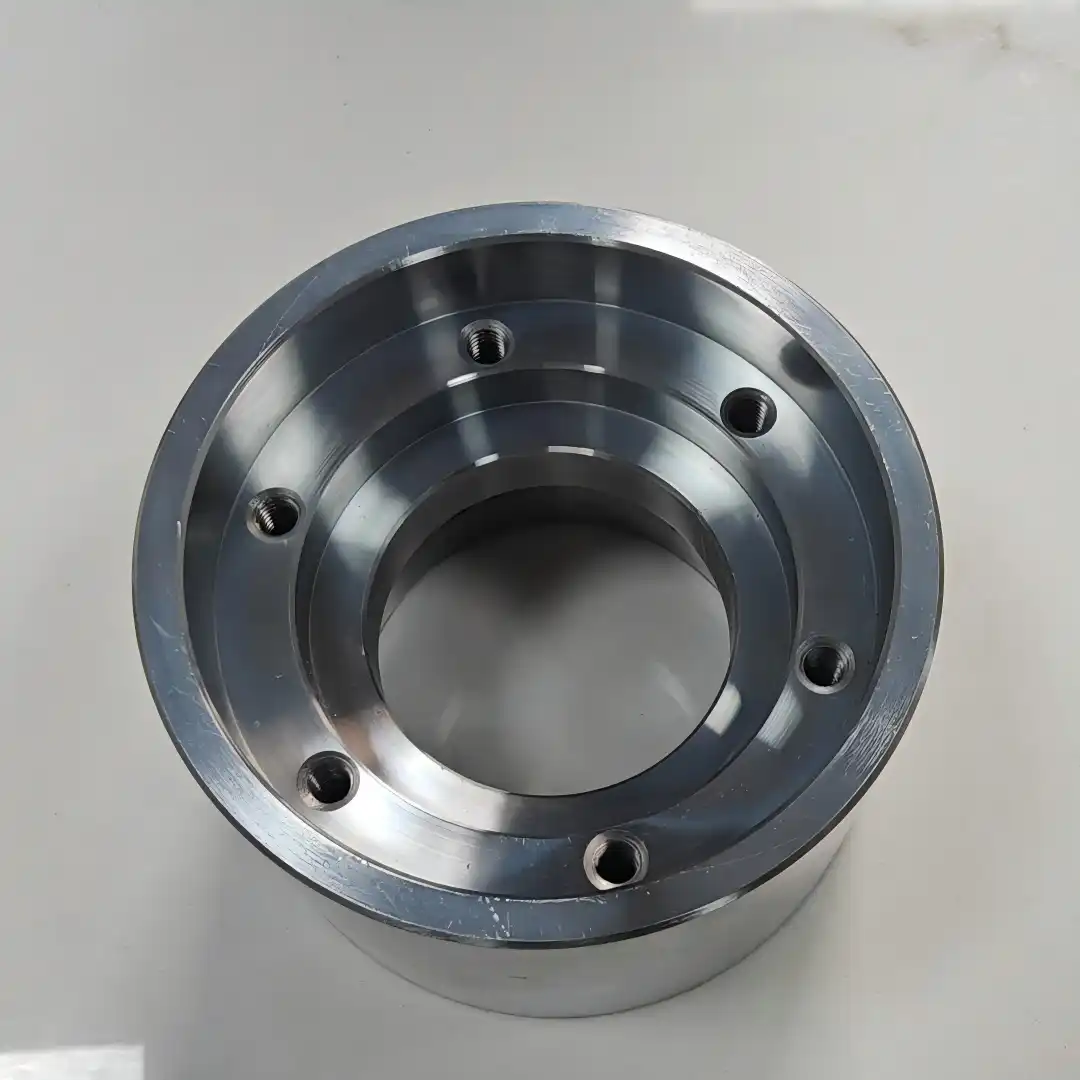
The tolerance expectation is tighter than general sheet metal work. Machined medical components commonly hold about ±0.01–0.05 mm on critical features, with the achievable band set by material, geometry and size, and a medical programme applies the same discipline to sheet metal: name the critical features, state the band for each, and agree the inspection method before the first part is cut. That expectation, and the supplier checks that follow from it, are set out in the shop’s guide to choosing a medical device prototype manufacturer.
The material side is narrow by design. Medical work concentrates on 316L stainless steel for its low carbon content, corrosion resistance and sterilisation durability; titanium in Grades 5 and 23 where strength-to-weight and corrosion resistance matter together; and PEEK on the polymer side for chemical resistance and repeated autoclaving to about 250 °C. Where the part touches the patient or the sterile field, the material has to meet USP Class VI and ISO 10993 biocompatibility expectations, and the grade map is laid out in the shop’s guide to medical device parts.
The records are the third requirement, and they are usually what an audit opens first: material certificates for every lot, dimensional inspection reports against the critical features, traceability through fabrication and finishing, revision and change control, and a defined nonconformance route. One boundary condition belongs in the commercial conversation early: a fabricator’s documentation supports your quality system rather than replacing it, and the medical scope of an order is agreed explicitly rather than inherited from a general quality certificate.
What are the hidden costs of poor medical fabrication choices?
Beyond the sticker price of a part, poor fabrication choices can trigger hidden costs in rework, regulatory delays, and field failures.
A bracket that doesn’t account for springback in stainless steel can require post‑form machining, which adds cost and the risk of micro‑burrs. An enclosure with poorly designed weld joints can create microscopic crevices that trap fluids and become microbiological hot spots during disinfection cycles. Worse, if a contract manufacturer lacks robust documentation, OEMs may find themselves re‑qualifying parts after a minor process change, incurring weeks of costly downtime. Choosing an experienced partner mitigates these risks by front‑loading engineering rigor, traceability, and rigorous inspection into every job.
How does rapid fabrication impact time‑to‑market for devices?
Rapid fabrication compresses the time between design freeze and clinical or regulatory trial use, which is especially valuable in 2026’s competitive medtech landscape. When a surgical team can test a prototype cart, rack, or enclosure in the OR after only a few days, design feedback becomes concrete and iterative, rather than theoretical.
From a sheet metal perspective, this means utilizing laser cutting and CNC bending for early-stage builds, then migrating to progressive dies only when market volume justifies the capital outlay. The ability to move from CAD to functional parts with expedited engineering feedback turns what used to be a months‑long metalwork cycle into a matter of days.
6CProto Expert Views
“From a shop‑floor perspective, the real 2026 inflection point is not the metal itself, but how medical OEMs are using sheet metal as a functional subsystem—part mechanical, part sterilization‑ready, part human‑interface. At 6CProto, we see an increasing number of RFQs that combine complex bracketry, enclosures, and rolling carts with strict Ra surface roughness requirements and electropolish or passivation specs. What separates a specialized partner from a commodity shop is that we don’t just hit the bend‑angle or material thickness; we interrogate the clinical use case: how often will this cart be autoclaved, how many push‑pull cycles will the drawer handle see, and how does laser‑cut edge quality affect particle shedding in a cleanroom environment? That’s where experience‑driven DFM—the kind you normally only see in tier‑one medical device OEMs—turns generic sheet metal into a true value‑add component.”–Michael Wang, Founder & Lead Mechanical Engineer at 6CProto
Why is medical sheet metal fabrication accelerating in 2026?
Medical sheet metal fabrication is accelerating because demand for precision‑engineered, sterilizable components is rising faster than traditional manufacturing setups can adapt. OEMs are consolidating their supply chains around engineering partners that can combine rapid prototyping, strict quality systems, and deep materials know‑how to support everything from sterile enclosures to custom carts and surgical brackets.
This creates a clear structural advantage for one‑stop partners that can deliver quick‑turn, high‑mix sheet metal work within an ISO‑aligned framework—ultimately shortening the medical device development cycle while keeping regulatory and field‑reliability risks in check.
Summary of Key Takeaways
Navigating the modern landscape of medical device fabrication requires a strategic approach to material selection, regulatory adherence, and supply chain design. The critical takeaways for medical OEMs include:
-
Prioritize materials like 316 stainless steel and specialized aluminum alloys to ensure compliance with aggressive hospital sterilization cycles.
-
Enforce absolute component traceability and Design for Manufacturability (DFM) compliance from early CAD stages to prevent unexpected audit delays and costly rework.
-
Transition from global just-in-time logistics to agile regional setups by choosing partners capable of integrating multi-disciplinary workflows under a unified quality management system.
-
Leverage tool-free rapid prototyping to minimize upfront capital risk while maintaining continuous design iteration.
FAQ
What are the three types of metal fabrication?
Forming, cutting and joining. Forming covers bending, punching and stamping; cutting covers laser, plasma, waterjet and punching; and joining covers welding, riveting and hardware insertion. Most medical sheet metal work combines all three in one programme, which is why the supplier is usually chosen on process coverage rather than on a single operation.
How tight are tolerances in medical sheet metal fabrication?
The discipline is the same as for machined medical parts: about ±0.01–0.05 mm on critical features, with the achievable band depending on material, geometry and size. On sheet metal the practical band is wider on formed features and tighter on cut and machined ones, so the drawing should state the band per feature and name the inspection method rather than applying one tolerance to the whole part.
Which materials dominate medical sheet metal applications?
316L stainless steel dominates, because its low carbon content resists corrosion and survives repeated sterilisation; titanium Grades 5 and 23 are used where strength-to-weight and corrosion resistance matter together; and PEEK appears on the polymer side for chemical resistance and autoclave durability to about 250 °C. Where the part touches the patient, the material also has to meet USP Class VI and ISO 10993 expectations.
What documentation should a medical sheet metal supplier provide?
Material certificates for each lot, dimensional inspection reports against the critical features, traceability through fabrication and finishing, revision and change-control records, and a defined nonconformance route. These are what support your own quality system during an audit; a general quality certificate does not substitute for them, and the medical scope of an order is agreed explicitly.
Why is medical sheet metal fabrication growing in 2026?
Three pressures are converging: tighter regulatory expectations that favour suppliers who can document their process, reshoring that shortens supply chains for regulated products, and rising demand for sterile enclosures, carts and instrument housings. The growth lands on fabricators who can hold a stated tolerance band and produce the record set, which is a narrower group than the general sheet metal market.