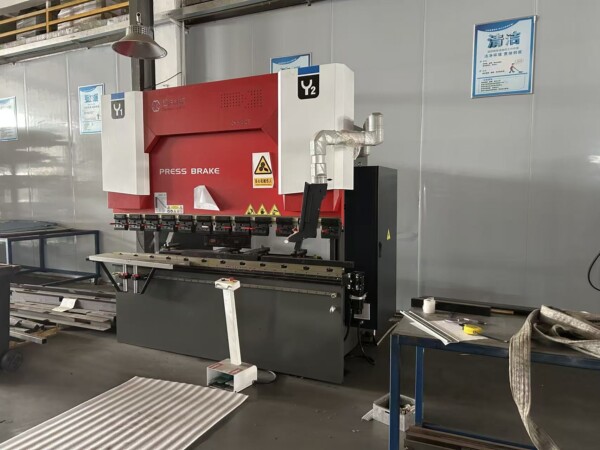
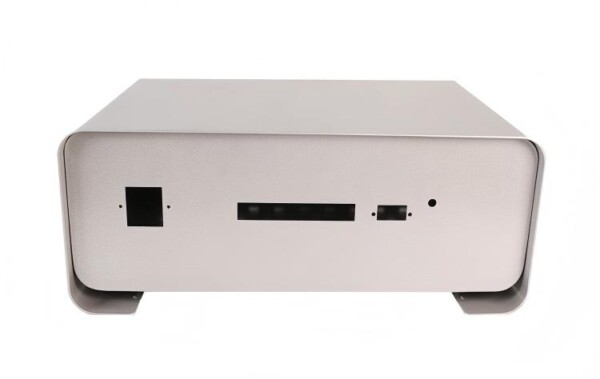
Custom sheet metal fabrication transforms flat metal sheets into high-precision, dimensionally stable components on advanced fiber lasers and press brakes rather than machining away raw material from solid billets. This rapid manufacturing technique yields essential enclosures, brackets, and structural chassis with uniform wall thicknesses, excellent rigidity, and tailored surface finishes that optimize mechanical fit, thermal dissipation, and long-term durability.

(Edited on June 15, 2026)

How Does Sheet Metal Fabrication Work?

The engineering workflow of custom sheet metal fabrication converts flat, two-dimensional raw stock into complex, three-dimensional components through a synchronized sequence of digitized operations. The process begins during the pre-production phase by converting a 3D CAD model into a unfolded flat pattern, calculating exact material bend allowances based on the specific alloy’s K-factor. Next, industrial fiber lasers or high-speed CNC punching presses precisely cut the outer profiles and internal cutouts from large metal sheets.

Once the flat blanks are extracted, they transfer to precision CNC press brakes where automated backgauges position the metal under heavy forming dies to execute calculated sequential bends. For intricate multi-component assemblies, the formed sheet metal sections move to secondary hardware insertion presses to install captive PEM nuts, standoffs, or studs, followed by permanent structural joining using TIG or MIG welding stations. This highly automated progression makes sheet metal fabrication the ideal production method for original equipment manufacturers developing mission-critical components across the aerospace, medical, electronics, and industrial automation sectors.

Which Materials Are Best for Fabrication?

Selecting the optimal sheet metal alloy requires a calculated engineering compromise among tensile yield strength, weight constraints, material formability, environmental corrosion resistance, and total production cost. Aluminum, specifically grade 5052-H32, balances low density with outstanding corrosion resistance and excellent cold-working ductility, making it the industry baseline for lightweight airborne enclosures and electronic brackets.

For harsh operating environments requiring extreme structural durability and high temperature thresholds, Austenitic stainless steels like 304 or 316 grades provide superior mechanical performance and exceptional chemical resistance due to their dense chromium oxide passivation layers. Conversely, low-carbon mild steel provides an economical, highly weldable alternative for heavy-duty structural frames and internal industrial panels, provided it receives an industrial powder coating to prevent oxidation. High-conductivity metals like pure copper or commercial brass are reserved for targeted electrical distribution paths, electromagnetic interference shielding, and specialized grounding hardware.

Material Alloy & Grade Yield Strength (MPa) Formability Rating Primary Environmental Benefit Typical Engineering Use
5052-H32 Aluminum 193 MPa Excellent Superior marine atmospheric resistance Aerospace chassis, lightweight enclosures
304 Stainless Steel 215 MPa Moderate High chemical and oxidation resistance Medical hardware, food processing frames
A36 Carbon Steel 250 MPa Good Cost-effective structural weldability Heavy industrial brackets, internal panels

Why Choose Sheet Metal Parts?

Engineering teams specify sheet metal components because they provide exceptional strength-to-weight ratios and unmatched design flexibility without demanding expensive, long-lead hard tooling. Unlike plastic injection molding or die casting which require weeks of upfront mold creation, sheet metal flat patterns are controlled entirely via software configurations, allowing engineers to implement rapid geometry revisions instantly without incurring financial penalties.

The primary mechanical advantage of thin-gauge sheet metal stems from its structural geometric configuration. By strategically introducing 90-degree bends, structural flanges, stiffening ribs, or rolled hems into a flat layout, engineers can increase the cross-sectional moment of inertia. This design capability allows thin, lightweight metal parts to withstand substantial structural loads, mechanical vibrations, and torsional forces, making the process ideal for rugged electronic enclosures, industrial cabinets, and automotive body panels.

How Do You Design for Manufacturability?

Adhering to strict Design for Manufacturability rules accelerates turnaround times, prevents material structural failures, and reduces tool setup overhead. The foundational law of sheet metal design dictates maintaining an identical, uniform wall thickness across the entire single component. When features like holes, slots, or notches are positioned too close to a bend radius, the localized tensile stress field generated during forming will pull the metal, resulting in ovalized holes or torn flanges.

DFM Design Constraint Standard Industrial Manufacturing Engineering Metric
Minimum Inside Bend Radius Must equal or exceed the nominal material sheet thickness to prevent outer fiber cracking.
Minimum Hole Distance to Bend Position edge of holes at a minimum distance of 2x material thickness away from the bend tangent line.
Minimum Bend Flange Length Maintain a minimum height of 4x material thickness to allow proper seating inside the press brake V-die.
Bend Relief Configurations Introduce slot cutouts at all t-shape junctions with a minimum width equal to material thickness.

What Are Common Fabrication Processes?

Modern sheet metal fabrication relies on a matrix of separate manufacturing processes, with each phase optimized to execute a specific material transformation. High-power fiber laser cutting centers represent the baseline for cutting profiles, utilizing compressed nitrogen or oxygen assist-gases to melt and clear the kerf cleanly, leaving smooth edges requiring minimal deburring.

Bending operations utilize precise hydraulic press brakes equipped with segmented punch and die sets to execute complex air-bending paths. For permanent, high-strength structural joints, technicians utilize gas tungsten arc welding to fuse seams together, frequently grinding down the weld beads to produce flat, seamless exterior surfaces. Finally, specialized mechanical hardware insertion systems automatically press self-clinching fasteners into pre-cut holes, providing highly repeatable, high-torque threads in thin sheet components that would otherwise fail to support standard tapped threads.

How Fast Can Prototypes Be Made?

The turnaround time for custom sheet metal components is governed by part complexity, total bend counts, welding requirements, and post-fabrication surface finishes. Straightforward flat profiles or simple brackets with one or two bends move rapidly through production lines because they require minimal machine programming and standard, off-the-shelf press brake tooling configurations.

Conversely, multi-part welded assemblies or large electronic enclosures requiring extensive manual grinding, cosmetic masking, and secondary operations like liquid painting or chemical film conversion demand extra processing time. Advanced manufacturing operations mitigate these scheduling delays by integrating automated nesting software directly with automated laser loaders, allowing factories to rapidly group separate prototype geometries onto identical material sheets to reduce physical material handling and accelerate final inspection clearances.

Who Uses Custom Metal Parts?

Custom fabricated sheet metal components serve as critical infrastructure across low-volume prototyping initiatives and scaled mass production lines alike. Design engineers and procurement managers in high-regulatory industries depend on the process to produce structural parts that meet stringent safety, material traceability, and dimensional consistency standards.

In the aerospace sector, light-gauge aluminum avionics trays and shielding enclosures must survive extreme vibrational loading while maintaining electrical grounding paths. The medical device industry relies on passivated stainless steel enclosures to meet strict hygienic washdown and chemical sterilization criteria. Simultaneously, the telecommunications, industrial automation, robotics, and electric vehicle sectors deploy custom sheet metal components for structural battery housings, heavy power distribution cabinets, and precise sensor mounting brackets.

Why Is Quality Control Important?

Rigorous metrology and quality control protocols are essential in precision sheet metal manufacturing because small dimensional deviations can accumulate across multiple bends, causing assembly stack-up errors. Because sheet metal displays natural material springback—where the metal unbends slightly after the press brake punch retracts—operators must continually monitor and compensate for angular variations during production runs.

Advanced inspection workflows incorporate coordinate measuring machines, high-resolution optical scanners, and precision plug gauges to verify geometric tolerances, true position hole locations, and total flat parallelism. Maintaining an ISO 9001:2015 certified workflow ensures that critical hardware positioning, weld penetration depth, and overall dimensional accuracy consistently match the target digital CAD specifications, guaranteeing seamless final assembly on the client’s integration floor.

How Do Finishing Options Improve Parts?

Post-fabrication surface treatments alter both the chemical performance and cosmetic characteristics of sheet metal parts, protecting the underlying alloy from ambient environmental degradation. Powder coating is the industry-standard choice for industrial carbon steels, creating a thick, impact-resistant thermoplastic layer that seals the reactive metal from moisture and atmospheric oxygen.

For aluminum components, anodizing utilizes an electrolytic bath to convert the natural surface layer into a hard, non-conductive, and highly corrosion-resistant aluminum oxide finish. Bead blasting is routinely utilized as a mechanical pre-treatment to erase superficial tool marks, scratch marks, and handling scuffs, imparting a uniform satin appearance. Other critical operations include chemical passivation for stainless steel to remove free surface iron particles, alongside conductive chromate conversion coatings for aluminum components that require long-term oxidation barriers without losing electrical grounding capabilities.

What Makes 6CProto Different?

6CProto differentiates itself in the custom manufacturing marketplace by providing a fully integrated, turnkey production model that bridges rapid prototyping agility with robust mass production execution. Operating from an ISO 9001:2015 certified facility, the company leverages high-capacity fiber laser cutters, multi-axis press brakes, and in-house surface finishing lines to control every critical phase of fabrication under a single quality management system.

Clients benefit from cross-platform processing capabilities, allowing 6CProto to seamlessly combine precision sheet metal brackets with custom CNC machined internal blocks or 3D printed components within the identical product assembly workflow. Backed by industry-leading shipping turnarounds as fast as 24 hours, comprehensive coordinate measuring machine verification, and expert engineering support, 6CProto provides global engineering firms with the speed, technical competence, and manufacturing reliability needed to de-risk complex hardware development lifecycles.

6CProto Expert Views

“Optimizing an intricate sheet metal design requires looking past the 3D CAD assembly and thoroughly analyzing the physical dynamics of metal under tension and compression. Sheet metal rewards geometric consistency, generous bend radii, and a disciplined approach to tolerance stack-ups across multiple forming operations. At 6CProto, the fastest, most cost-effective project turnarounds occur when customers engage our engineering team early, permitting interactive design for manufacturability analysis to optimize flat layouts before cutting the first sheet. This collaborative review eliminates localized stress concentration zones, minimizes specialized tool setups, and guarantees that the initial physical component scales seamlessly from a rapid prototype directly into a repeatable, high-volume production configuration.”

Michael Wang, Founder & Mechanical Engineer at 6CProto

What Are the Main Applications?

The high strength-to-weight ratio and scalable nature of custom sheet metal fabrication make it the foundational manufacturing option for protective structures and mounting interfaces. The most prevalent applications include industrial electronics enclosures, heavy-duty network server racks, control panels, and automated kiosk housings that require secure internal component protection and ventilation cutouts.

Structurally, sheet metal is utilized to produce heavy-duty mounting brackets, structural braces, internal equipment framing, and industrial machine guards designed to protect personnel from moving mechanical components. The process is equally efficient for producing large-scale structural fluid tanks, input-output facial panels, and intricate thermal heat sinks, providing an economical alternative to multi-axis CNC milling for large-surface-area geometries.

Can Sheet Metal Scale to Production?

Sheet metal fabrication scales from single-digit prototype runs to high-volume production shipments with exceptional geometric fidelity because the core process relies on highly automated digital manufacturing workflows. Once a prototype component is fully validated and approved, the identical, unaltered flat pattern CAM file is deployed to drive high-capacity automated production machinery.

During high-volume scaling, factories transition from flexible fiber laser cutting to dedicated hard tooling punch presses and custom staging dies to reduce unit cycle times and lower piece-part costs. The high repeatability of modern CNC press brakes ensures that the first component and the ten-thousandth part remain identical, allowing original equipment manufacturers to comfortably scale their supply chains from initial testing phases straight to global product launches.

Could Your Next Project Benefit?

Specifying custom sheet metal fabrication is a smart engineering decision if your component demands high structural strength, lightweight configuration, and a compressed development timeline. The process is remarkably efficient when a design can be broken down into uniform flat segments, standard linear bends, and conventional mechanical joining methods.

Maximizing the financial and mechanical advantages of fabrication requires establishing close collaboration with your manufacturing partner during the early phase of the design loop. By ensuring clean CAD geometry exports, defining realistic geometric dimensioning tolerances, and finalizing surface finish requirements upfront, you can eliminate engineering bottlenecks. Utilizing the advanced engineering support provided by 6CProto allows development teams to easily transition from initial conceptual layout to field-ready metal parts with minimal design revisions and zero unexpected production delays.

Conclusion

Custom sheet metal fabrication remains one of the most reliable, efficient, and versatile production methodologies for creating precision, thin-gauge metal parts. It seamlessly accommodates rapid engineering adjustments, offers outstanding mechanical durability, and scales from small functional prototypes to volume manufacturing runs, making it an essential process for structural brackets, electronic enclosures, and complex assemblies. Achieving optimal results requires specifying appropriate material grades, applying realistic bend parameters, and selecting a manufacturing partner capable of providing upfront design feedback, robust metrology checks, and certified surface treatments. Partnering with a comprehensive manufacturer like 6CProto ensures engineering teams secure rapid lead times, comprehensive interactive engineering analysis, and predictable part quality across the entire product life cycle.

Frequently Asked Questions

What standard sheet metal thicknesses work best for precision electronic enclosures?

The ideal thickness depends on the selected material, but electronic enclosures typically utilize sheet metal ranging from 1.2 mm to 2.0 mm (approximately 18-gauge to 14-gauge) in aluminum or steel. This gauge window provides excellent structural rigidity to support internal components and PCBs while keeping total assembly weight low.

Is sheet metal fabrication cost-effective for low-volume prototyping runs?

Yes, sheet metal fabrication is highly cost-effective for prototypes because it uses software-controlled fiber lasers and CNC press brakes. Because the process does not require expensive, dedicated casting molds or stamping dies, manufacturers can set up and produce a single functional prototype from a CAD file within hours.

Why must the minimum inside bend radius match the sheet metal thickness?

If the inside bend radius is smaller than the nominal sheet thickness, the outer surface fibers of the metal undergo excessive tensile deformation during the forming stroke. This localized over-stretching creates micro-fractures, visible cracking, and material thinning along the bend line, severely weakening the structural integrity of the part.

Can custom sheet metal components be tapped to create threads?

Sheet metal parts can be directly tapped if the material is thick enough to support at least three complete thread pitches. For thin-gauge sheets where direct tapping would result in stripped threads, manufacturers install self-clinching PEM fasteners, loose rivets, or weld nuts to provide durable, high-torque threaded holes.

Why choose 6CProto for custom sheet metal fabrication projects?

6CProto provides an integrated, technology-driven workflow that combines multi-axis fiber laser cutting and precision press brake forming with in-house metrology, ISO 9001:2015 quality control, and free interactive design feedback. This single-source model optimizes manufacturing parameters, reduces lead times down to 24 hours, and ensures tight tolerance compliance for critical aerospace, medical, and industrial components.

Technical References