

Why Inconel Punishes Cutting Tools
Inconel and other nickel superalloys are among the hardest materials to machine, not because they are simply hard, but because three properties combine against the cutting process. The alloy retains high strength at temperature, so the material resists chip formation and cutting forces stay high. It has low thermal conductivity, so the heat of cutting stays in the tool instead of leaving with the chip, and the tool edge runs far hotter than it would on steel at the same parameters. And it work-hardens under pressure, so the surface the tool just cut is harder than the surface before the cut, and the next pass meets a tougher target.
The result is a process that protects the tool: sharp edges, controlled speeds, consistent engagement, and plenty of coolant. None of it is a mystery. Nickel superalloy machining is a set of known constraints that a shop either plans for or suffers, and the quality of the part follows the discipline of the process. That is why experience with the alloy matters, and why the same part can cost twice as much from a shop that treats Inconel like steel.
The Chip Is the Diagnostic
When the parameters are right, Inconel produces a strong, tough chip that resists breaking, and the chip behavior is the machinist’s feedback loop. A chip that is too thin or too light means the tool is rubbing rather than cutting, which generates heat and work-hardens the surface without removing material. The feed must be high enough to cut, not just to burnish.
Continuous engagement protects the tool too. Inconel work-hardens where the tool pauses or rubs, so a cut that stops and restarts re-cuts a hardened surface. Consistent feed, depth, and speed keep the cutting zone in a controlled state, and they are what deliver the surface finish and tolerance on the RFQ. The buyer does not need to read chips, but the quotation should specify the finish and the tolerance, because the chip strategy is what makes them achievable.
Inconel Grades and Their Machining Behavior
The Inconel family covers different alloys with different balances of strength, corrosion resistance, and machinability, and the grade selection is an application decision that the machining must follow:
- Inconel 600 is a general-purpose nickel-chromium alloy that is machinable with controlled parameters, suited to high-temperature service in food and chemical processing.
- Inconel 601 adds oxidation resistance at temperature and belongs to a similar machining family as 600.
- Inconel 625 balances strength and corrosion resistance with considerable work-hardening behavior, so it demands sharp tooling and disciplined feeds.
- Inconel 718 is the precipitation-hardened workhorse of high-strength aerospace applications, the most common aerospace grade, demanding in the cut but well established.
Statement of the service conditions, temperature, load, and environment, should come before the grade, because the grade chosen for the application is the grade the process must handle. A supplier that knows the grade’s behavior can plan the process; a general shop may treat every grade like steel and produce poor results on all of them.
The material condition matters as much as the grade. Solution-annealed material machines differently from precipitation-hardened material, and the stock form, bar, forging, or plate, carries its own behavior. The RFQ should specify material condition and stock form, because a part specified only by grade leaves the condition to guess, and the guess changes the machining and the cost.
Tooling and Parameters That Survive
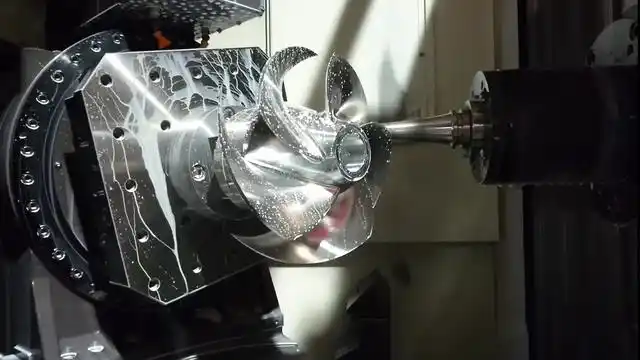
The tooling strategy for nickel superalloys prioritizes edge strength and heat resistance. Carbide tools with robust geometries are the practical workhorse, and the tool edge must stay sharp, because a worn edge rubs, heats, and work-hardens the surface instead of cutting it. Tool life is measured in cutting time, not in parts, and the schedule should allow for tool changes as a planned event rather than an emergency.
Common parameters run lower than steel in speed and feed, with the feed held high enough to cut continuously. Small, consistent depths of cut and short engagement windows keep heat out of both the tool and the part. Each grade has its own band, which is why generic “hard material” advice fails: the parameters that suit 718 are not automatically right for 625, and the tool geometry is chosen against the grade’s chip behavior.
Fixturing and Thermal Management
Rigid fixturing is not optional on Inconel. The alloy resists chip formation with high forces, and any flex in the setup converts cutting energy into vibration and heat, or allows the part to move under the tool. The setup must hold the part firmly enough that the tool sees only the material’s resistance, with no contribution from the fixture. Clamp points should be chosen to avoid distorting thin sections, because springing a thin web under clamping turns into a tolerance failure after machining.
Thermal management is the other pillar. Flood coolant directed at the cutting zone, delivered in volume and aimed precisely, is the standard approach, and the coolant choice and flow rate are part of the process plan, not a plumbing detail. For critical faces, the part temperature and measurement temperature should be managed so the tolerance is meaningful. A large Inconel part measured hot will disagree with the same part measured at the inspection temperature, and the drawing should state where the measurement applies.
Cost and Lead Time Reality for Superalloys
Nickel superalloy machining costs more than common metals for structural reasons: tooling wears faster, cycles are longer, coolant and process control cost more, and the labor is scarcer. As a reference, 6CProto quotes roughly 10 business days for Inconel parts against about 5 to 7 days for aluminum or steel, and the price difference follows the same ratio. The comparison is not a defect in any one supplier; it is the physics of the material.
The part, not the material, decides whether the cost is justified. Every dimension tighter than needed is a cost in a material this demanding, and every finish class wants a planned post-process. The discipline is to specify only the requirements the application defends: tolerance where the function requires it, finish where contact or appearance requires it, and material condition where the service warrants it. The Inconel part that is economical is the one whose requirements were justified.
When Machining Is the Answer, and When It Is Not
Machining is not automatically the right answer for every superalloy part. If the material was specified out of habit, a review of the service conditions may justify a lower-cost alloy, a geometry change, or a different process. A part that can be formed, welded, or additively built in Inconel before machining avoids removing the most expensive material in the shop, and a design that eliminates a critical tolerance removes the cost of holding it.
The decision sequence is simple: state the service conditions honestly, check whether the geometry could be made by a cheaper route, then confirm the tolerance and finish set against the function. The material is justified by the requirement, and the machining is planned around the material’s real behavior. Teams that run this sequence find that Inconel is not expensive unpredictably; it is expensive in exactly the places they specified.
Getting an Inconel Part Quoted
Nickel superalloys reward experience, and the process strategy, tooling, and thermal management are known to shops that run them routinely. 6CProto states Inconel 600, 601, 625, and 718 in its material range, described on the CNC machining materials page, and machines them through the CNC milling and CNC turning services. The aerospace industry page describes the high-temperature applications that drive the demand, and the article “How Do You Machine Hardened Steel Effectively?” covers the related disciplines that apply to heat-resistant alloys. For the dimensional control that these parts require, the machining tolerance framework in the CNC machining tolerances guide applies directly.
When requesting a quote, state the grade, the service conditions, the material condition and stock form, and the tolerances, and the engineering team can confirm the machining strategy and lead time before you commit. The part that succeeds is planned, not hoped for. Where the design requires a documented alloy basis, the material and process guidance in this article can be reviewed against standards from organizations such as ASME (ASME codes and standards).
FAQ
Can Inconel be machined without flood coolant?
Not reliably. The alloy’s low thermal conductivity concentrates heat at the tool edge, so without a volume of coolant the edge softens and wears quickly, and the surface work-hardens. Coolant delivery is part of the process plan, not an option to negotiate later.
Why does my Inconel quote cost several times the steel quote?
Because the cycle is longer, the tooling wears faster, the process control costs more, and the capability is scarcer. The quote difference follows the physics. The practical response is to confirm that every tolerance and finish in the specification is justified by the function, since each one adds cost in a material this demanding.
Do the Inconel grades need different tooling?
They share the same principles, sharp edges, rigid setups, controlled feeds, and coolant, but the parameters and tool geometry are tuned per grade. 718’s precipitation-hardened structure is more demanding than 600 and 601, and 625 sits between on strength and machinability. State the grade and condition so the process is planned correctly.