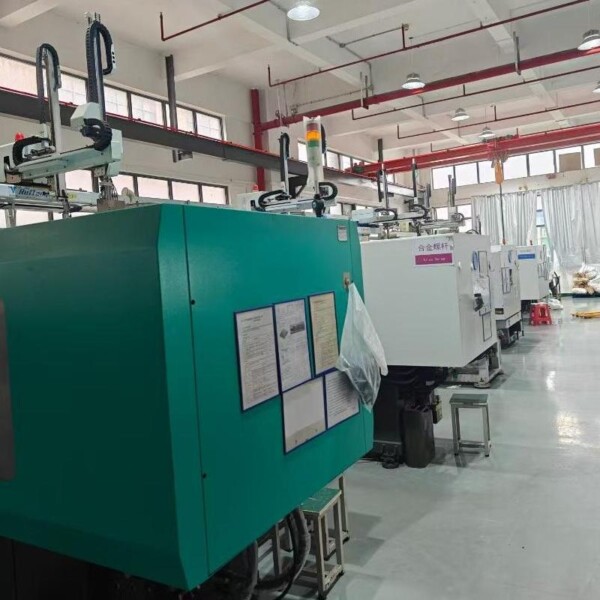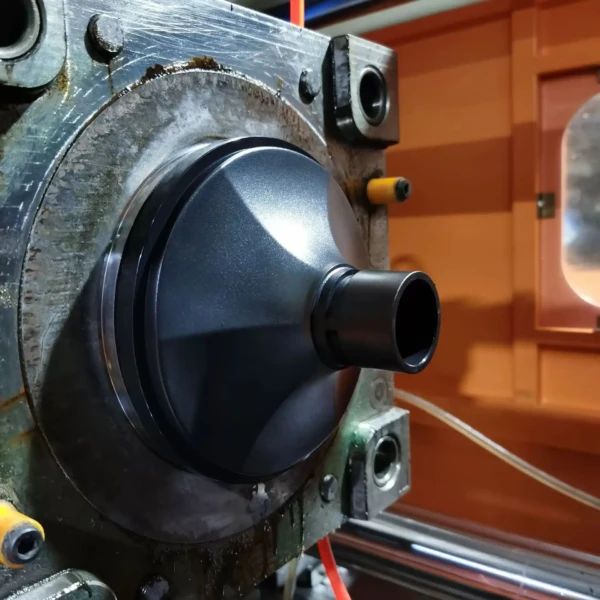
Low-volume molding is ideal for producing 100–10,000 near‑production parts with lower tooling cost, faster iteration, and real market feedback before you commit to expensive multi‑cavity steel molds. It bridges prototyping and mass production, using aluminum or soft steel tooling to balance unit price, lead time, and design flexibility for startups, OEMs, and engineering teams.

What is low-volume molding in practical manufacturing terms?

Low-volume molding is the production of typically 100–10,000 plastic parts using simplified, rapid tooling in aluminum or soft steel instead of hardened multi‑cavity steel molds. It targets bridge production, pilot runs, and niche products where design may still change, letting you validate form, fit, and function with production-grade materials before committing to high-volume tooling.

From a process engineer’s viewpoint, low-volume molding is not “cheap prototyping” but a deliberate tooling strategy. We still design steel-safe shutoffs, proper venting, and gating, but we optimize for quick machining, easy modification, and predictable mold life instead of million‑shot durability. A good low-volume tool is built to be modified two or three times without becoming a science project.

How is low-volume molding different from prototypes and mass production?

A useful way to think about it is as a bridge:

Aspect 3D printing prototype Low-volume molding Mass production molding
Typical quantity 1–50 parts 100–10,000 parts 10,000+ parts
Tooling type No mold Aluminum/soft steel mold Hardened multi‑cavity mold
Unit cost High Medium Low
Design change ease Very easy Easy–moderate Difficult and costly
Material realism Often close Production-grade Production-grade

In 6CProto projects, we often 3D print first articles to debug geometry, then move to low-volume molding to validate real polymers, warpage, cosmetic behavior, and assembly fits before customers invest in H13 or P20 multi‑cavity tools.

Why is low-volume molding ideal for 100–10,000 units?

Low-volume molding shines for 100–10,000 units because tooling cost and lead time stay low, yet you still get production-grade parts suitable for market pilots, certification, or early customer shipments. You can launch with an aluminum or soft-steel tool, gather feedback, and only upscale to hardened multi‑cavity molds once demand and design are stable.

On the factory floor, the sweet spot is when your expected annual usage is uncertain or your design is still evolving. Instead of sinking tens of thousands into a hardened multi‑cavity mold, you use a single‑ or two‑cavity aluminum or P20 tool. If your snap‑fit, sealing feature, or cosmetic surface needs tweaking, we can re-machine inserts or gate locations in days, not weeks.

How do part economics change in this volume window?

At 100–10,000 units, total landed cost is dominated by tooling amortization and change risk rather than absolute piece price. For example:

  • An aluminum single-cavity tool might cost a fraction of a full hardened multi‑cavity tool.

  • Per-part molding cost will be higher than mass production, but the total program spend can still be far lower if the design changes two or three times.

  • If your forecast is wrong, you are not stuck with an over‑engineered mold that never pays back.

In my experience, many startups actually save more by “overspending” a little on per‑part cost early, because they avoid multiple reworks of hardened steel tools.

How does low-volume molding reduce upfront tooling investment?

Low-volume molding reduces upfront tooling investment by using aluminum or soft steel molds, simpler cooling layouts, and fewer cavities. You avoid the complex, high-hardness machining of full production tools and skip elaborate features like automatic unscrewing or lifters unless they are absolutely necessary, cutting both machining hours and risk.

The key levers I use when designing low-volume tools are:

  • Material choice for mold: Aluminum or P20 soft steel machines faster and allows faster EDM and polishing, so we get to T1 quicker.

  • Cavity count: One or two cavities keep the mold base compact and simplify runner design.

  • Modular inserts: Critical features (such as sealing lands or clip features) are on inserts that can be swapped independently, avoiding full-block rework.

At 6CProto, we combine these choices with in-house CNC and EDM to push mold lead times down while still holding tight tolerances for functional parts.

What design trade-offs matter most in low-volume molding?

For low-volume molding, the most important design trade-offs are between wall thickness, draft angle, gate location, and tolerance stack-ups. You must balance cosmetic expectations with manufacturability, because aluminum molds show wear faster, and aggressive textures or razor-thin ribs can reduce mold life or cause inconsistent filling at the lower shot counts.

From an engineer’s perspective, I pay special attention to:

  • Steel-safe features: I leave ribs and snaps slightly “fat,” then trim down after T1 when we have actual measurements.

  • Gating strategy: For pilot runs, I may accept a visible gate mark in a non‑critical area if it avoids expensive submarine gates or side actions.

  • Cooling layout: We optimize cooling enough for stable cycle times, but we do not chase the last few seconds of cycle reduction that only pay back in six-figure volumes.

These nuances are what often separate a clean, low-volume program from one that feels like constant firefighting.

Which typical DFM changes should you expect?

In low-volume molding, expect your manufacturing partner to suggest:

  • Thick-to-thin flow direction to prevent sink and voids.

  • Increased draft on deep ribs and bosses for easier ejection in aluminum molds.

  • Modified radii at corners to reduce stress and improve filling.

  • Localized coring to reduce sink under pads and logo areas.

When 6CProto delivers a free DFM report, we specifically mark steel‑safe opportunities so you can approve dimensional “guardrails” before we cut metal.

Which materials and mold steels work best for low-volume runs?

For low-volume injection molding, the most common mold materials are aluminum and P20 soft steel, paired with standard thermoplastics like ABS, PC, PP, PA, and TPEs. Aluminum is ideal for a few hundred to a few thousand parts with fast iterations, while P20 or similar steels suit higher low-volume ranges or abrasive engineering resins.

From a materials engineering standpoint:

  • Aluminum molds: Great for ABS, PP, PC–ABS, and many commodity and engineering plastics when volumes are modest and changeability is high.

  • P20/4140 molds: Better for higher shot counts, more abrasive materials (glass-filled nylon), or tighter tolerances.

  • Resins: Choosing a production-intent resin early avoids surprises in stiffness, warpage, and chemical resistance when you transition to mass production.

At 6CProto, we often start with aluminum for early batches and design the tool such that key inserts could be remade in steel later if a customer wants to push the shot count further.

Where does a hybrid tooling strategy make sense?

A hybrid strategy—aluminum core with steel inserts in high-wear areas—can be powerful. I might specify hardened steel only for:

  • Gate bushings and sprue areas.

  • Sliding cores or lifters that see mechanical wear.

  • Critical sealing surfaces that cannot drift over time.

This approach keeps cost and lead time low but protects the dimensions that actually matter over a few tens of thousands of shots.

How do lead times and iteration speed compare with other methods?

Low-volume molding usually offers tooling lead times in the range of a few weeks, significantly faster than full steel production tooling, though slower than 3D printing. The big advantage is that after T1, design changes through insert swaps or minor machining can be turned around quickly, letting you iterate on production-like parts in compressed development cycles.

On the shop floor, the time breakdown typically looks like:

  • DFM and design freeze: days, not months, if the CAD is mature.

  • Tool build: aluminum or P20 single-cavity in a couple of weeks under efficient workflows.

  • T1 sampling, measurement, and adjustments: another short window, depending on how many loops you need.

Because 6CProto integrates DFM, tooling, molding, and CMM inspection under one roof, we can compress these loops further and ship small pilot batches while still fine-tuning the mold.

Why choose low-volume molding over 3D printing or CNC?

You choose low-volume molding over 3D printing or CNC when you need production-grade plastics, consistent cosmetic surfaces, and realistic cycle times for 100–10,000 parts. 3D printing is unbeatable for very low quantities and complex geometries, and CNC is excellent for metal or ultra-tight tolerances, but neither matches injection molding for repeatable polymer part cost at this volume.

How do these processes stack up for 100–10,000 units?

Factor Low-volume molding 3D printing CNC machining
Best materials Production thermoplastics Wide but sometimes non-standard Metals, some plastics
Upfront cost Mold required None Fixtures, programming
Per-part cost (100–10,000) Medium, decreases with volume Often high and flat High, especially for complex shapes
Surface finish Production-level, textured options Layer lines or smoothing Machined, can be polished
Design change cost Moderate (tool edits) Low (CAD only) Medium (reprogramming, fixturing)

At 6CProto, we often start customers on 3D printing for 1–50 parts, move them to low-volume molding for 100–10,000 plastic parts, and reserve CNC for metal components or specialized plastic parts demanding very tight tolerances and special finishes.

Who benefits most from low-volume molding solutions?

Low-volume molding best serves hardware startups, R&D teams, medical device developers, and businesses with niche or seasonal products. These groups often need certified, production-quality parts in modest quantities for clinical trials, field tests, or limited releases where data and flexibility matter more than minimum possible unit cost.

In my experience, typical use cases include:

  • Startups validating their first real product with customers before committing to mass tooling.

  • Medical and aerospace teams needing controlled batches for verification and validation, where tool changes are almost guaranteed.

  • Industrial OEMs running spare-part programs or regional variants that will never warrant multi‑cavity tools.

6CProto works with exactly these profiles, building tools and quality plans that match their regulatory or reliability requirements without overspending on unnecessary complexity.

Are there hidden risks or cost traps in low-volume molding?

Low-volume molding carries risks like underestimating tooling wear, over‑promising mold life on aluminum, or designing parts too close to mass‑production constraints while still expecting easy changes. If you push aggressive tolerances, deep textures, and high-glass-fill materials into a purely “cheap” aluminum tool, you can shorten mold life and face expensive rework.

The hidden traps I warn customers about include:

  • Assuming infinite changes: Every steel-safe tweak still costs machining time and affects tool integrity.

  • Ignoring cumulative tolerance: Stacking many tight features in an aluminum tool can lead to drift that fails assemblies after a few thousand shots.

  • Not planning for scale: If you know you will move to 200,000+ units, design your low-volume tool so its learnings transfer directly to a future steel multi‑cavity tool.

A disciplined DFM review with clear priorities—what must be perfect now versus later—helps avoid these pitfalls.

Can low-volume molding scale into medium or high-volume production?

Low-volume molding can scale if the initial mold is engineered with future production in mind, using modular inserts, family tool concepts, and transferable gating strategies. While an aluminum single-cavity tool itself will not handle true mass-production, the dimensional data, warpage behavior, and process window it reveals are invaluable when you design your eventual hardened multi‑cavity mold.

As a practical pattern, I often:

  • Design the gate and runner concept similar to what a multi‑cavity tool will use, just scaled down.

  • Place critical sealing and mating features on inserts that can be copied into future tools.

  • Capture full CMM data and process parameters (melt temperature, injection speed, pack profile) once we stabilize the part, then use that process window as a starting point for mass production.

This makes your low-volume stage a true learning investment rather than a throwaway experiment.

6CProto Expert Views

“On the floor at 6CProto, the highest ROI low-volume projects are those where the customer treats the first aluminum tool as a learning instrument, not a final destination. We deliberately cut steel-safe on snap‑fits, living hinges, and sealing flanges, then run several T samples while logging CMM data and cosmetic feedback. By the time we design the hardened multi‑cavity mold, we already know where the part wants to warp, where vents clog, and which surfaces are truly customer-facing. That’s how you turn a ‘small batch’ into a de‑risking engine for your future high-volume program—with less guesswork and fewer five‑figure surprises.”

This philosophy underpins how 6CProto guides customers from prototypes to reliable serial production, particularly in demanding sectors like aerospace, medical, and automotive.

How does 6CProto support low-volume molding projects end-to-end?

6CProto supports low-volume molding by combining DFM analysis, rapid tooling, molding, and metrology in a single workflow, from 3D printing and CNC to injection molding and sheet metal. You can start with a single functional prototype, then evolve through low-volume molding to higher volumes as your market and design mature, without changing suppliers.

Because 6CProto is ISO 9001:2015 certified and equipped with advanced CMM inspection, we can hold tight tolerances even on “temporary” tools and document the process window you will replicate later. Whether you are molding ten housings for a field trial or several thousand units for a regional launch, you get the same level of engineering attention, test data, and feedback that large OEMs demand.

For many customers, the real value is not only parts in hand but specific, data-backed advice: where to open up tolerances to save cost, which resins actually performed better under stress, and when it is finally time to graduate from low-volume molding to hardened multi‑cavity tools. That is where 6CProto earns its role as a long-term manufacturing partner, not just a job shop.

Conclusion: How should you decide if low-volume molding is right for your next run?

If you are planning a 100–10,000 piece run, low-volume molding gives you production-grade parts, manageable tooling cost, and valuable learning before you lock into mass production tools. Evaluate your expected demand, design stability, and regulatory path, then choose an aluminum or soft-steel tooling route that prioritizes steel-safe features, modular inserts, and transferable process data.

Work closely with an experienced partner like 6CProto that can review your CAD, flag risk areas, and structure your tool to survive both design changes and real-world usage. When you approach low-volume molding as a strategic bridge—rather than a cheaper shortcut—you reduce time-to-market risk, control budget, and arrive at high-volume production with far fewer surprises.

FAQs

What volume range is truly “low-volume” for molding?
In most practical programs, low-volume molding covers roughly 100–10,000 parts of a given design. The exact boundary depends on part size, complexity, and whether your application justifies multi‑cavity hardened steel tooling or can remain in simpler aluminum or soft-steel tools without compromising cost and reliability.

Can I use low-volume molding for final sale products, not just prototypes?
Yes, many companies ship final sale products from low-volume tools, especially for niche, seasonal, or early-stage markets. As long as the mold material, resin choice, and process controls are appropriate, the parts can meet the same functional and cosmetic standards as those from high-volume molds, just at higher per-unit cost.

Does low-volume molding support engineering plastics and overmolding?
Low-volume molding can handle many engineering plastics and overmolding, but the tooling must be designed accordingly. Abrasive, glass-filled materials or complex overmolds may push you toward P20 or hybrid molds instead of pure aluminum. Your manufacturing partner should advise on mold steel, gate design, and expected mold life before you commit.

How early should I involve a manufacturer like 6CProto in my design process?
The best results come when you involve a partner like 6CProto once your CAD is 80–90% defined but before you finalize wall thicknesses, draft angles, and key snap‑fits. Early DFM feedback helps you avoid un-moldable features, reduce rework, and design in steel-safe directions that make low-volume iterations faster and cheaper.

What information do I need to request a low-volume molding quote?
To get a meaningful quote, prepare 3D CAD files, basic 2D drawings with critical dimensions, target quantity range, resin preferences, color and surface requirements, and any certification needs. Sharing your future volume expectations also helps the manufacturer decide whether to recommend aluminum, soft steel, or a hybrid tooling strategy that can scale with your product.